Relationship between bond prices and interest rates | Finance & Capital Markets | Khan Academy
TL;DR
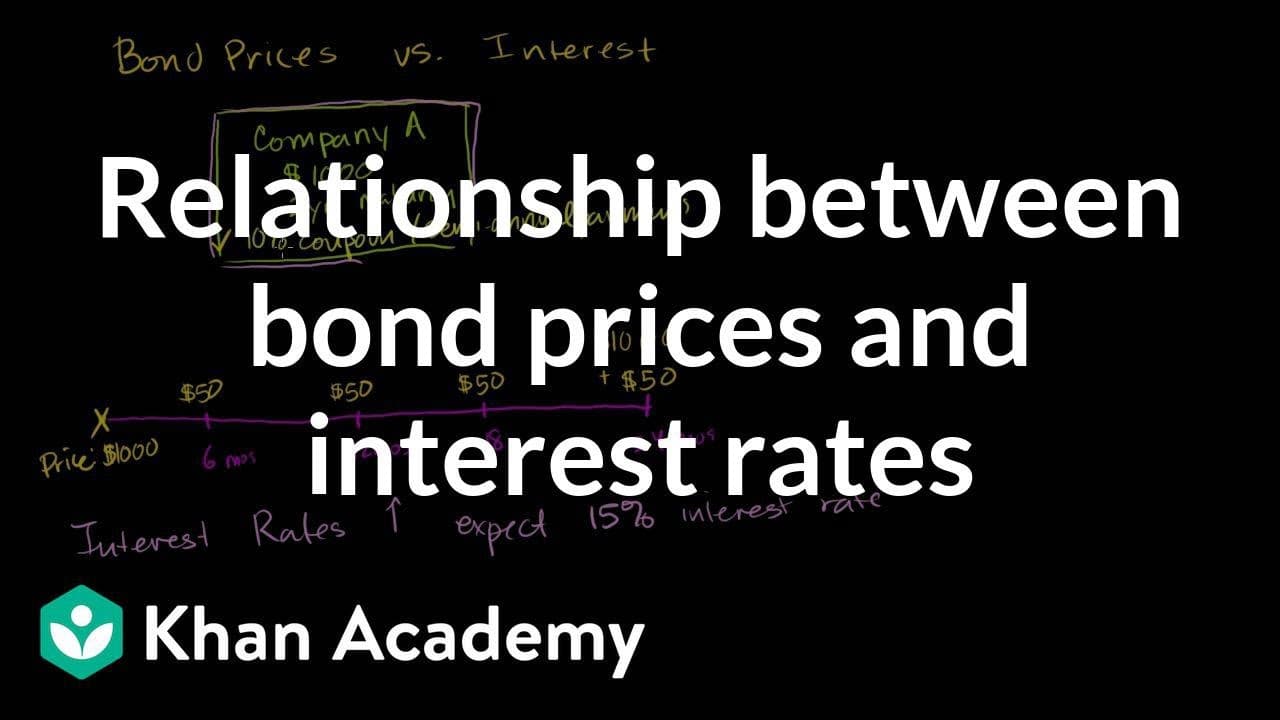
Bond prices and interest rates have an inverse relationship. When interest rates rise, bond prices decrease, and when interest rates fall, bond prices increase.
Transcript
Voiceover: What I want to do in this video is to give a not-too-math-y explanation of why bond prices move in the opposite direction as interest rates, so bond prices versus interest rates. To start off, I'll just start with a fairly simple bond, one that does pay a coupon, and we'll just talk a little bit about what you'd be willing to pay for tha... Read More
Key Insights
- ☠️ Bond prices and interest rates have an inverse relationship due to changes in relative attractiveness to investors.
- ☠️ When interest rates rise, bond prices fall because existing bonds offer lower interest rates compared to new bonds.
- ☠️ When interest rates fall, bond prices rise because existing bonds offer higher interest rates compared to new bonds.
- 0️⃣ Changes in interest rates affect both coupon-paying bonds and zero-coupon bonds, but the impact is more straightforward for zero-coupon bonds.
- ☠️ The relationship between bond prices and interest rates allows investors to capitalize on market fluctuations and adjust their investment strategies accordingly.
- ☠️ Bond prices are determined by the present value of future cash flows, discounted at an appropriate interest rate.
Install to Summarize YouTube Videos and Get Transcripts
Explore YouTube Video Summarizer or Get YouTube Transcript Extractor
Questions & Answers
Q: Why do bond prices and interest rates have an inverse relationship?
Bond prices and interest rates have an inverse relationship because when interest rates rise, the fixed interest payments on existing bonds become less attractive compared to new bonds offering higher interest rates. Therefore, the price of existing bonds must decrease to be competitive.
Q: How do changes in interest rates affect bond prices?
When interest rates increase, the price of existing bonds decreases because their fixed interest payments become less attractive. Investors can purchase new bonds with higher interest rates, so they are willing to pay less for existing bonds. Conversely, when interest rates decrease, the price of existing bonds increases as they offer a higher interest rate compared to new bonds.
Q: Why would someone be willing to pay more than the face value for a bond?
If interest rates decrease, the fixed interest payments on existing bonds become more attractive. Investors are willing to pay more for these bonds because they provide a higher interest rate compared to newly issued bonds.
Q: How does the term "zero-coupon bond" fit into the analysis?
Zero-coupon bonds are bonds that pay no interest but are sold at a discount to their face value. The price of a zero-coupon bond depends on the interest rate expectations. If interest rates are expected to decrease, the price of a zero-coupon bond will increase, and vice versa.
Summary & Key Takeaways
-
Bond prices and interest rates have an inverse relationship, meaning that when one goes up, the other goes down.
-
When interest rates increase, the price of existing bonds decreases because new bonds with higher interest rates are more attractive to investors.
-
Conversely, when interest rates decrease, the price of existing bonds increases because they offer a higher interest rate compared to new bonds.
Read in Other Languages (beta)
Share This Summary 📚
Summarize YouTube Videos and Get Video Transcripts with 1-Click
Try YouTube Summary with ChatGPT & Claude or YouTube Transcript Generator
Explore More Summaries from Khan Academy 📚


Summarize YouTube Videos and Get Video Transcripts with 1-Click
Try YouTube Summary with ChatGPT & Claude or YouTube Transcript Generator