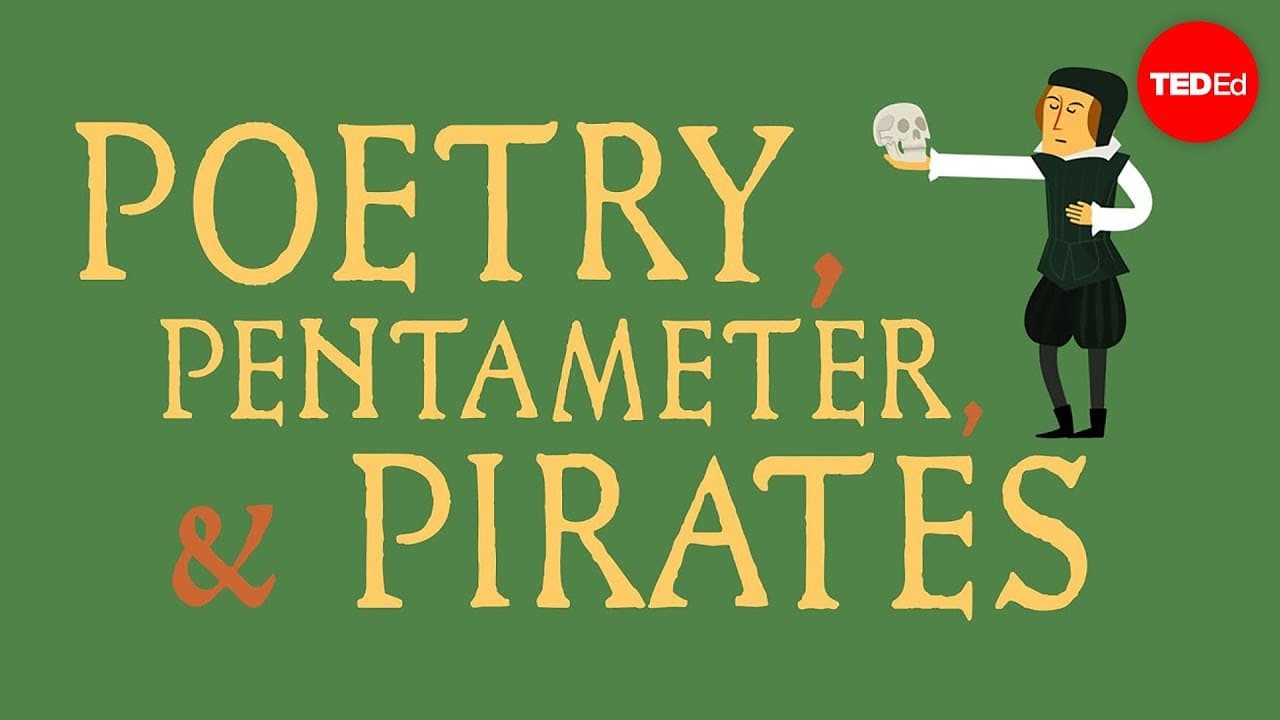
Why Shakespeare loved iambic pentameter - David T. Freeman and Gregory Taylor
TL;DR
Shakespeare's language is poetic, using stress and meter to create rhythmic lines that express emotions.
Transcript
To someone first encountering the works of William Shakespeare, the language may seem strange. But there is a secret to appreciating it. Although he was famous for his plays, Shakespeare was first and foremost a poet. One of the most important things in Shakespeare's language is his use of stress. Not that kind of stress, but the way we emphasize ... Read More
Key Insights
- 🤒 Shakespeare's language is poetic and rhythmic, with an emphasis on stress and meter to convey emotions effectively.
- 😒 Poets and songwriters use stressed and unstressed syllables to create rhythm and poetic meter in their works.
- 🫥 Iambic pentameter, Shakespeare's favorite meter, consists of five two-syllable iambs in a line of verse, showcasing his mastery of rhythm and language.
- 😑 The switch to iambic pentameter in emotional moments by Shakespeare's characters adds depth and intensity to their speeches, allowing for a more impactful expression of emotions.
- 🥰 Shakespeare's use of stress and meter reflects the natural rhythm of the heart, creating a profound connection between the audience and the characters.
- ⏯️ The use of iambic pentameter in Shakespeare's plays is not only for dramatic effect but also for the ease of memorization by actors and comprehension by the audience.
- 🫥 The unique rhythm of iambic pentameter adds a musical quality to Shakespeare's lines, enhancing their emotional impact and making them resonate with readers and listeners.
Install to Summarize YouTube Videos and Get Transcripts
Explore YouTube Video Summarizer or Get YouTube Transcript Extractor
Questions & Answers
Q: How does Shakespeare use stress in his language?
Shakespeare uses stress to emphasize certain syllables in words, creating rhythm and meter in his poetry. This technique enhances the emotional impact of his lines and makes them memorable to readers and listeners alike.
Q: What is iambic pentameter, and why did Shakespeare favor it?
Iambic pentameter is a meter consisting of five two-syllable iambs in a line of verse. Shakespeare favored it for its natural flow in the English language, making it easy for actors to memorize and audiences to understand, thus enhancing the dramatic impact of his poetry.
Q: Why do Shakespeare's characters switch to iambic pentameter for emotional moments?
Shakespeare's characters turn to iambic pentameter in emotional moments because it adds depth and intensity to their speeches, allowing them to express their innermost feelings and thoughts in a poetic and impactful manner.
Q: How does Shakespeare's use of meter and stress reflect the rhythm of the heart?
Shakespeare's rhythmic lines mirror the heartbeat in iambs, creating a natural and emotional connection between the audience and the characters. This rhythmic quality adds a layer of depth and resonance to his most poetic lines.
Summary & Key Takeaways
-
Shakespeare, known for his plays, was primarily a poet who used stress in his language to emphasize syllables.
-
Poets use stressed and unstressed syllables to create rhythm and meter in their poems, similar to music.
-
Shakespeare's favorite meter was iambic pentameter, with lines consisting of five two-syllable iambs, showcasing his rhythmic prowess.
Read in Other Languages (beta)
Share This Summary 📚
Summarize YouTube Videos and Get Video Transcripts with 1-Click
Try YouTube Summary with ChatGPT & Claude or YouTube Transcript Generator
Explore More Summaries from TED-Ed 📚






Summarize YouTube Videos and Get Video Transcripts with 1-Click
Try YouTube Summary with ChatGPT & Claude or YouTube Transcript Generator