Mysterious Madagascar "Cat" Blow-Darted for Science | National Geographic
TL;DR
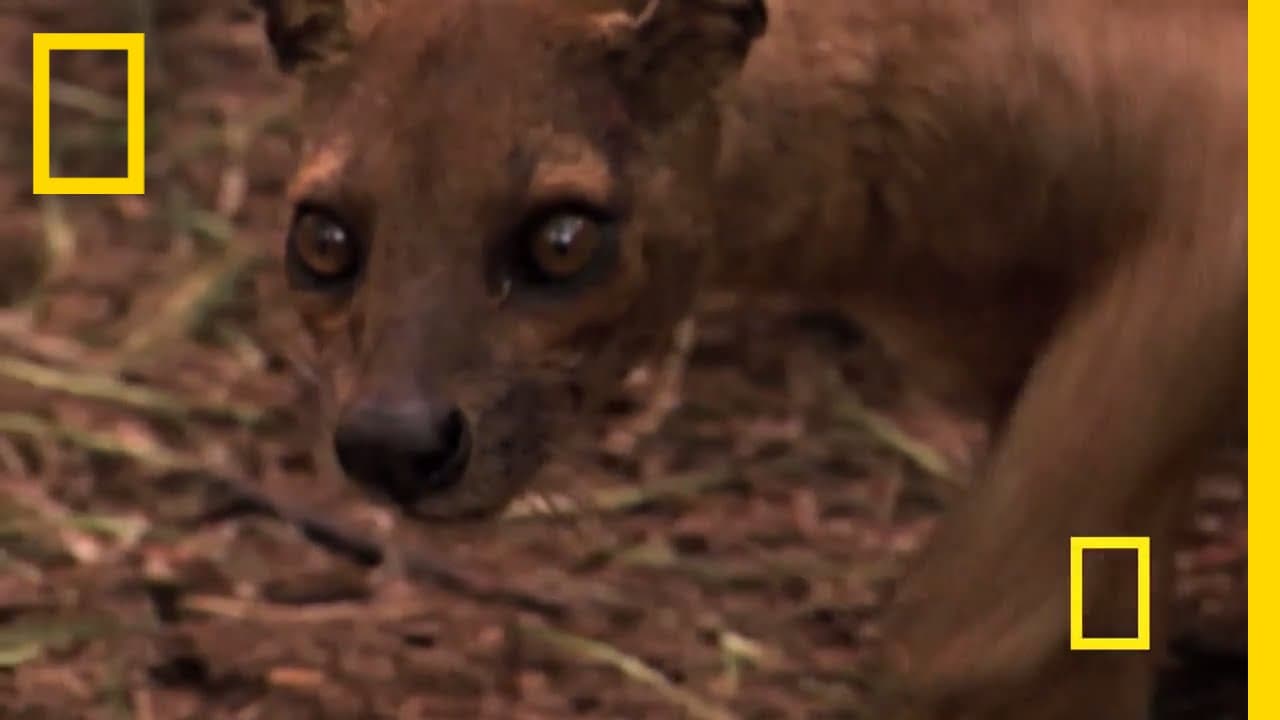
Biologist studies elusive Fosa, crucial predator in Madagascar, aiming for conservation with fewer than 3,000 left in the wild.
Transcript
fousa is the largest carnivore on Madagascar it's the top predator it's the natural king of the jungle I'm Luke dollar for about 17 years I've been coming to Madagascar a country biologist like myself like to think of as a petri dish of evolutionary history it's so unique that four out of five organisms you find here you won't find anywhere else on... Read More
Key Insights
- 🖐️ The Fosa is the largest carnivore in Madagascar, serving as the top predator and playing a crucial role in the ecosystem.
- ❓ Biologist Luke Dollar emphasizes the importance of studying and conserving the Fosa due to its dwindling population.
- 🟰 The Fosa's varied diet, including lemurs and rodents, demonstrates its role as an equal opportunity predator in the ecosystem.
- 🥳 The Fosa's activity cycle of hunting and resting throughout the day and night ensures its consistent presence in the ecosystem.
- ❓ Conservation efforts are crucial, as the Fosa's population is estimated to be fewer than 3,000 in the wild.
- 🧑⚕️ Understanding the Fosa's impact on the ecosystem is essential for maintaining the balance and health of Madagascar's biodiversity.
- 🇲🇬 The Fosa's role as a top predator highlights its significance in regulating populations and supporting the ecological systems in Madagascar.
Install to Summarize YouTube Videos and Get Transcripts
Explore YouTube Video Summarizer or Get YouTube Transcript Extractor
Questions & Answers
Q: Why is the Fosa considered the top predator in Madagascar?
The Fosa is the largest carnivore in Madagascar, preying on a variety of forest animals and playing a crucial role in maintaining the ecosystem's balance as the top predator.
Q: How does studying the Fosa contribute to conservation efforts in Madagascar?
By studying the Fosa, researchers like Luke Dollar can gather crucial information to aid in conservation efforts, as the Fosa's population is estimated to be fewer than 3,000 in the wild.
Q: What is the Fosa's diet composed of, and why is it important for the ecosystem?
The Fosa's diet includes lemurs, rodents, and reptiles, making it an equal opportunity predator that helps regulate populations and maintain the balance of the ecosystem.
Q: How does the Fosa's activity cycle contribute to its role in the ecosystem?
The Fosa is active both day and night, with a consistent pattern of hunting and resting, ensuring a steady presence as a top predator in Madagascar's ecosystem.
Summary & Key Takeaways
-
The Fosa is the largest carnivore in Madagascar, playing a crucial role as the top predator in the ecosystem.
-
Biologist Luke Dollar highlights the importance of studying and conserving the Fosa due to its dwindling population.
-
The Fosa's diet includes a variety of forest animals, making it an essential player in maintaining the balance of Madagascar's unique ecosystem.
Read in Other Languages (beta)
Share This Summary 📚
Summarize YouTube Videos and Get Video Transcripts with 1-Click
Try YouTube Summary with ChatGPT & Claude or YouTube Transcript Generator
Explore More Summaries from National Geographic 📚



Summarize YouTube Videos and Get Video Transcripts with 1-Click
Try YouTube Summary with ChatGPT & Claude or YouTube Transcript Generator