Preliminary Business Studies Business Management: Management Approaches
TL;DR
Explores classical, behavioral, and contingency management approaches.
Transcript
hi in this video we're looking at different management approaches in business so there's really three different management styles B being the classical approach the behavioural approach and the contingency approach so the classical approach to management really is based on the notion of there's really only one best way to do... Read More
Key Insights
- The classical management approach emphasizes a structured, hierarchical system with clear lines of authority and a focus on efficiency and productivity through specialized roles.
- Henri Fayol's classical management functions include planning, organizing, and controlling, which aim to maximize productivity and efficiency within a business.
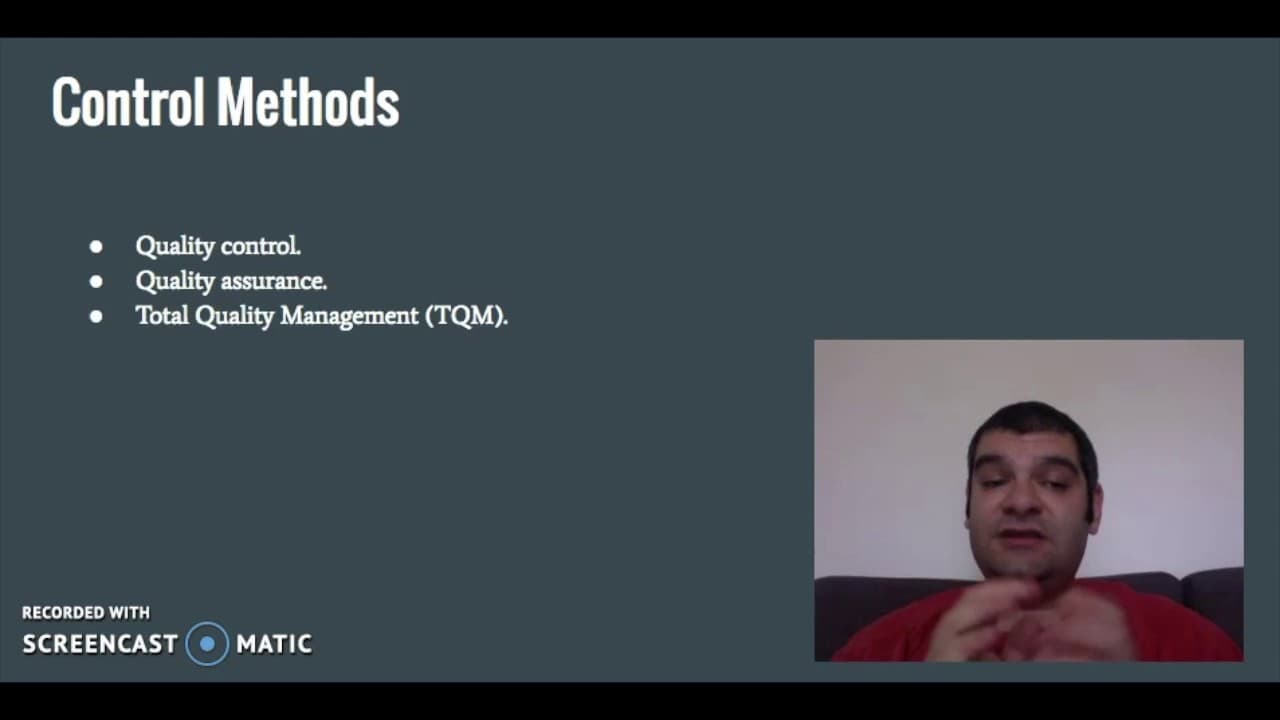
- Quality control, assurance, and total quality management are integral to the classical approach, ensuring product excellence through systematic checks and staff training.
- The behavioral management approach focuses on employee satisfaction and motivation, emphasizing the importance of social needs and team dynamics for increased job satisfaction and output.
- Elton Mayo's research highlights the non-economic aspects of worker satisfaction, advocating for a participative leadership style to foster a supportive work environment.
- The behavioral approach encourages a flatter organizational structure with wider spans of control, promoting democratic leadership and effective communication.
- The contingency management approach advocates for flexibility in management styles to adapt to changing circumstances, blending classical and behavioral elements as needed.
- Each management approach has its strengths and weaknesses, with the classical approach being more efficient but rigid, while the behavioral approach is more inclusive but slower in decision-making.
Install to Summarize YouTube Videos and Get Transcripts
Explore YouTube Video Summarizer or Get YouTube Transcript Extractor
Questions & Answers
Q: What is the classical management approach?
The classical management approach is a structured, hierarchical system that emphasizes efficiency and productivity through specialized roles and clear lines of authority. It is based on the principles outlined by Henri Fayol, focusing on planning, organizing, and controlling to maximize business productivity. This approach is popular in environments like assembly lines where tasks are repetitive and efficiency is paramount.
Q: How does the behavioral management approach differ from the classical approach?
The behavioral management approach differs from the classical approach by focusing on employee satisfaction and motivation rather than just efficiency. It recognizes the importance of social needs and team dynamics, advocating for a participative leadership style. This approach encourages a flatter organizational structure with wider spans of control, promoting democratic leadership and effective communication to enhance job satisfaction and productivity.
Q: What are the key functions of the classical management approach?
The key functions of the classical management approach, as outlined by Henri Fayol, include planning, organizing, and controlling. Planning involves setting strategic, tactical, and operational goals and determining methods to achieve them. Organizing arranges resources to maximize productivity and efficiency. Controlling involves evaluating and modifying tasks to ensure goals are met, incorporating quality control and assurance measures.
Q: How does the contingency management approach operate?
The contingency management approach operates by emphasizing flexibility in management styles to adapt to changing circumstances. It blends elements of both classical and behavioral approaches, allowing managers to switch between styles based on situational needs. This approach is particularly useful in dynamic environments where rigid adherence to one management style may not be effective, ensuring that management practices remain relevant and responsive.
Q: What role does quality management play in the classical approach?
Quality management plays a crucial role in the classical approach by ensuring product excellence through systematic checks and staff training. It includes quality control, which involves checking products at the end of the production process, and quality assurance, which ensures quality at various stages. Total Quality Management (TQM) extends this by fostering a culture of excellence throughout the organization, regardless of the product or role.
Q: Why is effective communication important in the behavioral approach?
Effective communication is vital in the behavioral approach because it ensures that employees are informed, engaged, and aligned with the organization's goals. By keeping employees in the loop, they understand their roles and contributions, leading to increased productivity and job satisfaction. Communication fosters a collaborative environment where employees feel valued and motivated, enhancing overall organizational performance.
Q: What are the challenges of the behavioral management approach?
The challenges of the behavioral management approach include the potential for slower decision-making due to the participative leadership style, which involves listening to and considering input from a larger number of employees. This can be time-consuming, especially under tight deadlines. Additionally, managing a flatter organizational structure with wider spans of control can be complex and may require more effort to maintain effective oversight and coordination.
Q: How does the hierarchy differ between classical and behavioral approaches?
In the classical approach, the hierarchy is a strict pyramid-shaped structure with a clear chain of command and minimal spans of control, where each manager oversees a small number of subordinates. In contrast, the behavioral approach features a flatter pyramid structure with wider spans of control, where one person may be responsible for a larger team. This encourages participative leadership and greater employee involvement in decision-making processes.
Summary & Key Takeaways
-
This video discusses three primary management approaches: classical, behavioral, and contingency. The classical approach is characterized by a structured hierarchy and focuses on efficiency through specialization. The behavioral approach emphasizes employee satisfaction and motivation, advocating for a participative leadership style.
-
Henri Fayol's functions of planning, organizing, and controlling are central to the classical approach, ensuring productivity and efficiency. Quality control, assurance, and total quality management are key components, focusing on product excellence through systematic checks and staff training.
-
The contingency approach stresses flexibility in management styles to adapt to changing circumstances. It blends classical and behavioral elements, allowing managers to switch between approaches based on situational needs. This approach highlights the importance of adaptability in effective management.
Read in Other Languages (beta)
Share This Summary 📚
Summarize YouTube Videos and Get Video Transcripts with 1-Click
Try YouTube Summary with ChatGPT & Claude or YouTube Transcript Generator
Explore More Summaries from Marco Cimino 📚



Summarize YouTube Videos and Get Video Transcripts with 1-Click
Try YouTube Summary with ChatGPT & Claude or YouTube Transcript Generator