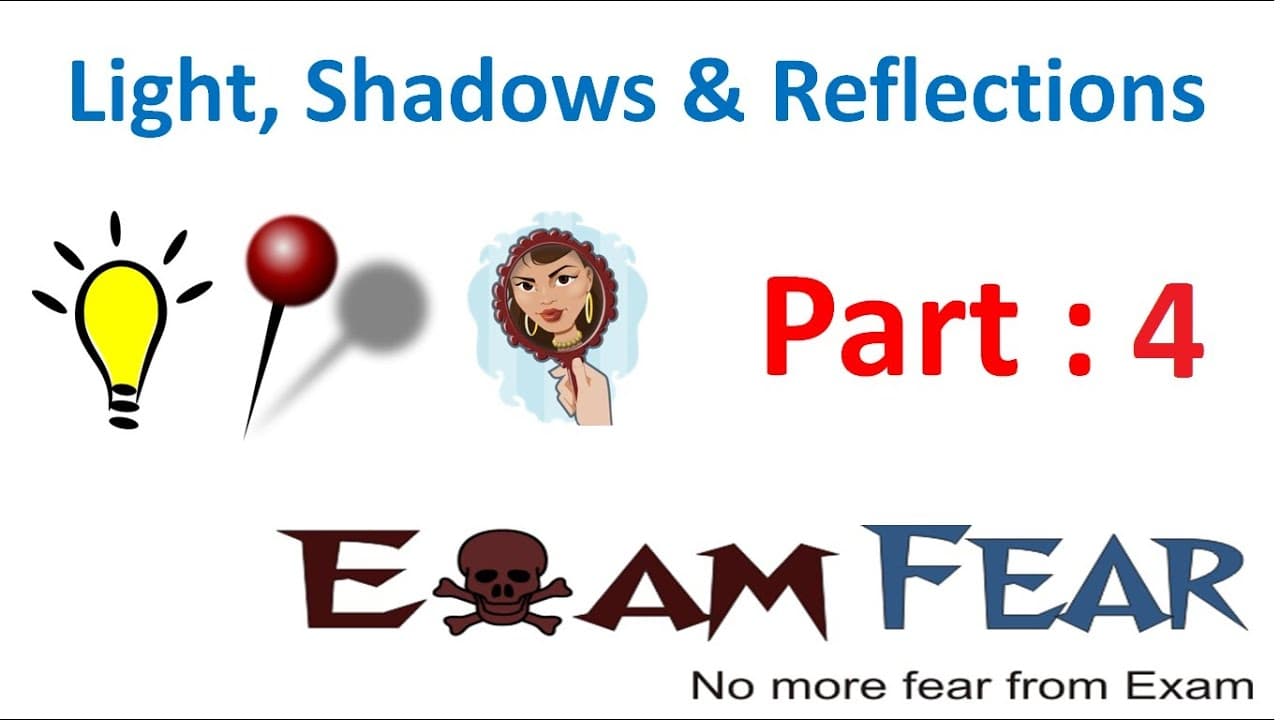
Physics Light Shadow & Reflection Part 4 (Interaction of Light) Class 6 VI
TL;DR
Light interacts with objects in three ways: reflection, absorption, and transmission, which determine whether objects are transparent, translucent, or opaque.
Transcript
hello friends this video on light shadows and reflection part 4 is brought to you by exam feel calm no more fear from exam so the question is in each of these of the why do we have these three different types of objects that's because light when falls on an object interacts in different ways with different objects so for example in some objects lig... Read More
Key Insights
- 🙂 Light can interact with objects in three ways: reflection, absorption, and transmission.
- 🙂 Transparent objects allow light to pass through completely, while opaque objects reflect or absorb light.
- 🙂 Translucent objects transmit some light but also reflect and absorb some.
- 🙂 The nature of the material and the medium through which light travels determine how light will interact with an object.
- 🙂 Mirrors, despite being made of glass, are considered opaque because they reflect light.
- 🛢️ Some oils can be transparent, while others are translucent.
- 💦 Wet paper becomes translucent because of its interaction with water.
Install to Summarize YouTube Videos and Get Transcripts
Explore YouTube Video Summarizer or Get YouTube Transcript Extractor
Questions & Answers
Q: What are the three possible interactions of light with an object?
Light can reflect off an object, be absorbed by it, or pass through it, depending on the nature of the object.
Q: How are materials classified as transparent, translucent, or opaque?
Transparent materials allow light to pass through completely, while opaque materials do not allow any light transmission. Translucent materials transmit some light but also reflect and absorb some.
Q: What determines how light interacts with an object?
The nature of the material of the object and the medium through which light travels determine how light will behave when it interacts with the object.
Q: Why is a mirror considered an opaque object?
Despite being made of glass, a mirror is considered opaque because it reflects light instead of allowing it to pass through. The reflective coating on the mirror's surface blocks the transmission of light.
Summary & Key Takeaways
-
Light interacts with objects in different ways, including reflection, absorption, and transmission.
-
The interaction of light with an object determines whether the object is transparent, translucent, or opaque.
-
Transparent objects allow light to pass through completely, while opaque objects reflect or absorb light, and translucent objects transmit some light but also reflect and absorb some.
Read in Other Languages (beta)
Share This Summary 📚
Summarize YouTube Videos and Get Video Transcripts with 1-Click
Try YouTube Summary with ChatGPT & Claude or YouTube Transcript Generator
Explore More Summaries from LearnoHub - Class 11, 12 📚


Summarize YouTube Videos and Get Video Transcripts with 1-Click
Try YouTube Summary with ChatGPT & Claude or YouTube Transcript Generator