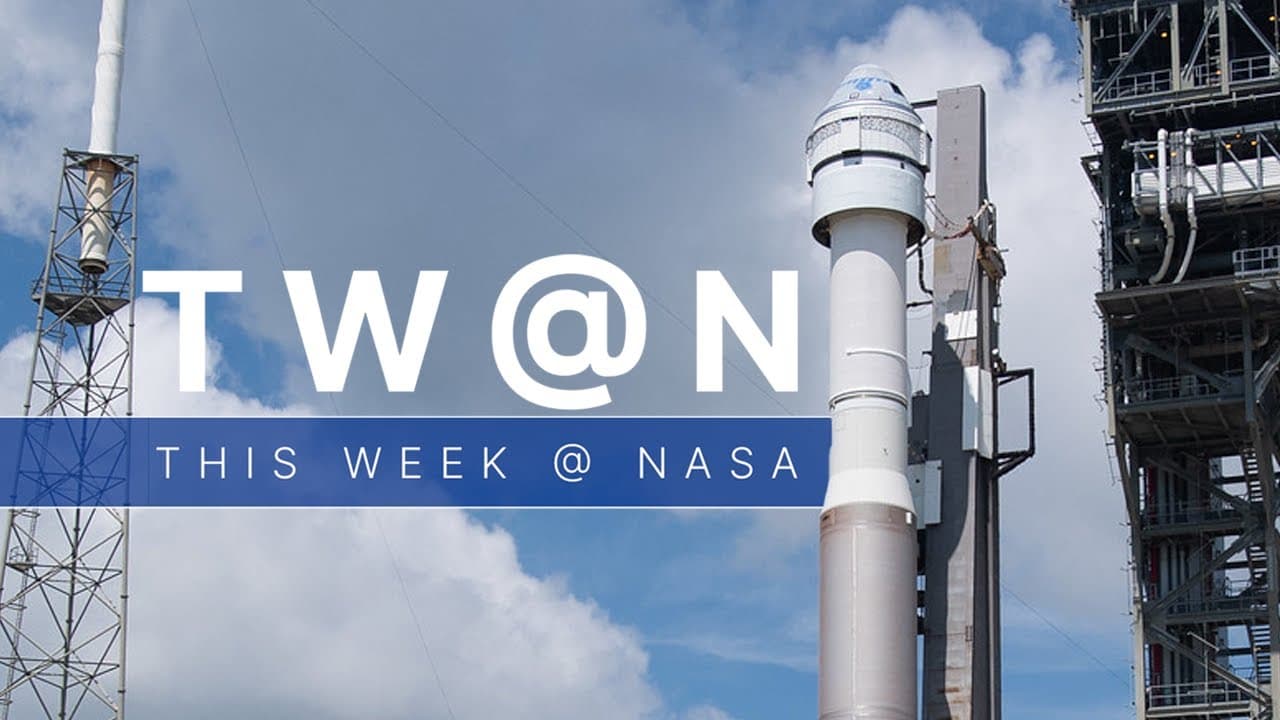
The Next Commercial Crew Test Flight to the Space Station on This Week @NASA – July 30, 2021
TL;DR
NASA's weekly update includes the second uncrewed test flight of Boeing's Starliner spacecraft, the Nauka module causing the space station to move out of orientation, the discovery of water vapor on Jupiter's moon Ganymede, an index tracking rainforest response to threats, winners of the Future-Scaping our Skies challenge, and the 50th anniversary of Apollo 15.
Transcript
The next commercial crew test flight to the space station … A new space station module … And another astronomical discovery by Hubble … a few of the stories to tell you about – This Week at NASA! NASA's Boeing Orbital Flight Test-2 mission to the International Space Station is the second uncrewed flight test of the CST-100 Starliner spacecraft as ... Read More
Key Insights
- ✈️ NASA is conducting the second uncrewed test flight of the CST-100 Starliner spacecraft to gather valuable data for certifying its crew transportation system.
- 🚉 The Nauka module docking to the space station caused an unplanned firing of thrusters, leading to the station's movement, but ground teams promptly stabilized it.
- 🌊 Hubble Space Telescope's data revealed the presence of water vapor in Ganymede's atmosphere, suggesting an ocean below its surface with more water than Earth's oceans.
- 🫰 A rainforest index developed by international researchers can aid policymakers in planning conservation and restoration activities to protect these vital ecosystems.
- 🧑🏭 NASA's Future-Scaping our Skies challenge gathered public input to envision the future of flight, considering various factors that may impact aviation in the next 30 years.
- 🏆 Winners of the challenge were announced, offering insights into how societal, technological, regulatory, and other changes could shape the future of aviation.
- 😒 The 50th anniversary of Apollo 15, a mission that successfully landed astronauts on the Moon, was celebrated, showcasing the first use of the Lunar Roving Vehicle.
Install to Summarize YouTube Videos and Get Transcripts
Explore YouTube Video Summarizer or Get YouTube Transcript Extractor
Questions & Answers
Q: What is the purpose of NASA's Boeing Orbital Flight Test-2 mission?
The mission aims to demonstrate the capabilities of the CST-100 Starliner spacecraft and Atlas V launch vehicle, gathering data to certify Boeing's crew transportation system for regular flights to and from the space station.
Q: What caused the International Space Station to move out of orientation after the Nauka module docked?
Flight controllers noticed the unplanned firing of the module's thrusters, which led to the station's movement. Ground teams worked to regain attitude control and stabilize the space station.
Q: What significant discovery did Hubble Space Telescope make regarding Ganymede?
Hubble's data unveiled evidence of water vapor in the atmosphere of Jupiter's moon Ganymede, indicating the presence of an ocean beneath its crust, estimated to hold more water than Earth's oceans.
Q: How will the index tracking rainforest response to threats aid conservation efforts?
The index allows scientists and policymakers to monitor how rainforests respond to threats like climate change and human land use, enabling better planning for conservation and forest restoration activities.
Q: What was the purpose of the Future-Scaping our Skies challenge?
The challenge sought input from the public to envision the future of flight considering various societal, technological, and environmental changes over the next 30 years, helping NASA anticipate aviation needs and make informed technology decisions.
Summary & Key Takeaways
-
NASA's Boeing Orbital Flight Test-2 is the second uncrewed test flight of the CST-100 Starliner spacecraft to demonstrate its capabilities and gather data for certifying crew transportation.
-
The Nauka Multipurpose Laboratory Module docked to the International Space Station but caused unplanned thruster firing, requiring ground teams to stabilize the station.
-
Hubble Space Telescope data revealed evidence of water vapor in Ganymede's atmosphere, suggesting the presence of an ocean below its surface.
-
Scientists developed an index to track rainforest response to threats, aiding in policy planning for conservation and forest restoration.
-
Winners of the Future-Scaping our Skies challenge were announced, where the public envisioned the future of flight considering various societal changes.
-
Apollo 15, the fourth NASA mission to land humans on the Moon, marked its 50th anniversary, known for the usage of the Lunar Roving Vehicle.
Read in Other Languages (beta)
Share This Summary 📚
Summarize YouTube Videos and Get Video Transcripts with 1-Click
Try YouTube Summary with ChatGPT & Claude or YouTube Transcript Generator
Explore More Summaries from NASA 📚
Summarize YouTube Videos and Get Video Transcripts with 1-Click
Try YouTube Summary with ChatGPT & Claude or YouTube Transcript Generator