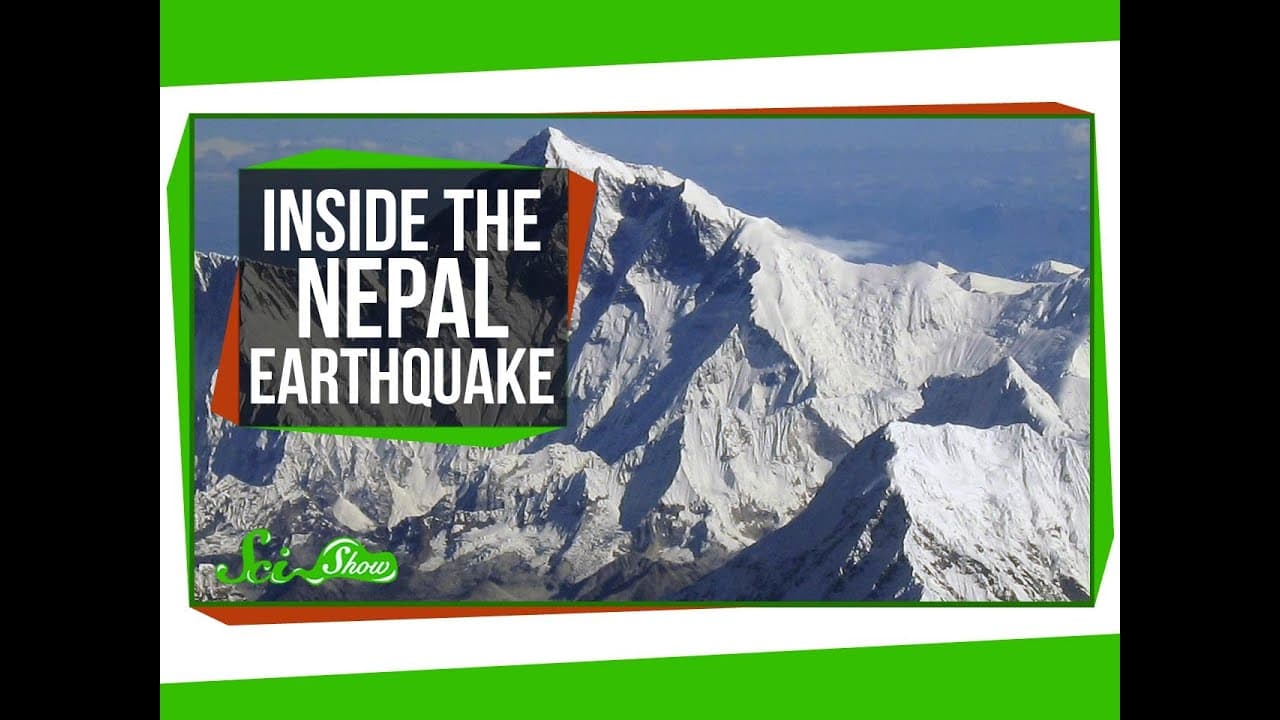
Inside the Nepal Earthquake
TL;DR
Nepal's recent earthquake was a reminder of its precarious geological position as it sits on a subduction zone and experiences rare but destructive earthquakes.
Transcript
On April 25th, an earthquake with a magnitude of 7.8 struck Nepal, claiming the lives of thousands of people and leveling buildings in and around the capital city of Kathmandu. You may have heard scientists quoted in the news, saying that this quake was “inevitable,” and in a sense, it was. Nepal is home to the tallest mountain in the world, after ... Read More
Key Insights
- 🧘 Nepal's recent earthquake was rare but devastating, highlighting the country's precarious geological position.
- 🌍 The earthquake was caused by the movements of the earth's crust in a subduction zone.
- 😣 Shallow earthquakes, like the one in Nepal, are more severe and cause more damage.
- 🆘 Donating to relief organizations can help support the victims of the Nepal earthquake.
- 🪽 Fossils can provide insights into the history of dinosaurs and their potential to fly.
- 🤨 The discovery of Yi qi raises questions about whether some dinosaurs could fly.
- 💁 Scientists have discovered a network of subterranean saltwater lakes in Antarctica, potentially containing unique forms of microbial life.
Install to Summarize YouTube Videos and Get Transcripts
Explore YouTube Video Summarizer or Get YouTube Transcript Extractor
Questions & Answers
Q: Why are strong earthquakes rare in Nepal?
Strong earthquakes are rare in Nepal because they only occur when stress gradually builds up in the rock around the fault lines, eventually leading to a release of energy in the form of an earthquake.
Q: What is the geological position of Nepal?
Nepal sits on a subduction zone, where the Indian Plate slides under the Eurasian Plate. Its southern border rests directly on the boundary between these two plates, on a formation called a thrust fault.
Q: How does the depth of an earthquake affect its severity?
The closer to the surface an earthquake strikes, the more severe its vibrations are and the more damage it can cause. The recent earthquake in Nepal was particularly destructive because it was shallow, with an epicenter just 15 kilometers below the surface.
Q: How can I help the victims of the Nepal earthquake?
You can help the victims of the Nepal earthquake by donating to nonprofits sending relief to the area. A list of these organizations can be found in the video description.
Summary & Key Takeaways
-
Nepal experienced a devastating earthquake of magnitude 7.8, claiming thousands of lives and causing widespread destruction.
-
Strong earthquakes are rare in this region, with only four earthquakes of magnitude six or higher occurring in the past hundred years.
-
Nepal sits on a subduction zone, where the Indian Plate slides under the Eurasian Plate, causing stress build-up and eventual release in the form of an earthquake.
Read in Other Languages (beta)
Share This Summary 📚
Summarize YouTube Videos and Get Video Transcripts with 1-Click
Try YouTube Summary with ChatGPT & Claude or YouTube Transcript Generator
Explore More Summaries from SciShow 📚


Summarize YouTube Videos and Get Video Transcripts with 1-Click
Try YouTube Summary with ChatGPT & Claude or YouTube Transcript Generator