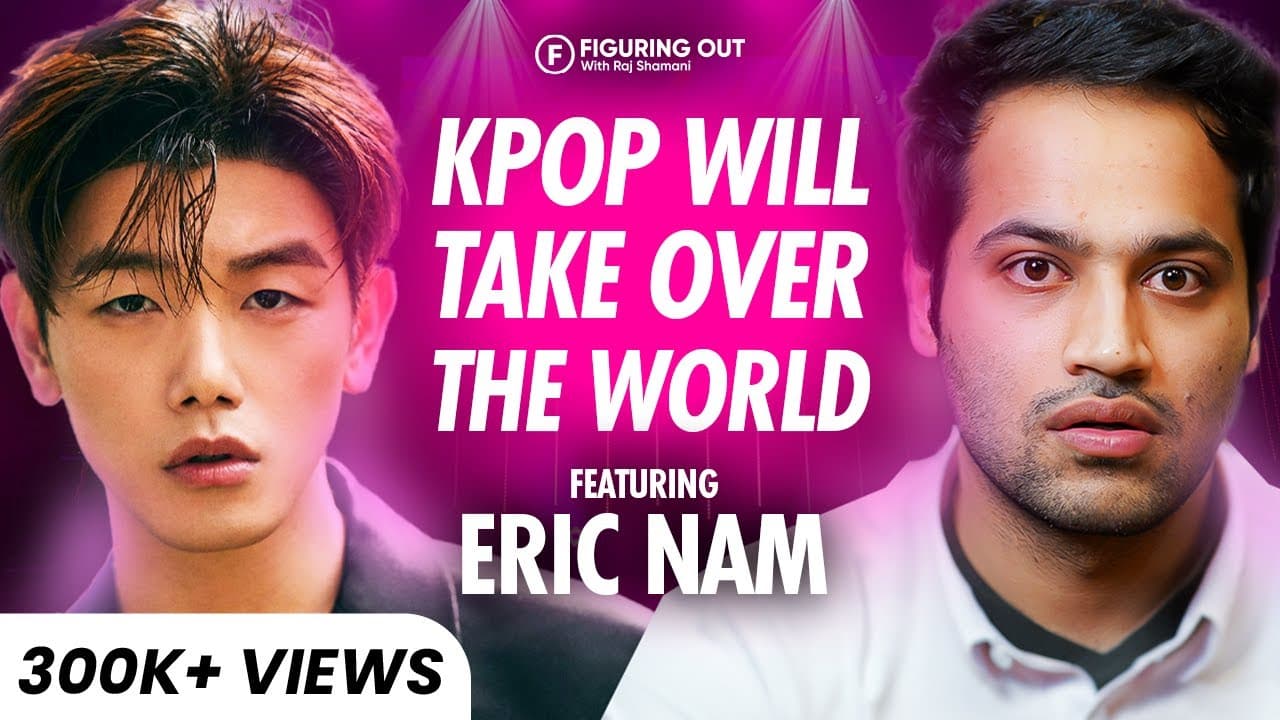
Breaking Down The K-Pop Industry With Eric Nam | FO 163 Raj Shamani
TL;DR
Eric Nam discusses cultural differences, K-pop's global rise, and the artist experience.
Transcript
there was a lot of bullying in school for you know a lot of like pulling your eyes back and saying you know ching chong swiss cheese I was like what are you talking about it was like a lot of you know racist kind of things that as a kid you just kind of deal with you don't even know and and for me I was like I don't belong here Eric Nom Eric Nom Er... Read More
Key Insights
- 🥺 Cultural duality can lead to feelings of alienation, particularly for individuals from immigrant backgrounds like Eric, who experienced this firsthand.
- 🍾 K-pop artists often undergo intense training and surface-level scrutiny, yet much of their commitment stems from personal choice and passion for performance.
- 🍾 The loyalty and engagement of K-pop fans create a distinct community that enhances the artist-audience relationship, fostering a unique environment of support.
- 🍾 The success of K-pop and Korean products globally is linked to a strategic focus on quality and aesthetics, integrated with effective government and corporate support.
- 👪 The pandemic significantly influenced cultural consumption patterns, as international audiences turned to Korean entertainment while confined to their homes.
- 👻 Embracing a multifaceted identity as an artist can enhance personal branding and allow individuals to connect with diverse audiences effectively.
- 💗 The evolution of marketing strategies in music shows a growing acceptance of various promotional methods, including community engagement and viral marketing.
Install to Summarize YouTube Videos and Get Transcripts
Explore YouTube Video Summarizer or Get YouTube Transcript Extractor
Questions & Answers
Q: What challenges did Eric face as a Korean-American growing up in the U.S.?
Growing up in the U.S., Eric Nam experienced cultural bullying, which made him feel out of place. He was often subjected to racially insensitive comments and struggled with feelings of belonging. This tumultuous experience shaped his perspective on identity and bridged the cultural gaps he felt between being Korean and American.
Q: How does Eric describe the treatment of K-pop artists in the industry?
Eric notes that while the K-pop industry is often viewed critically for its rigorous training regimes, he believes that many artists choose this path willingly, aspiring to become performers. He argues that with time, there has been a transition towards more artist-centered management, focusing on the mental and physical health of the artists to foster a supportive environment.
Q: What makes K-pop fandom culture unique?
Eric emphasizes that K-pop fandoms are incredibly devoted and community-oriented, creating a strong sense of belonging among fans and artists alike. This culture revolves around fan engagement, events, and collective experiences, which fosters a deep emotional connection that transcends merely enjoying the music.
Q: Why does Eric think Korean culture, including skincare and K-pop, is gaining global popularity?
Eric attributes the global rise of Korean culture to a combination of high-quality production in entertainment and the increased interest in Korean dramas and music during the pandemic. This has sparked curiosity about Korean lifestyle aspects, such as food and skincare, encouraging international audiences to want to experience Korean culture firsthand.
Q: What insights did Eric gain about the differences between American and Korean audiences?
Eric observes that Korean audiences tend to be very caring and engaged with the well-being of their artists, often showing support both emotionally and materially. In contrast, he finds that American audiences are generally more focused on individual achievements but are increasingly learning from the community aspects present in K-pop.
Q: What was Eric's evolution in terms of identity as an artist?
Eric struggled early in his career with being recognized for multiple roles, from music to TV, and questioned his brand. However, he shifted this perspective to embrace being multifaceted, seeing it as a unique strength rather than a limitation. He encourages celebrating diverse talents and recognizing that individuals can thrive in multiple disciplines.
Summary & Key Takeaways
-
Eric Nam shares his experiences growing up as a Korean-American, facing cultural challenges in both the U.S. and Korea, including instances of bullying due to his ethnicity.
-
He elaborates on the demanding nature of the K-pop industry, emphasizing the rigorous training that artists undergo, yet notes a growing trend toward prioritizing artists' well-being.
-
The discussion also highlights the global fascination with Korean culture, from K-pop to skincare, attributing this to years of effort in producing quality entertainment and a rise in interest during the pandemic.
Read in Other Languages (beta)
Share This Summary 📚
Summarize YouTube Videos and Get Video Transcripts with 1-Click
Try YouTube Summary with ChatGPT & Claude or YouTube Transcript Generator
Explore More Summaries from Figuring Out With Raj Shamani 📚

Summarize YouTube Videos and Get Video Transcripts with 1-Click
Try YouTube Summary with ChatGPT & Claude or YouTube Transcript Generator