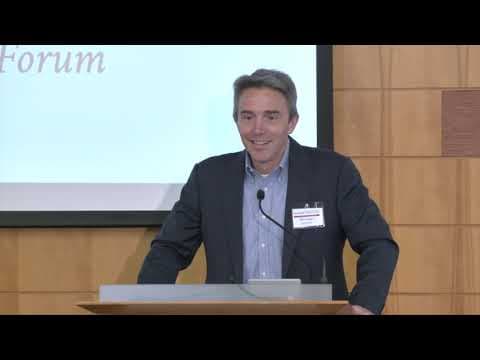
Keynote: Peter Orszag, CEO of Financial Advisory at Lazard Freres & Co LLC

TL;DR
Orszag discusses the changing landscape of Social Security, including deterioration in actuarial balance, growing gaps in life expectancy by income, and the need for automatic adjustments to address uncertainties.
Transcript
so it's a it is a real honor to introduce Peter orzag who will be delivering the keynote address today at our policy forum Peter is the CEO of financial advisory at lizard Ferris and Company LLC and leads the firm's advisory businesses that serve companies and governments across the globe he has served in a variety of influential Economic Policy ro... Read More
Key Insights
- 😘 Actuarial balance within Social Security has deteriorated significantly since 2005, driven by lower income and higher costs.
- 💗 Growing gaps in life expectancy by income have reduced the progressivity of the system and have implications for entitlement program benefits.
- 🎚️ Automatic adjustments, such as benefit adjustments at retirement and evolving the maximum taxable earnings level, can help address uncertainties in Social Security projections.
Install to Summarize YouTube Videos and Get Transcripts
Explore YouTube Video Summarizer or Get YouTube Transcript Extractor
Questions & Answers
Q: What were the main objectives of Peter Orszag and Peter Diamond's book on Social Security reform?
Orszag and Diamond aimed to develop a reform plan that restored actuarial balance within Social Security by balancing costs and income. They wanted to address the lack of traditional plans focusing on private accounts or equity premium plays.
Q: How has the actuarial balance within Social Security changed since 2005?
The actuarial balance has deteriorated significantly, with a doubling of the imbalance from 1.9% to 3.6% of taxable payroll. This is driven by lower-than-expected income and higher costs, deviating from initial projections.
Q: How does the growing gap in life expectancy by income impact entitlement program benefits?
As life expectancy gaps widen, higher-income individuals receive larger lifetime benefits compared to lower-income Americans. This reduces the progressivity of the overall system, as higher-income individuals receive benefits for a longer period of time relative to lower-income individuals.
Q: What suggestions does Orszag offer for addressing uncertainties in Social Security projections?
Orszag emphasizes the need for automatic adjustments in response to changes in mortality rates and income inequality. He proposes adjusting benefits at retirement to reflect changes in life expectancy and dynamically evolving the maximum taxable earnings level to align with a desired share of taxable payroll.
Summary & Key Takeaways
-
Peter Orszag highlights the deterioration of actuarial balance within Social Security since the publication of his book in 2006.
-
He discusses the growing gaps in life expectancy by income and its impact on entitlement program benefits.
-
Orszag emphasizes the need for automatic adjustments in Social Security to address uncertainties and promote long-term stability.
Read in Other Languages (beta)
Share This Summary 📚
Summarize YouTube Videos and Get Video Transcripts with 1-Click
Try YouTube Summary with ChatGPT & Claude or YouTube Transcript Generator
Explore More Summaries from Stanford Institute for Economic Policy Research (SIEPR) 📚

Summarize YouTube Videos and Get Video Transcripts with 1-Click
Try YouTube Summary with ChatGPT & Claude or YouTube Transcript Generator