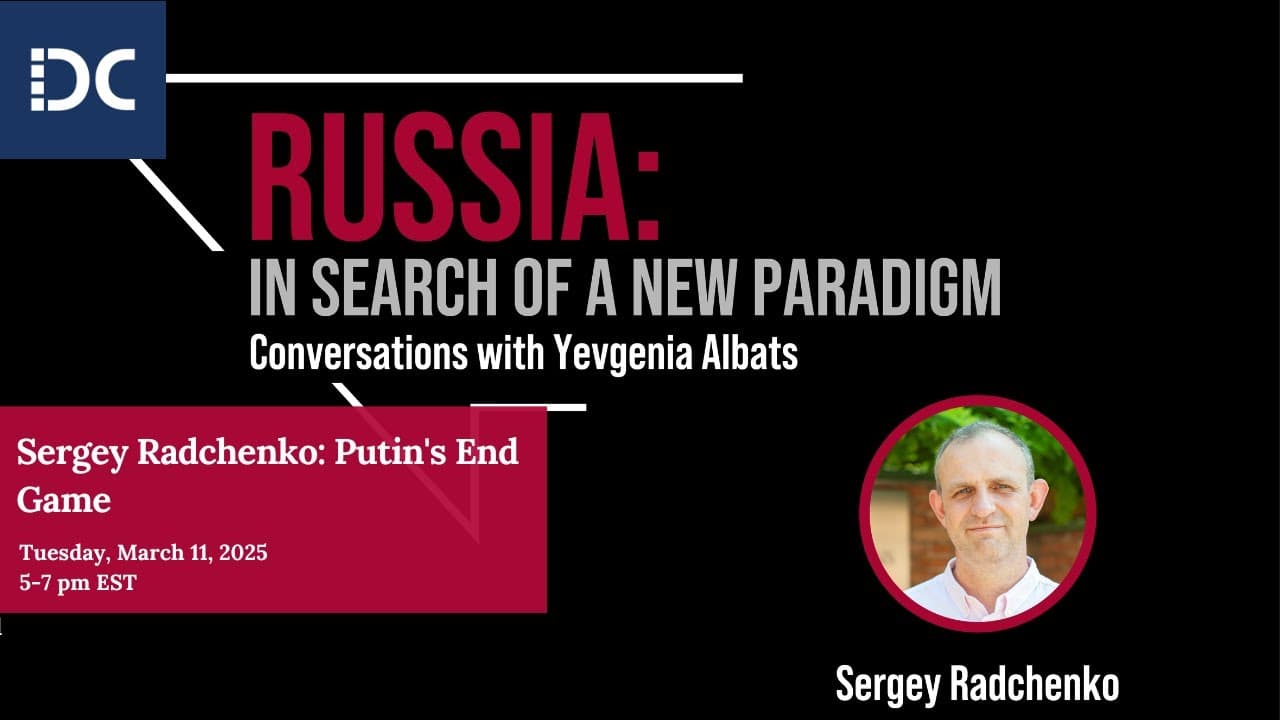
Sergey Radchenko: Putin's End Game
TL;DR
Analysis of Russia's geopolitical ambitions and historical parallels.
Transcript
good afternoon and welcome uh my name is e Blau I'm the faculty director of the D C with Russian year in studies and we're very pleased to have you here to have you join us for the ninth session of uh our year-long series Russia in search of a new paradigm conversations witha albertz in this series uh which meets on Tuesdays from 5:... Read More
Key Insights
- Putin's endgame involves seeking legitimacy and recognition from Western powers, drawing parallels to Soviet leaders' strategies during the Cold War.
- The Yalta Agreement serves as a historical reference for Russia's current geopolitical moves, with Putin aiming for a similar division of influence.
- Putin's invasion of Ukraine is seen as a strategic move to assert Russia's power, despite the economic and military challenges it presents.
- The current global landscape is compared to the Cold War, with nuclear deterrence and proxy wars being significant factors.
- China's role in the geopolitical equation is crucial, with its relationship with Russia being strategic yet cautious.
- The idea of a superpower condominium involving the US, China, and Russia is explored, highlighting the complexities of such alliances.
- The historical context of Soviet-US relations during the Cold War is used to understand current US-Russia dynamics.
- The importance of individual leaders' decisions in shaping geopolitical outcomes is emphasized, with a focus on Putin's ambitions.
Install to Summarize YouTube Videos and Get Transcripts
Explore YouTube Video Summarizer or Get YouTube Transcript Extractor
Questions & Answers
Q: What is Putin's main goal in seeking recognition from Western powers?
Putin's main goal in seeking recognition from Western powers is to legitimize his leadership and Russia's status as a global superpower. This quest for legitimacy is compared to the strategies of Soviet leaders during the Cold War, who sought similar recognition to solidify their power domestically and internationally.
Q: How does the Yalta Agreement relate to current geopolitical dynamics?
The Yalta Agreement is referenced as a historical precedent for dividing global influence among superpowers. Putin's current geopolitical moves are seen as an attempt to recreate a similar division of influence, with Russia, the US, and China as key players. This historical context helps explain Russia's actions in Ukraine and its broader ambitions.
Q: Why did Putin choose to invade Ukraine despite the challenges?
Putin's decision to invade Ukraine is seen as a strategic move to assert Russia's power and influence. Despite the economic and military challenges, the invasion is viewed as a means to achieve long-term geopolitical goals, including undermining Western influence and securing Russia's position as a dominant regional power.
Q: How does the current global landscape compare to the Cold War?
The current global landscape is compared to the Cold War in terms of nuclear deterrence and proxy wars. While there are significant differences, such as the multipolar nature of today's world, the presence of nuclear weapons and geopolitical rivalries create parallels with the Cold War era.
Q: What is the role of China in the current geopolitical equation?
China plays a crucial role in the current geopolitical equation, with its relationship with Russia being both strategic and cautious. The potential for a superpower condominium involving the US, China, and Russia is explored, highlighting the complexities and challenges of such alliances in the modern context.
Q: What are the challenges of forming a superpower condominium?
Forming a superpower condominium involving the US, China, and Russia faces several challenges, including differing geopolitical interests and historical rivalries. The complexities of aligning these powers' agendas and the potential for backstabbing, as seen in past Soviet-US relations, complicate the feasibility of such an alliance.
Q: How do individual leaders' decisions impact geopolitical outcomes?
The discussion emphasizes the significant impact of individual leaders' decisions on geopolitical outcomes. Leaders like Putin, who are driven by personal ambitions and historical narratives, play a crucial role in shaping global dynamics, often leading to unexpected and complex geopolitical situations.
Q: What lessons can be drawn from Soviet-US relations during the Cold War?
Soviet-US relations during the Cold War offer lessons in understanding current US-Russia dynamics, particularly in terms of strategic competition and the importance of nuclear deterrence. The historical context provides insights into the motivations and strategies of current leaders, highlighting the continuity of certain geopolitical patterns.
Summary & Key Takeaways
-
The discussion highlights Putin's quest for legitimacy and recognition from Western powers, drawing parallels to Soviet leaders' strategies during the Cold War. It explores the historical context of the Yalta Agreement and its influence on current geopolitical dynamics.
-
Putin's invasion of Ukraine is analyzed as a strategic move to assert Russia's power, despite the economic and military challenges it presents. The conversation also delves into the role of nuclear deterrence and proxy wars in the current global landscape.
-
The relationship between China and Russia is examined, with a focus on the potential for a superpower condominium involving the US, China, and Russia. The complexities of such alliances are discussed, along with the historical context of Soviet-US relations during the Cold War.
Read in Other Languages (beta)
Share This Summary 📚
Summarize YouTube Videos and Get Video Transcripts with 1-Click
Try YouTube Summary with ChatGPT & Claude or YouTube Transcript Generator