Color and Sound Perception Explained by Theoretical Physicist and Nobel Laureate Frank Wilczek
TL;DR
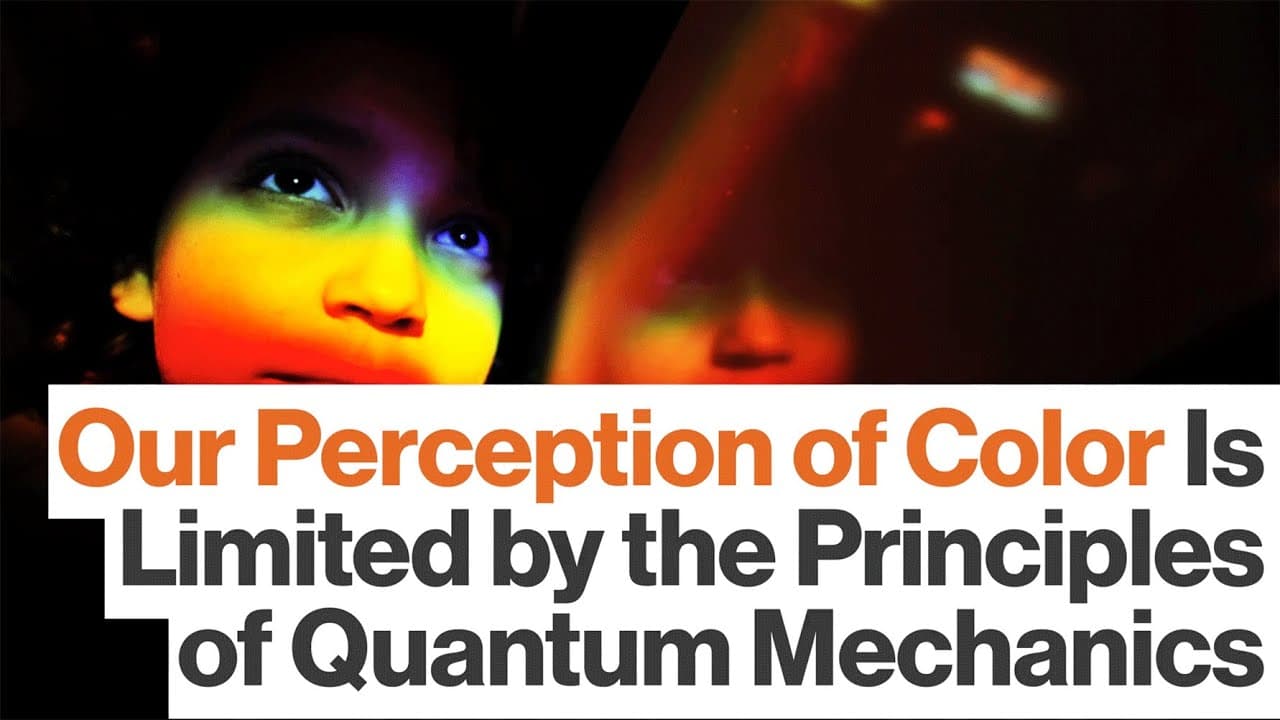
Human vision relies on trichromatic perception and limits our ability to see a vast spectrum of electromagnetic radiation.
Transcript
In the nineteenth century with Maxwell’s synthesis of the laws of electricity and magnetism physicists started to realize that what we perceive as light is deeply understood as a kind of disturbance, electric and magnetic fields. That gave us a new concept of the possibilities of perception of light that show us that we’re missing a lot. The electr... Read More
Key Insights
- 📺 Trichromatic vision limits human color perception to three averages.
- ❓ Different creatures can perceive a wider spectrum of colors due to sampling electromagnetic radiation.
- 🦾 Human color perception is limited by quantum mechanical principles.
- 👂 Color perception mixes colors, while sound perception preserves distinct tones.
- 👂 Spatial resolution is more detailed in visual information compared to sound.
- 🐎 The speed of electromagnetic radiation impacts how it is processed in color perception.
- 😃 The human eye's cone cells and proteins play a crucial role in synthesizing perceived colors.
Install to Summarize YouTube Videos and Get Transcripts
Explore YouTube Video Summarizer or Get YouTube Transcript Extractor
Questions & Answers
Q: How do Maxwell's equations relate to color perception?
Maxwell's equations show that light is an electromagnetic disturbance perceived as color through trichromatic vision, limiting human perception to three averages.
Q: How does human color perception compare to that of other creatures?
Human color perception is limited to three averages, while other creatures can see more colors, sampling electromagnetic radiation beyond the human spectrum.
Q: Why is human perception of color limited by the principles of quantum mechanics?
Human perception of color is limited by the principles of quantum mechanics because it relies on the all-or-none process of photons triggering changes in the structure of proteins.
Q: How does the perception of color differ from the perception of sound?
The perception of color mixes different colors to create an intermediate color, unlike sound perception that preserves distinct tones even in chords.
Summary & Key Takeaways
-
Maxwell's equations reveal that light is an electromagnetic disturbance perceived as color through trichromatic vision.
-
Human perception of color is limited to three averages, while other creatures can see more colors.
-
Sound perception differs from color perception in preserving distinct tones versus mixing colors.
Read in Other Languages (beta)
Share This Summary 📚
Summarize YouTube Videos and Get Video Transcripts with 1-Click
Try YouTube Summary with ChatGPT & Claude or YouTube Transcript Generator
Explore More Summaries from Big Think 📚




Summarize YouTube Videos and Get Video Transcripts with 1-Click
Try YouTube Summary with ChatGPT & Claude or YouTube Transcript Generator