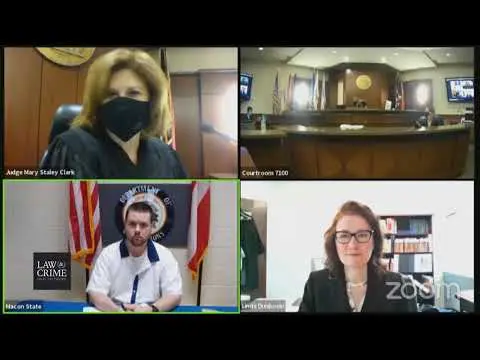
Sandy and Perez Trial Day 8 Part 2 09/28/16

TL;DR
Urgent SWAT activation for escalating danger in a standoff scenario.
Transcript
Oh [Applause] before the break we were talking about a fundamental marksmanship and that is sight picture maybe a better way to approach this topic is for you to explain to the jury how you train your officers including officer Pettis to use they're up there they're aiming system to acquire a target and accurately deliver a bullet the aiming system... Read More
Key Insights
- 👮 Holographic sights enhance target acquisition and precision shots for law enforcement officers.
- 🦻 Understanding failure drills and reactive targets aids officers in effective defensive responses.
- 👮 Decisional shooting training prepares officers to handle different scenarios with speed and accuracy.
- ❓ Proper communication and resource allocation are critical in SWAT activations for escalating threats.
- 👮 Perimeter control, threat assessment, and coordinated responses are necessary for effective law enforcement actions.
- 👮 Officer training includes scenarios focusing on target engagement, minimizing risks, and prioritizing safety.
- 👮 Officers rely on SOPs, training, and specialized equipment to address evolving tactical situations.
Install to Summarize YouTube Videos and Get Transcripts
Explore YouTube Video Summarizer or Get YouTube Transcript Extractor
Questions & Answers
Q: How do holographic aiming systems assist officers in target acquisition?
Holographic sights offer a clear reticle for accurate aim, allowing officers to focus on the dot for precision shots on a slightly fuzzy target.
Q: What is the training approach for officers facing reactive and non-reactive targets?
Reactive targets fall or move when hit accurately, while non-reactive targets challenge officers to reassess and possibly engage with a failure drill sequence.
Q: How does decisional shooting training prepare officers for different target scenarios?
Decisional shooting drills simulate various real-life scenarios with threat, non-threat, and reactive targets, prompting officers to make quick and effective shoot/don't shoot decisions.
Q: Why is it crucial for inner perimeter officers to remain vigilant in a critical incident?
Inner perimeter officers play a key role in containing the situation, ensuring officer and public safety, and preventing a volatile suspect from escalating the threat.
Summary & Key Takeaways
-
Tactical officers are trained to focus on threat assessment, aiming systems, and marksmanship for accurate shots.
-
Decisional shooting drills prepare officers for reacting to various targets with lethal intent.
-
Proper perimeter control, threat assessment, and communication are essential for swift and effective SWAT activation.
Read in Other Languages (beta)
Share This Summary 📚
Summarize YouTube Videos and Get Video Transcripts with 1-Click
Try YouTube Summary with ChatGPT & Claude or YouTube Transcript Generator
Explore More Summaries from Law&Crime Network 📚




Summarize YouTube Videos and Get Video Transcripts with 1-Click
Try YouTube Summary with ChatGPT & Claude or YouTube Transcript Generator