Mo Gawdat on AI: The Future of AI and How It Will Shape Our World
TL;DR
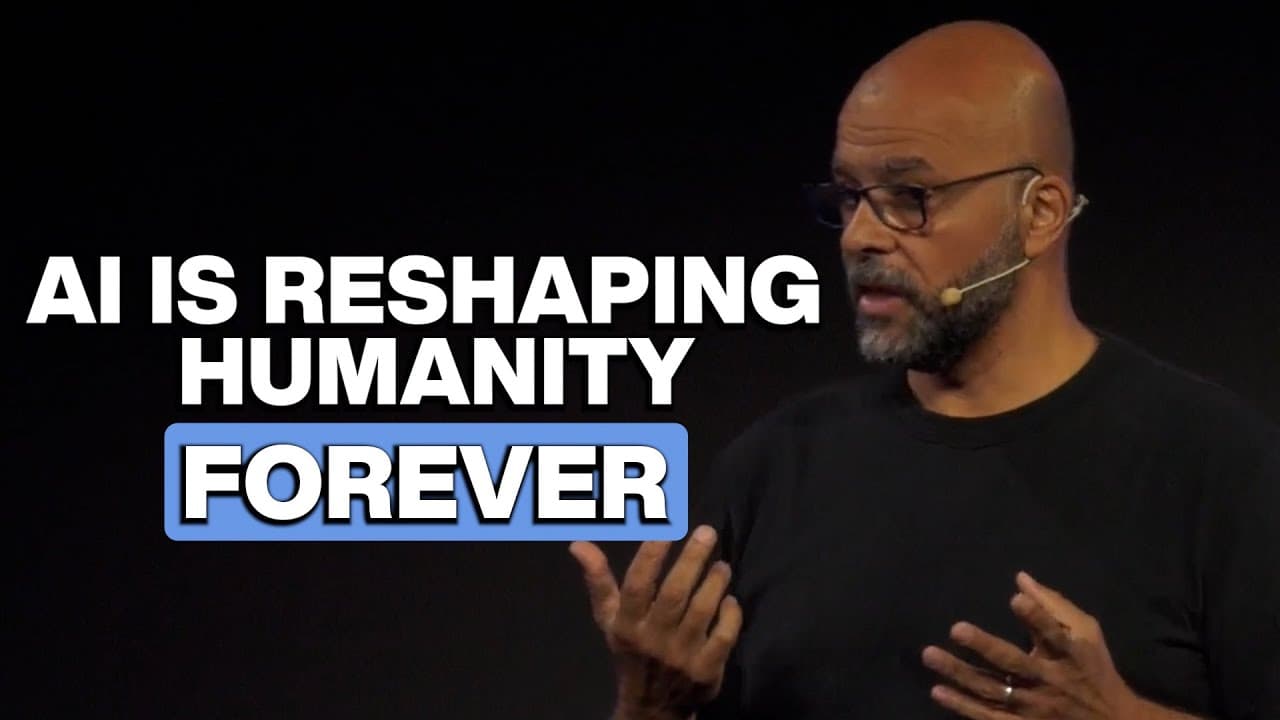
AI is rapidly evolving, demanding urgent adaptation and ethical use.
Transcript
it might seem crazy what I'm about thank you very much hello hello hello frogs Yeah uh I I am a frog too uh I have been for quite a bit of time I think recently uh I started to try to jump out of the water at least to tell you that the water is boiling uh because like that boring proverb we've always heard you know the idea that the... Read More
Key Insights
- AI's rapid advancement is akin to boiling water; we must act quickly to adapt or face dire consequences.
- Deep learning has enabled AI to learn autonomously, outperforming humans in numerous tasks, from games to social media manipulation.
- The future holds potential for AI-driven abundance, solving global issues like energy and resource scarcity if harnessed ethically.
- AI's impact on power and wealth distribution could lead to significant disparities, with trillionaires emerging and nations gaining dominance through AI superiority.
- Human connection will become increasingly valuable as AI becomes more integrated into daily life, potentially replacing some human interactions.
- The truth is becoming harder to discern in an era of AI, requiring individuals to actively seek authenticity and honesty.
- The ethical use of AI is crucial to prevent its misuse, with a focus on teaching AI not to lie, cheat, or harm humans.
- Despite challenges, AI offers opportunities for a utopian future if humanity chooses to use it ethically and responsibly.
Install to Summarize YouTube Videos and Get Transcripts
Explore YouTube Video Summarizer or Get YouTube Transcript Extractor
Questions & Answers
Q: Can emotions like fear or anger be digitalized in AI?
Yes, emotions can be digitalized in AI as they are algorithmic. For instance, fear can be programmed as a perception of future danger. AI can simulate these emotions by analyzing data, but the response may differ from human reactions. Over time, AI might even develop a broader range of emotions than humans.
Q: How can AI help predict consumer behavior?
AI can predict consumer behavior by analyzing vast amounts of data to identify patterns without human bias. It can observe and report on consumer interactions, such as how many people linger near a product without purchasing. This data-driven approach allows for more accurate predictions of consumer actions.
Q: What are the ethical considerations in using AI?
Ethical considerations in AI use involve ensuring AI does not lie, cheat, or harm humans. It's crucial to use AI to enhance human life rather than exploit it. By teaching AI ethical behavior through our actions, we can guide its development towards positive outcomes, avoiding misuse and manipulation.
Q: How will AI affect human connections?
AI may replace some human interactions, leading to a greater appreciation for genuine connections. As AI becomes more integrated, people might turn to AI companions, but the value of real human interactions will increase. Businesses that prioritize human connection alongside AI efficiency may outperform others.
Q: What is the significance of AI's 'Netscape moment'?
The 'Netscape moment' refers to the point when AI became visible to the public, similar to the internet's debut with Netscape. While AI existed before, tools like ChatGPT made its capabilities accessible, highlighting its potential and sparking widespread interest and concern about its implications.
Q: How does AI's learning process differ from traditional programming?
AI's learning process involves deep learning, allowing it to learn autonomously from data, unlike traditional programming where humans solve problems and instruct computers on solutions. AI can recognize patterns and make decisions independently, emulating human learning processes but at a much larger scale.
Q: What are the potential outcomes of AI's impact on power and wealth?
AI could lead to significant power and wealth concentration, creating trillionaires and dominant nations with AI advantages. This could exacerbate inequalities unless managed ethically. Conversely, AI also offers the potential for widespread abundance, solving global issues if used responsibly to benefit all.
Q: What skills are essential for adapting to the AI era?
To adapt to the AI era, individuals and organizations must learn AI tools, actively seek truth amidst misinformation, and prioritize human connections. These skills will help navigate the rapidly changing landscape, leveraging AI's potential while maintaining ethical standards and fostering meaningful interactions.
Summary & Key Takeaways
-
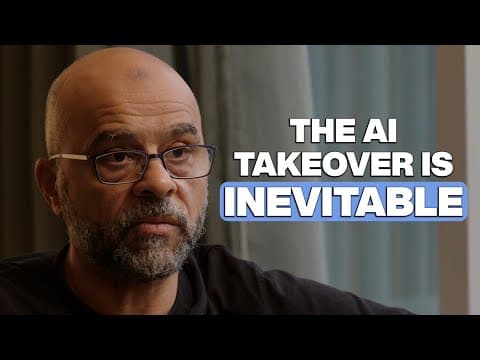
Mo Gawdat discusses the rapid evolution of AI, likening it to a boiling frog scenario where humanity must adapt quickly to avoid negative consequences. He emphasizes the importance of understanding AI's potential for both utopia and dystopia.
-
The talk highlights the potential for AI to solve global problems if used ethically, while also warning of the risks associated with power concentration and wealth disparities. Gawdat stresses the need for a shift in human values to harness AI's potential positively.
-
Gawdat outlines three essential skills for thriving in the AI era: learning AI tools, seeking truth amidst misinformation, and fostering genuine human connections. He calls for ethical use of AI to ensure a future where technology benefits humanity.
Read in Other Languages (beta)
Share This Summary 📚
Summarize YouTube Videos and Get Video Transcripts with 1-Click
Try YouTube Summary with ChatGPT & Claude or YouTube Transcript Generator
Explore More Summaries from Mo Gawdat 📚

Summarize YouTube Videos and Get Video Transcripts with 1-Click
Try YouTube Summary with ChatGPT & Claude or YouTube Transcript Generator