Mutual Fund/ETF Keywords & What They Mean

TL;DR
Understanding the key words in mutual fund and ETF names can help investors quickly grasp important details about the fund's investment strategy and risk profile.
Transcript
it can be tricky to navigate the world of mutual funds and ETFs define the investment that you were looking for with over 9,000 mutual funds and over 1700 ATF's to choose from in the US alone it can be an overwhelming prospect to go through the pile and find the ones you're interested in luckily the names that these funds go by are often organized ... Read More
Key Insights
- 🥹 Mutual funds and ETFs have diverse naming conventions, with some providing clear information about the fund's investment strategy and holdings.
- 🍉 Terms like "aggressive" or "conservative" in a fund's name indicate the level of risk the fund takes on.
- 👲 Words like "small cap" or "large cap" provide information about the size of the companies the fund invests in.
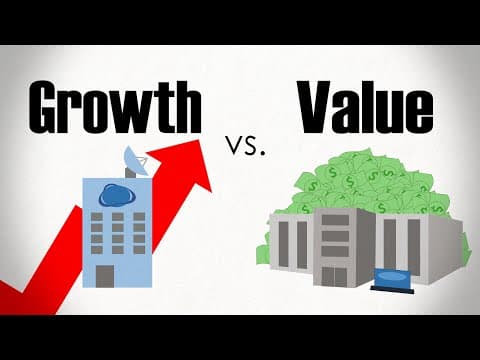
- ❓ Keywords like "growth" or "value" give insights into the fund's investment style and objectives.
- 😒 Bond funds often use keywords like "government," "investment-grade," or "junk" to describe the type of bonds they hold.
- 👨💻 Codes in a fund's name, such as ACC or INC, indicate how dividends and interest are handled by the fund.
- 🔙 Letters at the end of the name, like A, B, C, or D, indicate the type of fees charged by the fund.
Install to Summarize YouTube Videos and Get Transcripts
Explore YouTube Video Summarizer or Get YouTube Transcript Extractor
Questions & Answers
Q: What is the difference between a passive index fund and an active fund?
Passive index funds track a specific index, such as the S&P 500, and aim to replicate its performance. Active funds, on the other hand, have fund managers who aim to outperform the market by making investment decisions based on their analysis and research.
Q: What does the term "small cap" mean in a fund's name?
"Small cap" refers to companies with a smaller market capitalization. These companies are generally considered to have more growth potential but also carry higher risk compared to large-cap companies.
Q: What is the significance of the terms "value" and "growth" in a fund's name?
"Value" funds invest in established companies with strong fundamentals that may be undervalued by the market. "Growth" funds focus on companies with high growth potential, which may be more expensive but offer the potential for higher returns.
Q: What do the codes ACC, INC, and D in a fund's name represent?
ACC stands for accumulation, meaning dividends and interest are reinvested by the fund. INC stands for income, indicating that the fund pays out dividends and interest to investors. D represents distribution, where the fund distributes dividends and interest to investors.
Summary & Key Takeaways
-
Mutual funds and ETFs have a wide variety of names, but they often provide important information about the fund's investing style and holdings.
-
Names of passive index funds, like the Vanguard S&P 500 ETF, are straightforward and indicate which index they track.
-
Active funds can be harder to interpret, but key terms in the name can provide insights into the fund's investment style, such as "aggressive," "growth," or "value."
-
Codes like ACC, INC, and D provide details about the fund's structure and how dividends are handled.
Read in Other Languages (beta)
Share This Summary 📚
Summarize YouTube Videos and Get Video Transcripts with 1-Click
Try YouTube Summary with ChatGPT & Claude or YouTube Transcript Generator
Explore More Summaries from The Plain Bagel 📚





Summarize YouTube Videos and Get Video Transcripts with 1-Click
Try YouTube Summary with ChatGPT & Claude or YouTube Transcript Generator