What Are the Best Camera Angles for Food Photography?
TL;DR
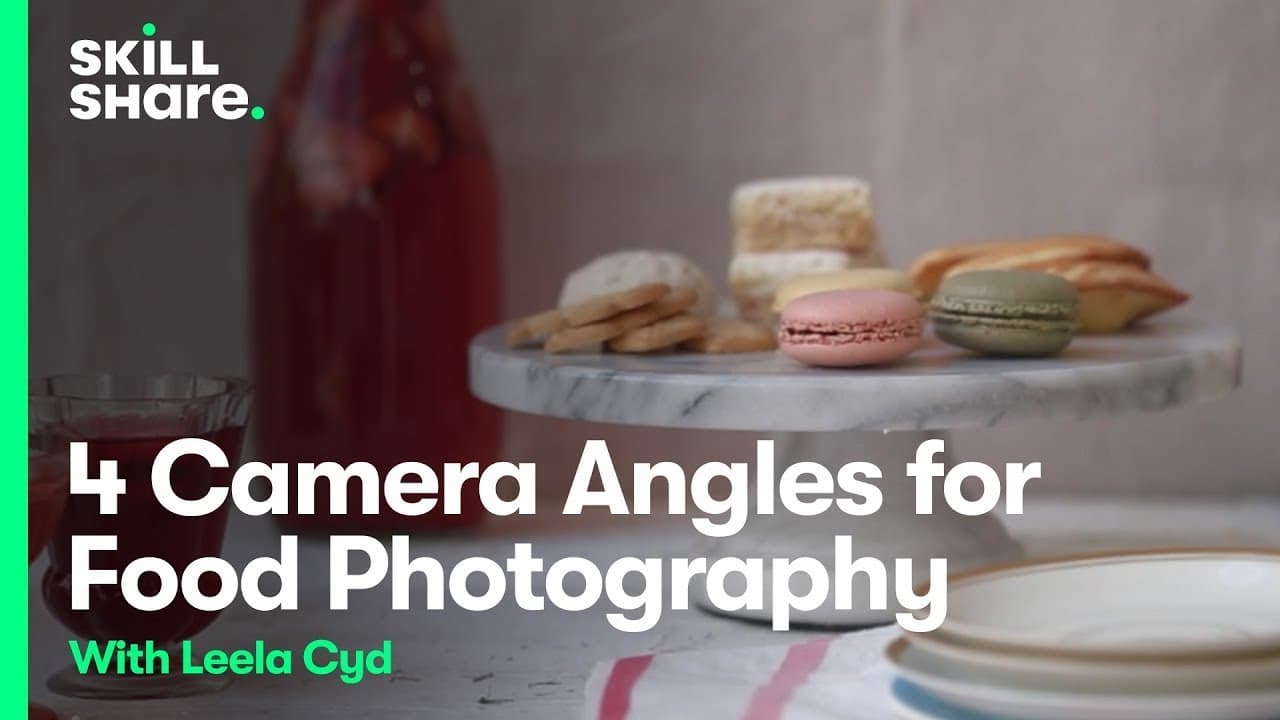
The best camera angles for food photography are overhead, three-quarter, straight-on, and macro. The three-quarter angle creates an inviting perspective, the straight-on angle highlights tall food items, and the macro shot showcases textures. Overhead shots focus on shapes and colors, making them popular in cookbooks and magazines.
Transcript
hi I'm Leela Sid I'm a photographer and Storyteller based in Santa Barbara California but you can find me traveling all over the world on assignment shooting food people interiors and travel for all kinds of different magazines books as well as commercial clients in the hospitality industry and other areas now we're going to address camera angles s... Read More
Key Insights
- 😋 Overhead, three-quarter, straight-on, and macro are essential camera angles for creating appealing food photographs.
- 😋 The three-quarter angle evokes a desire to consume the food while emphasizing specific elements in the frame.
- 😋 The straight-on angle is ideal for showcasing tall and voluminous food items, but not suitable for flat plates.
- 🌠 The macro shot focuses on textures and shapes, creating a minimalistic composition.
- 🫥 Each camera angle requires consideration of line, shape, and color to achieve balanced and visually pleasing compositions.
- 😋 Scale plays a crucial role in overhead photography, ensuring the food matches the size of the plate.
- 😋 The overhead angle is a popular choice in cookbooks and magazines, offering a comprehensive view of the food.
Install to Summarize YouTube Videos and Get Transcripts
Explore YouTube Video Summarizer or Get YouTube Transcript Extractor
Questions & Answers
Q: What are the four essential camera angles in food photography?
The four essential angles are overhead, three-quarter, straight-on, and macro. Each angle offers a unique perspective and helps create aesthetically pleasing food photographs.
Q: Why is the three-quarter angle commonly used in commercial work?
The three-quarter angle replicates the perspective of a diner at a table, making the food appear more enticing. It emphasizes the bottom of the frame, drawing attention to specific food elements.
Q: When should the straight-on angle be used?
The straight-on angle is perfect for showcasing tall and voluminous food items, such as glasses filled with drinks or dishes with height. It may not be suitable for flat plates where the food wouldn't be clearly visible.
Q: What makes the macro shot an important technique in food photography?
The macro shot allows for a close focus on the textures and shapes of the food. It helps to create minimalist compositions by highlighting specific elements and removing distractions.
Summary & Key Takeaways
-
Food photographer Leela Sid discusses the importance of four key camera angles in food photography: overhead, three-quarter, straight-on, and macro.
-
The three-quarter angle is commonly used in commercial work as it creates an enticing view that makes you want to dive into the food.
-
The straight-on angle is ideal for showcasing tall and voluminous food items, while the macro shot emphasizes texture and shapes.
-
The overhead angle, popular in cookbooks and magazines, allows for a focus on shapes, lines, and textures.
Read in Other Languages (beta)
Share This Summary 📚
Summarize YouTube Videos and Get Video Transcripts with 1-Click
Try YouTube Summary with ChatGPT & Claude or YouTube Transcript Generator
Explore More Summaries from Skillshare 📚


Summarize YouTube Videos and Get Video Transcripts with 1-Click
Try YouTube Summary with ChatGPT & Claude or YouTube Transcript Generator