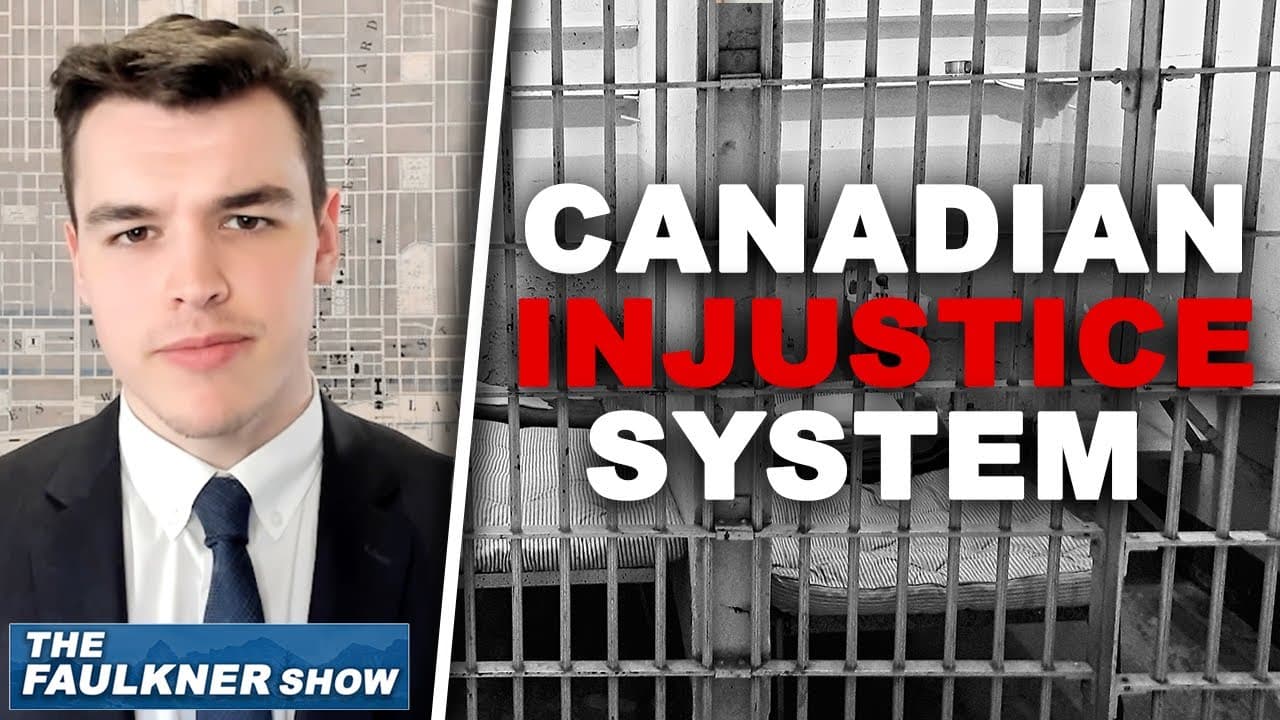
Wrongful Conviction: The shocking state of Canada’s justice system
TL;DR
Canada's justice system faces scrutiny for wrongful convictions and inadequate accountability for mistakes made.
Transcript
as violent crime continues to rise in Canada's major cities the many failures of Canada's justice system have come into sharper Focus for Canadians over the past few years what is described as Canada's revolving door Bale policy where repeat violent Defenders are released back out onto the streets after committing crimes only to continue committing... Read More
Key Insights
- 😮 The Canadian justice system has faced growing scrutiny due to a rising violent crime rate and the effectiveness of its policies.
- 👪 Wrongful convictions leave profound impacts on individuals and their families, undermining public trust in the legal process.
- 🖐️ Innocence Canada plays a critical role in exonerating wrongfully convicted individuals but operates under resource constraints.
- 👮 There exists minimal accountability for law enforcement and prosecution agencies in cases of wrongful conviction.
- 🫤 The recent exonerations of Robert Mailman and Walter Gillespie illustrate systemic failures in the justice system regarding methodical mistakes made decades ago.
- 💁 Many individuals wrongfully convicted do not receive any form of compensation, further compounding their suffering.
- 🙈 The failure to investigate alternative suspects or evidence often contributes to wrongful convictions, as seen in historical cases.
Install to Summarize YouTube Videos and Get Transcripts
Explore YouTube Video Summarizer or Get YouTube Transcript Extractor
Questions & Answers
Q: What is the revolving door bail policy in Canada, and why is it a concern?
The revolving door bail policy allows repeat violent offenders to be released after committing crimes, leading to a cycle of reoffending. This policy has become a major concern among Canadians who fear for public safety, as it creates an environment where known criminals can repeatedly engage in violent activities without facing significant consequences.
Q: What are some notable cases highlighted by Innocence Canada that exemplify wrongful convictions?
Innocence Canada has worked on several cases, notably Robert Mailman and Walter Gillespie, who were wrongfully convicted of murder and spent decades in prison. Their recent exoneration after 40 years illustrates the persistence of wrongful convictions in the justice system and the need for reform.
Q: How does the Canadian justice system handle accountability for wrongful convictions?
Accountability for wrongful convictions in Canada remains weak, as few prosecutions or firings occur in such cases. For instance, individuals responsible for wrongful convictions often continue their careers without facing significant repercussions, signaling a broader issue in ensuring that justice is served for both the wrongly accused and the actual victims of crimes.
Q: What challenges does Innocence Canada face in its mission to exonerate the wrongfully convicted?
Innocence Canada faces significant challenges including limited resources, a lengthy legal process, and the task of proving innocence after traditional legal remedies have been exhausted. Many cases can take decades to resolve, highlighting the frailty of the justice system that has long-lasting impacts on individuals' lives.
Q: What was the impact of the wrongful convictions on the lives of Robert Mailman and Walter Gillespie?
Robert Mailman and Walter Gillespie endured significant trauma due to their wrongful convictions, with each man spending nearly half of their lives in prison. This experience not only stripped them of their freedom but also caused immense emotional and psychological distress, leaving lasting scars that challenge their reintegration into society.
Q: How can Canadians support Innocence Canada’s mission?
Canadians can support Innocence Canada by visiting their website to learn more about their work, raising awareness of wrongful convictions, and considering donations. Engaging in discussions and advocating for justice reform can also help build public pressure for accountability within the justice system.
Summary & Key Takeaways
-
The content discusses the rise in violent crime in Canada and critiques the justice system's failures, particularly its policy of releasing repeat offenders.
-
Innocence Canada’s role in exonerating wrongfully convicted individuals, specifically Robert Mailman and Walter Gillespie, is highlighted, showcasing significant issues in the legal system.
-
The lack of accountability for law enforcement and prosecutors is emphasized, raising concerns over the future of victims in the justice process.
Read in Other Languages (beta)
Share This Summary 📚
Summarize YouTube Videos and Get Video Transcripts with 1-Click
Try YouTube Summary with ChatGPT & Claude or YouTube Transcript Generator
Explore More Summaries from True North 📚






Summarize YouTube Videos and Get Video Transcripts with 1-Click
Try YouTube Summary with ChatGPT & Claude or YouTube Transcript Generator