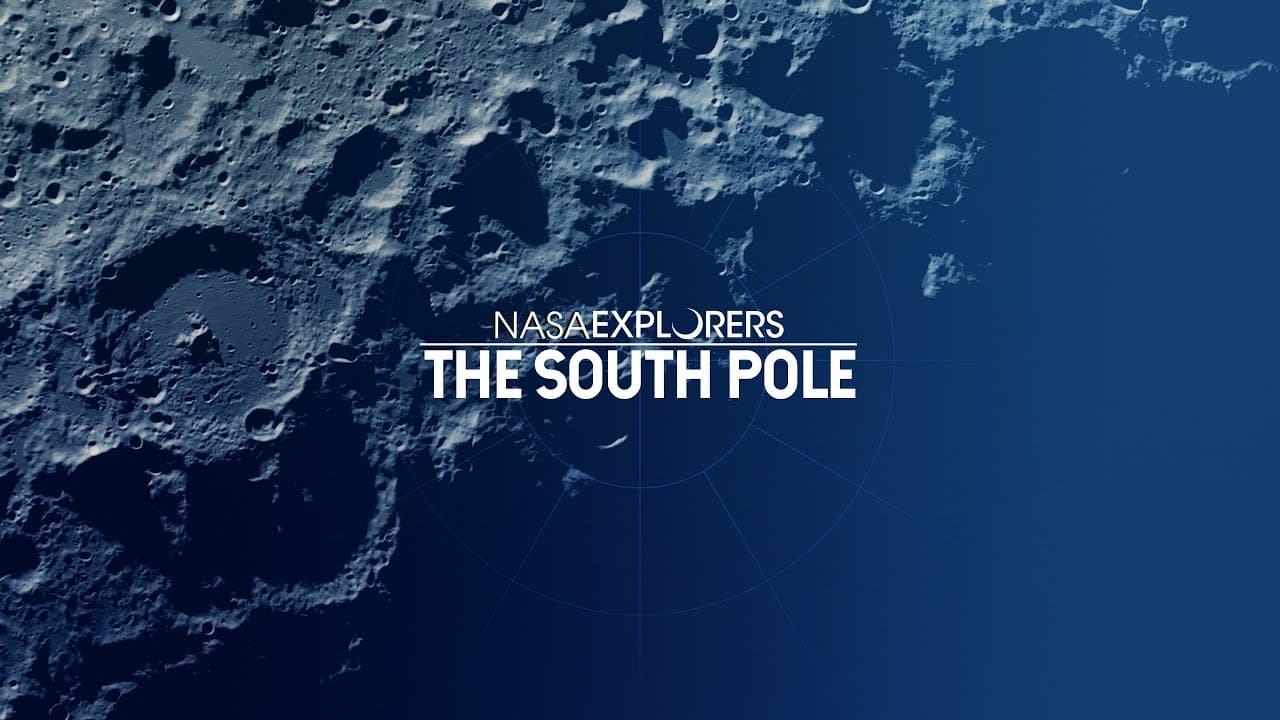
NASA Explorers Season 5, Episode 4: The South Pole
TL;DR
The Artemis program aims to explore the Moon's South Pole to gain new insights and expand human presence on the Moon, with the ultimate goal of preparing for Martian exploration.
Transcript
(music throughout) Imagine if you were an alien who was visiting the Earth for the first time from some other galaxy. Imagine only visiting the United States and never visiting any other part of the Earth's surface. That's essentially what we've done with the Apollo missions, really been able to do wonderful and groundbreaking science with the samp... Read More
Key Insights
- 🛩️ The Apollo missions provided valuable scientific data but only explored a small fraction of the Moon's surface.
- 💦 The Moon's South Pole is an appealing location for exploration due to its geological features, lighting conditions, and potential resources like water.
- 🦻 The Lunar Reconnaissance Orbiter has provided extensive data that aids in the planning and success of future lunar missions.
- 😌 The Artemis program aims to expand human presence on the Moon and lay the groundwork for future Mars exploration.
- 🌍 Exploring the Moon has cultural, scientific, and practical significance, fostering international collaboration and satisfying the human desire for exploration.
- 👾 The Moon's visibility and proximity make it a captivating celestial body to study, inspiring generations to be curious about space.
- 🏑 The Artemis program not only seeks scientific knowledge but also aims to inspire future generations and explore humanity's potential in multiple fields.
Install to Summarize YouTube Videos and Get Transcripts
Explore YouTube Video Summarizer or Get YouTube Transcript Extractor
Questions & Answers
Q: Why did the Apollo missions provide limited scientific knowledge about the Moon?
The Apollo missions only explored a small part of the lunar surface, similar to landing on Earth and collecting rocks from a specific location. This restricted sampling limited our understanding of the Moon's overall diversity.
Q: Why is the Moon's South Pole an attractive location for exploration?
The Moon's South Pole has unique geological features, including the largest and deepest crater, which can provide insights into the early history of the Moon and the solar system. Additionally, the lighting conditions at the South Pole make it suitable for power generation and preserving water in deep craters.
Q: How does the Lunar Reconnaissance Orbiter (LRO) contribute to our knowledge of the Moon?
LRO has been circling the Moon since 2009 and has collected a vast amount of data about the Moon's temperature, geology, and radiation environment. The data from LRO enables scientists to create high-resolution maps and identify safe landing sites for future missions.
Q: What is the significance of exploring the Moon for Martian exploration?
Mars is much farther away from Earth than the Moon, and future human missions to Mars would require longer stays. By conducting sustainable exploration on the Moon and learning to live off its resources, scientists can gather crucial knowledge and lessons for future Mars missions.
Summary & Key Takeaways
-
The Apollo missions provided valuable scientific knowledge, but they only scratched the surface of the Moon's diversity. The Artemis program aims to explore a different location, the Moon's South Pole, to enrich our understanding.
-
The South Pole region offers unique geological features, including the largest and deepest crater, which can provide insights into the early history of the Moon and the solar system.
-
The South Pole's unique lighting conditions make it an ideal location for exploration, with areas of sunlight for power and deep craters with constant darkness for preserving water and other resources.
Read in Other Languages (beta)
Share This Summary 📚
Summarize YouTube Videos and Get Video Transcripts with 1-Click
Try YouTube Summary with ChatGPT & Claude or YouTube Transcript Generator
Explore More Summaries from NASA 📚
Summarize YouTube Videos and Get Video Transcripts with 1-Click
Try YouTube Summary with ChatGPT & Claude or YouTube Transcript Generator