Warren Buffett: How to Invest Tiny Sums of Money
TL;DR
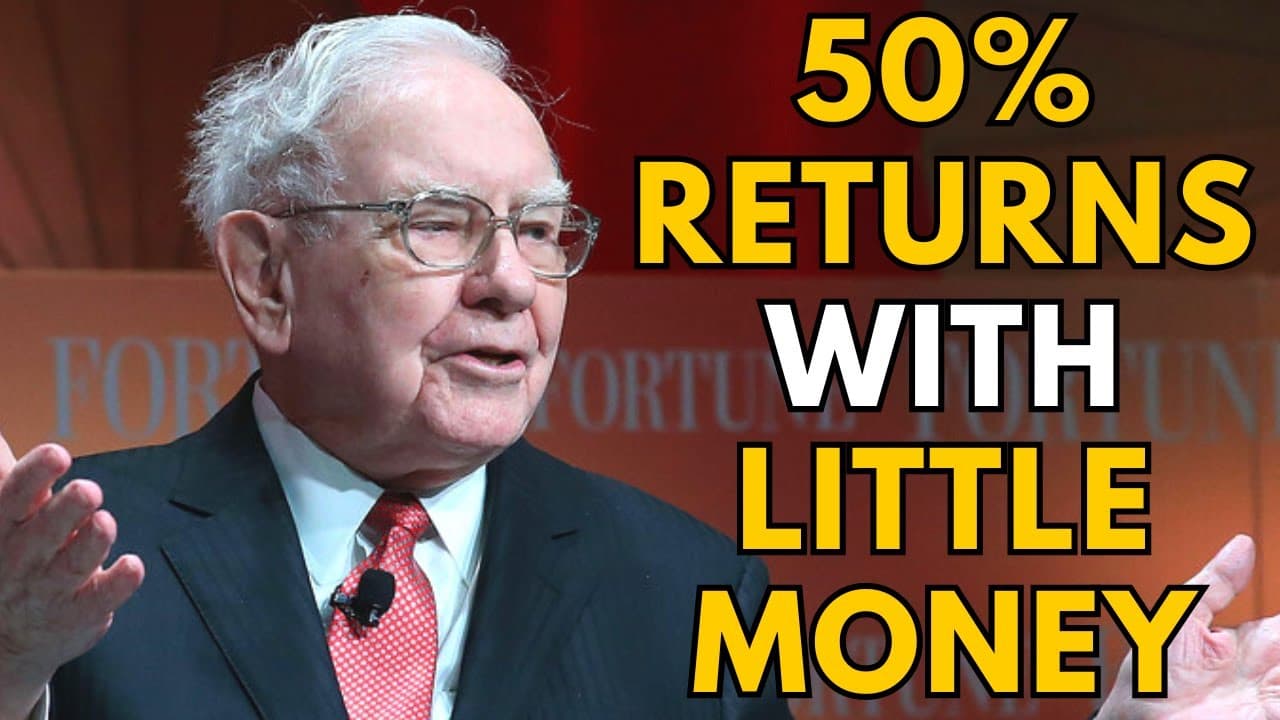
Warren Buffett suggests three key principles for generating high returns with little money: avoid competition, focus on smaller companies, and concentrate on your best ideas.
Transcript
I think if you're working with a small amount of money I think you can make very significant sums but as soon as you start getting the money up into the millions many millions the curve on expectable results falls off just dramatically so I just came across a long lost clip of Warren Buffett explaining the exact three things he would do to generate... Read More
Key Insights
- 🤑 Avoiding competition is crucial for generating high returns with little money. Competing against highly skilled and motivated investors is challenging and decreases the chances of finding attractive investment opportunities.
- ◾ Focusing on smaller companies presents opportunities with less competition. Large investors often cannot invest in small or medium-sized stocks due to managing significant amounts of money, creating an advantage for smaller investors.
- 👋 Concentrating on your best ideas rather than diversifying your portfolio is a better approach for generating high returns. By thoroughly understanding a few wonderful businesses, you can take advantage of rare investment opportunities.
Install to Summarize YouTube Videos and Get Transcripts
Explore YouTube Video Summarizer or Get YouTube Transcript Extractor
Questions & Answers
Q: What were Warren Buffett's best investment results?
Warren Buffett achieved his best investment results from 1956 to 1969, with an annual return of 29%, compared to 7% for the Dow.
Q: How did Buffett's investment approach change over time?
Initially, Buffett looked for undervalued stocks and sold them quickly. As his capital base grew, he shifted to buying undervalued excellent companies with favorable long-term economics.
Q: What factors should you consider when investing a small sum of money today?
Buffett advises searching for businesses selling at the lowest price relative to their discounted future cash flows. The universe of possible ideas is much larger when starting with a small amount of money.
Q: Why did Buffett's best period have such high returns?
Buffett's best period, which was from early 1951 to the next 10 years, had returns averaging about 50% per year. However, during that time, he was working with a tiny amount of money and could find ridiculously cheap investments.
Summary & Key Takeaways
-
Warren Buffett achieved his best investment results during the years 1956 through 1969, with a 29% annual return compared to 7% for the Dow. He initially looked for undervalued stocks and sold them quickly, but later shifted to buying undervalued excellent companies with favorable long-term economics.
-
When investing a small sum today, Buffett advises searching for businesses selling at the lowest price relative to their discounted future cash flows. He suggests that the universe of possible ideas is much larger when starting with a small amount of money.
-
Buffett's best period was from early 1951 through the next 10 years, where his returns averaged about 50% a year, far surpassing the performance of the Dow. However, as his capital base grew, the universe of possible investment ideas shrunk dramatically.
-
Buffett emphasizes that if you're working with a small sum of money and willing to put in the work, you can find investments that promise very large returns compared to larger capital amounts.
Read in Other Languages (beta)
Share This Summary 📚
Summarize YouTube Videos and Get Video Transcripts with 1-Click
Try YouTube Summary with ChatGPT & Claude or YouTube Transcript Generator
Explore More Summaries from Investor Center 📚




Summarize YouTube Videos and Get Video Transcripts with 1-Click
Try YouTube Summary with ChatGPT & Claude or YouTube Transcript Generator