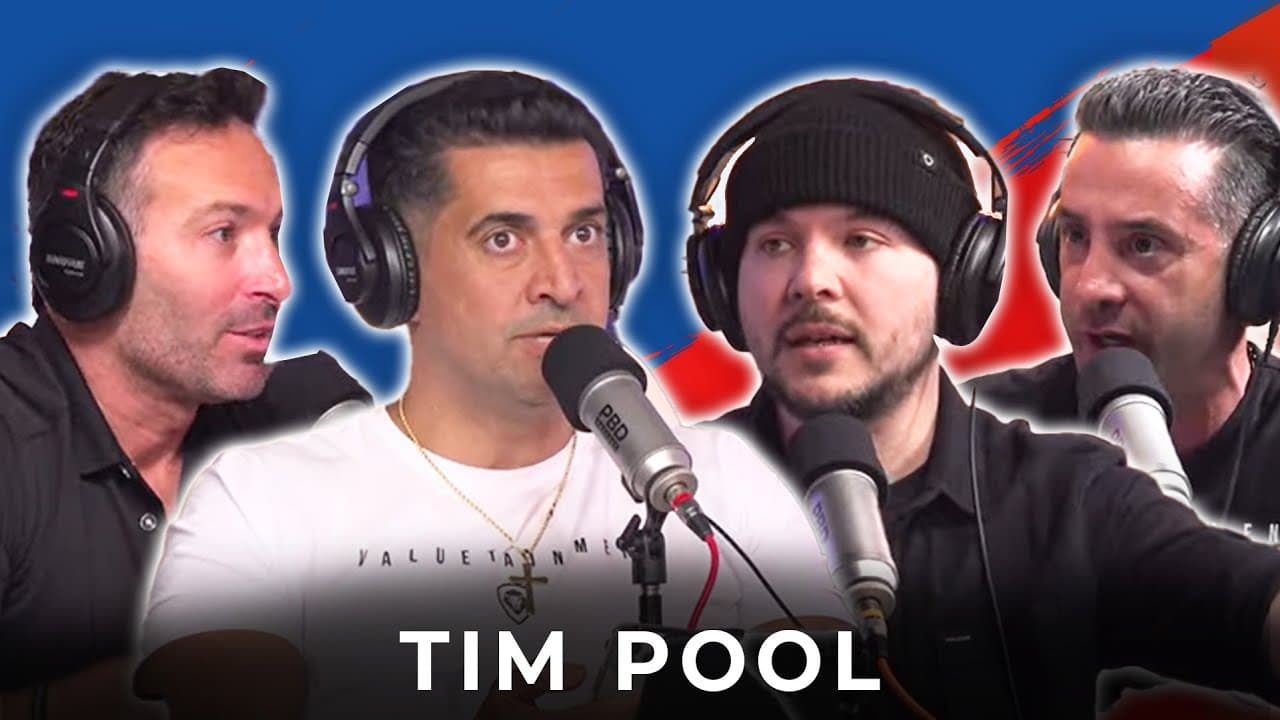
Tim Pool Breaks Down His Fall Out With Vice | PBD Podcast | Ep. 266
TL;DR
Tim Pool discusses political changes, media dynamics, and key figures' influence on current events.
Transcript
homie look what I become so so our guest today is kind of a big deal okay I mean if you go on YouTube You're gonna find this stuff he's all over the place he's allowed he makes people think he pisses people off he's got a following some days you love him some days you hate them but no matter what you're thinking about this guy and he's got another ... Read More
Key Insights
- 🫵 Tim Pool's background in journalism and activism has shaped his nuanced views on contemporary politics.
- 🖐️ Media narratives and character assassination play crucial roles in shaping public perception of political figures.
- 🤩 Political candidates addressing key issues like freedom of expression can resonate with disaffected voters.
- ❓ The evolution of political landscapes necessitates critical engagement with diverse perspectives and voices.
- 🙈 Figures such as RFK Jr. and Vivek Ramaswamy are seen as potential catalysts for change in the upcoming elections.
- 💠 The tactics used to tackle perceived threats, like "woke culture," are instrumental in shaping campaign strategies for contemporary candidates.
- 🤨 Assange and Snowden's cases highlight the tensions between state secrecy and the public's right to know, raising questions about government accountability.
Install to Summarize YouTube Videos and Get Transcripts
Explore YouTube Video Summarizer or Get YouTube Transcript Extractor
Questions & Answers
Q: How did Tim Pool's political views evolve over time?
Tim Pool's political views have transformed from early activism in progressive movements, such as Occupy Wall Street, to a more centrist stance. He shifted from supporting figures like Bernie Sanders to recognizing the complexities of contemporary politics and aligning with different opinions, including Donald Trump.
Q: What is Pool's perspective on Julian Assange and Edward Snowden?
Tim Pool sees Julian Assange as a true journalist who exposed government corruption through whistleblowing and believes he deserves a pardon for his actions. He views Edward Snowden as a controversial figure who leaked sensitive information, recognizing the debate about whether he should be considered a whistleblower or a leaker.
Q: How did Pool respond to the portrayal of media narratives?
Pool criticizes mainstream media for shaping narratives that often misrepresent individuals or events. He highlights how media outlets use selective editing and framing to distort realities, which leads to public misunderstanding and polarization around key political issues.
Q: What role do figures like Vivek Ramaswamy play in modern politics?
Vivek Ramaswamy is viewed as a rising star within the GOP, advocating for issues that resonate with younger voters and those concerned about the implications of woke culture. Pool emphasizes Ramaswamy's ability to challenge established norms and engage in meaningful political discourse.
Summary & Key Takeaways
-
Tim Pool reflects on his political journey, highlighting his early activism during the Occupy Wall Street protests and shifts in his views over the years, including his stance on various political figures.
-
The conversation explores the impact of media, focusing on figures like Julian Assange and Edward Snowden, and the challenges surrounding freedom of speech and whistleblowing in contemporary politics.
-
Pool emphasizes the importance of understanding the nuances in political discussions, the shifting cultural narratives, and the potential for future candidates like RFK Jr. and Vivek Ramaswamy to reshape the political landscape.
Read in Other Languages (beta)
Share This Summary 📚
Summarize YouTube Videos and Get Video Transcripts with 1-Click
Try YouTube Summary with ChatGPT & Claude or YouTube Transcript Generator