The Potential Origin of Mummification | Lost Treasures of Egypt
TL;DR
Prehistoric accidental mummification in Egypt's desert reveals early practices inspiring ancient Egyptians.
Transcript
[music playing] NARRATOR: In the desert of Gebelein, just south of Luxor, Meredith searches for evidence of Egypt's earliest death rites. She believes the myths that drove Egyptians to mummify their own bodies had roots much earlier than ancient Egyptian civilization. Prehistoric rock art depicting wildlife suggests this area was once a sacred plac... Read More
Key Insights
- 🐪 Gebelein desert reveals evidence of prehistoric death practices possibly inspiring ancient Egyptian mummification.
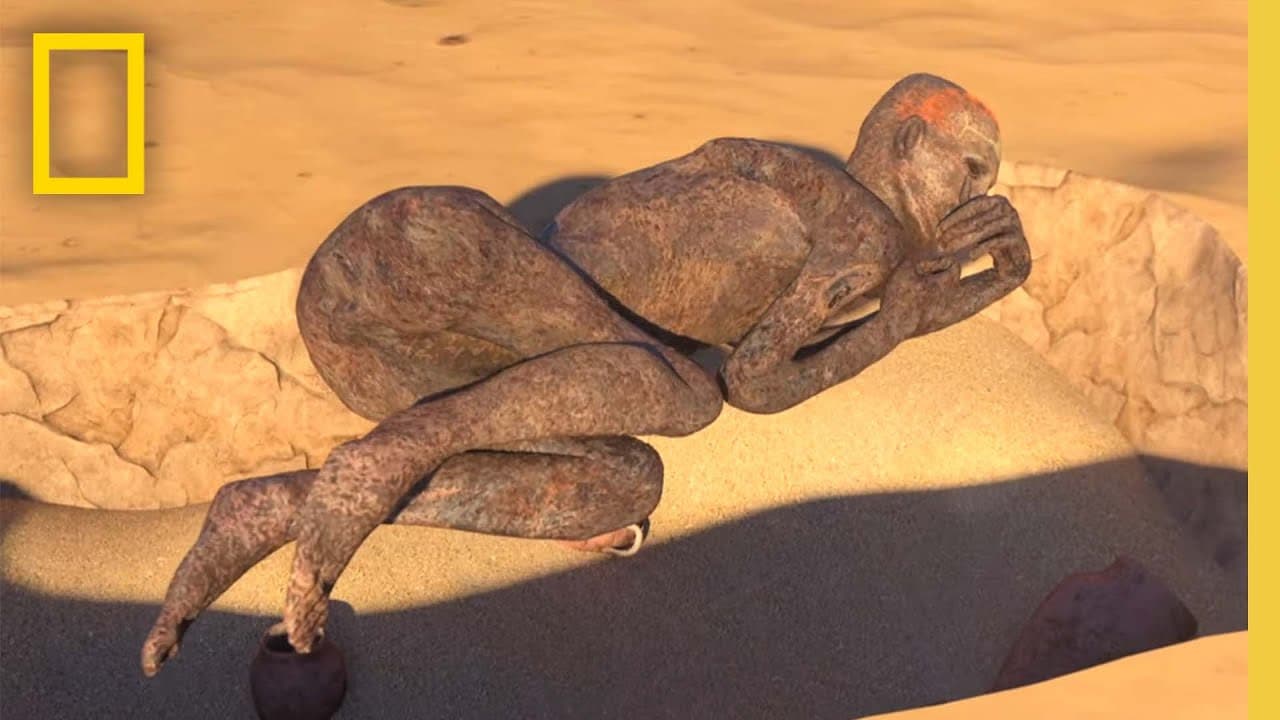
- 👴 'Ginger', a 5,400-year-old mummified man, was naturally preserved by the desert sand after being brutally stabbed.
- ⛩️ The accidental mummification of 'Ginger' hints at the origins of mummification practices in ancient Egypt.
- 💖 Accidents of nature like 'Ginger's' preservation could have sparked the ancient Egyptians' interest in mummification technology.
- ❓ The absence of ritualistic or magical elements in 'Ginger's' preservation suggests accidental mummification.
- 🇪🇬 The discovery of 'Ginger' provides insight into the beginnings of mummification practices in ancient Egypt.
- 🇪🇬 'Ginger's' natural mummification process may have inspired later intentional mummification practices in ancient Egypt.
Install to Summarize YouTube Videos and Get Transcripts
Explore YouTube Video Summarizer or Get YouTube Transcript Extractor
Questions & Answers
Q: How was the 5,400-year-old mummified man, 'Ginger', discovered?
'Ginger' was found by local farmers in Gebelein under a layer of desert debris in astonishing detail with tattoos and red hair visible.
Q: What caused the natural preservation of the mummy 'Ginger'?
The hot, dry sand in the desert quickly evaporated all water from 'Ginger's' body, preventing decomposition, thus preserving him for over 5,000 years.
Q: Why does Meredith believe the early mummification practices were accidental?
Meredith suggests that 'Ginger's' mummification was unintentional and resulted from the drying power of nature, inspiring later intentional mummification practices.
Q: How did the discovery of 'Ginger' provide insights into the origins of mummification?
The discovery of 'Ginger' suggests that accidental natural mummification could have influenced ancient Egyptians to develop intentional mummification techniques.
Summary & Key Takeaways
-
In the desert of Gebelein, evidence of prehistoric death rites is found, hinting at the roots of mummification.
-
A 5,400-year-old mummified man, 'Ginger', was naturally preserved by the desert sand after being brutally stabbed.
-
This accidental mummification may have inspired the ancient Egyptians to develop intentional mummification practices.
Read in Other Languages (beta)
Share This Summary 📚
Summarize YouTube Videos and Get Video Transcripts with 1-Click
Try YouTube Summary with ChatGPT & Claude or YouTube Transcript Generator
Explore More Summaries from National Geographic 📚




Summarize YouTube Videos and Get Video Transcripts with 1-Click
Try YouTube Summary with ChatGPT & Claude or YouTube Transcript Generator