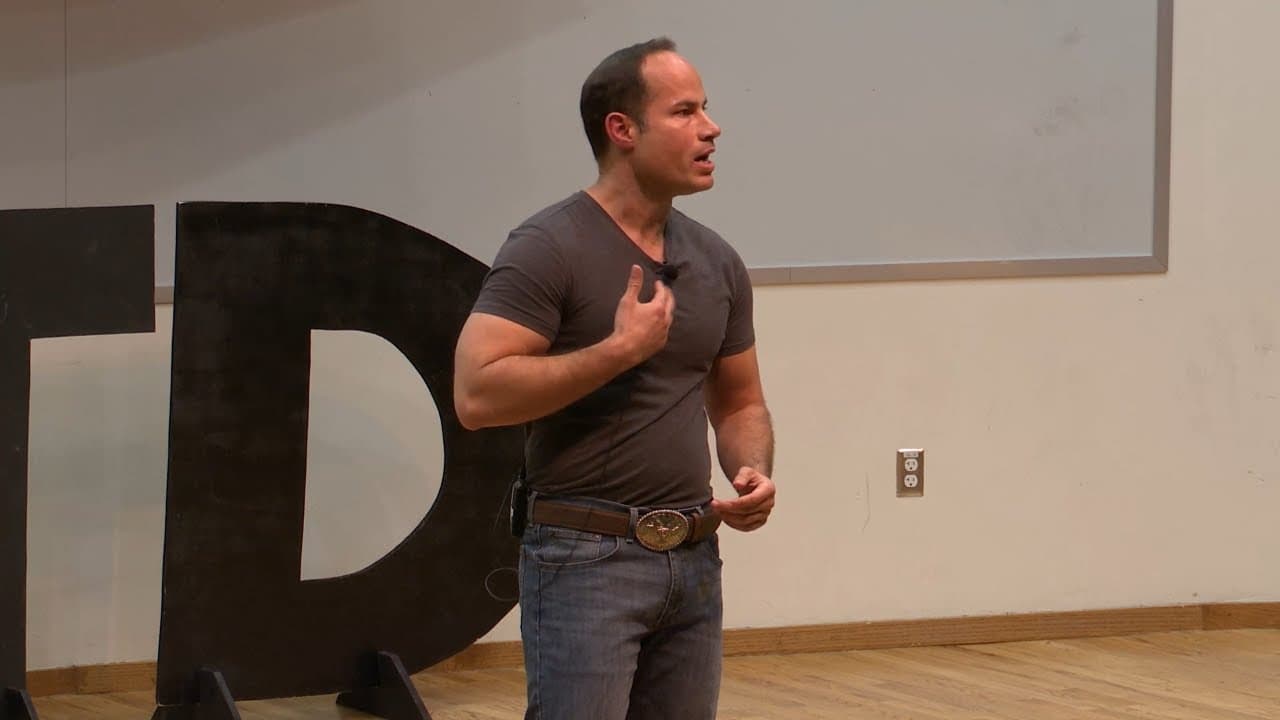
What I Learned About Solving Problems Looking for a Fight in Abilene, Texas | Justin Mann | TEDxUTD
TL;DR
Our identities amplify emotions, complicating problem resolution.
Transcript
one night a little over 20 years ago now while I was a teenager I was out with a few rty friends in an old muscle car hot riding up and down North First in abalene Texas looking for a fight learned a tough lesson that night and if you'll let it sink in today it can completely change how every one of us here reacts to and tries to work through compl... Read More
Key Insights
- 🥺 Emotional reactions can hijack rational decision-making, leading people astray from constructive outcomes.
- 👥 Identities serve as amplifiers, intensifying emotions and complicating group dynamics during crises.
- 🫷 Social media can exacerbate identity ties, pushing individuals toward drama rather than solutions.
- 🥺 Understanding that well-intentioned actions can lead to unintended consequences is crucial in problem-solving.
- 🪡 The need for meaningful dialogue is paramount in separating emotions from issues to avoid escalating conflicts.
- 🛟 Recognizing when identity becomes a defensive mechanism can preserve logical reasoning and ethical principles.
- ▶️ Seeking simple solutions through communication rather than confrontation is often the most effective path forward.
Install to Summarize YouTube Videos and Get Transcripts
Explore YouTube Video Summarizer or Get YouTube Transcript Extractor
Questions & Answers
Q: What incident sparked the speaker's reflection on identity and problem-solving?
The speaker recalls a night during their teenage years when they, along with friends, sought out a potential abuser after hearing rumors of a physical assault. This reckless decision, driven by emotion and identity, served as a catalyst for their later reflections on the complexities of emotional responses and social dynamics.
Q: How did the speaker's perspective evolve throughout the night?
Initially, the speaker was focused on confronting the alleged abuser. However, as the night progressed, they began to doubt whether violence would actually solve the problem. This introspection led them to realize that their actions could harm the alleged victim, thus highlighting the importance of understanding the impact of one's decisions before acting.
Q: In what ways does social media affect our problem-solving abilities, according to the speaker?
The speaker argues that social media acts as a "digital stage," amplifying emotional reactions tied to personal identities. Algorithms curate content that provokes strong emotional responses, which can distort critical thinking and undermine rational discussions around complex issues, often leading to polarized views and a lack of genuine problem resolution.
Q: What are the dangers of tying one’s identity to political viewpoints?
The speaker explains that when individuals identify strongly with particular politicians or political viewpoints, they may become emotionally defensive when faced with opposing ideas or evidence. This attachment can lead them to prioritize their identity over logic and ethics, ultimately distorting their ability to engage in constructive dialogue and problem-solving.
Q: What lessons can be drawn from the speaker's experience regarding conflict resolution?
The key lesson is to recognize that emotions and identities can cloud judgment, leading to impulsive reactions. By separating one's identity from the issues at hand and approaching problems with calm analysis, individuals can find simpler and more effective solutions, thereby avoiding unnecessary conflicts and complications.
Q: How can individuals avoid repeating the pitfalls of emotional decision-making?
Individuals can take proactive steps to reflect before acting, such as evaluating their emotional state, considering the potential consequences of their actions, and opting for calm discussions or seeking facts rather than letting their impulses drive them. This reflective approach can foster a more conducive environment for resolving conflicts.
Summary & Key Takeaways
-
The speaker reflects on a personal experience from 20 years ago, where misguided intentions led to a night of seeking violence rather than understanding a problematic situation.
-
The narrative emphasizes how identities can drive individuals to react emotionally rather than logically, often leading to poor decision-making in both personal and political situations.
-
The speaker encourages reflection on how separating identity from problem-solving can lead to better resolutions rather than escalating conflicts unnecessarily.
Read in Other Languages (beta)
Share This Summary 📚
Summarize YouTube Videos and Get Video Transcripts with 1-Click
Try YouTube Summary with ChatGPT & Claude or YouTube Transcript Generator
Explore More Summaries from TEDx Talks 📚



Summarize YouTube Videos and Get Video Transcripts with 1-Click
Try YouTube Summary with ChatGPT & Claude or YouTube Transcript Generator