Max Little: A test for Parkinson's with a phone call
TL;DR
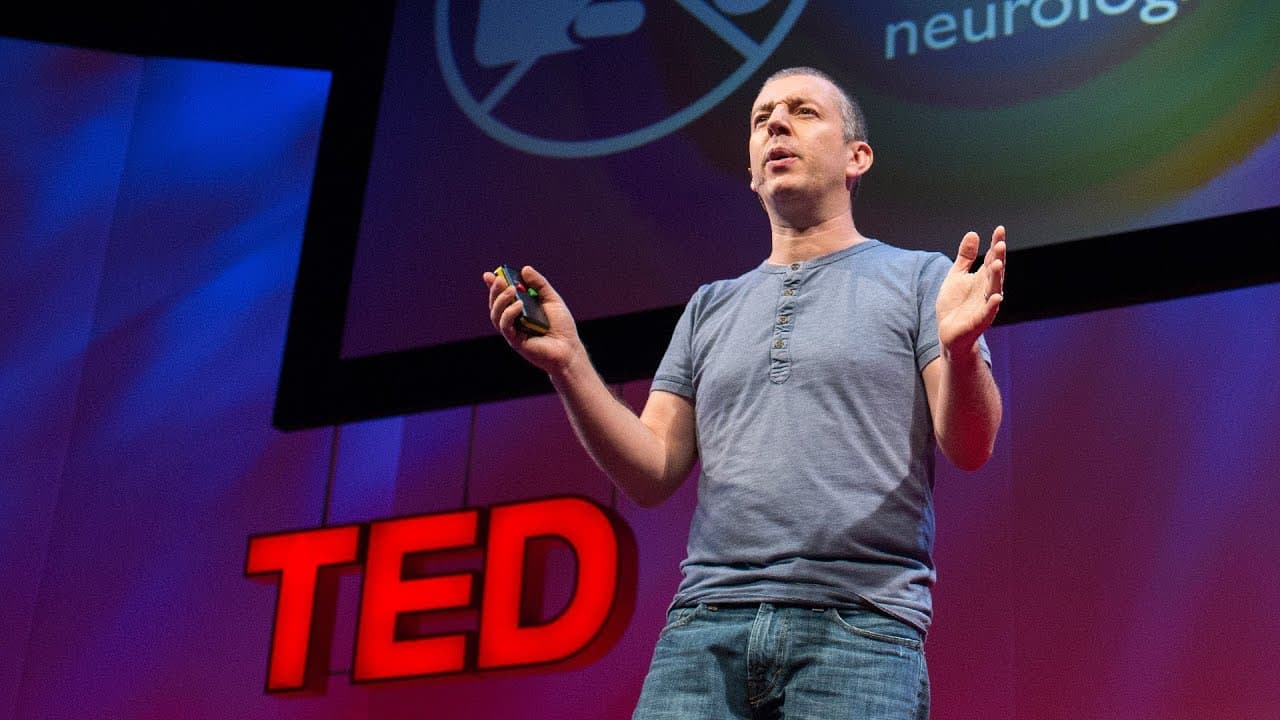
In this TED Talk, Max Little discusses the potential of using voice analysis to detect and monitor Parkinson's disease.
Transcript
Translator: Joseph Geni Reviewer: Morton Bast So, well, I do applied math, and this is a peculiar problem for anyone who does applied math, is that we are like management consultants. No one knows what the hell we do. So I am going to give you some -- attempt today to try and explain to you what I do. So, dancing is one of the most human of activit... Read More
Key Insights
- 🕺 Dancing, particularly ballet, requires high levels of skill and expertise, but neurological disorders like Parkinson's disease can gradually destroy these abilities.
- 🔬 Objective tools are needed to detect Parkinson's disease early and measure its progression objectively, as there are currently no biomarkers or simple blood tests available outside of clinical trials.
- 💻 Voice-based tests, using precision voice analysis software and machine learning, can quantitatively measure the effects of Parkinson's disease on vocal organs and provide a non-invasive, low-cost, and self-administered option for monitoring and screening.
- 🌎 The Parkinson's Voice Initiative aims to collect a large dataset of voice recordings from both healthy individuals and those with Parkinson's disease to tackle the goal of finding early biomarkers of the disease on a population scale.
- 📞 By allowing individuals to call in and leave voice recordings cheaply and easily, the initiative can reduce logistical difficulties for patients and enable high-frequency monitoring and low-cost mass recruitment for clinical trials.
- 📊 The voice-based tests have shown high accuracy, with a 99% accuracy rate achieved over the mobile telephone network, allowing for remote monitoring and progress tracking.
- 💡 The use of voice-based tests can revolutionize screening and monitoring for Parkinson's disease, making it more accessible, scalable, and effective in detecting and measuring the disease's progression.
- 🎯 The ultimate goal is to have an objective measure that can determine when a cure for Parkinson's disease is truly achieved and to search for early markers of the disease before it becomes too late.
Install to Summarize YouTube Videos and Get Transcripts
Explore YouTube Video Summarizer or Get YouTube Transcript Extractor
Questions & Answers
Q: What do applied mathematicians do?
Applied mathematicians are like management consultants, but their work is often misunderstood. They use their skills to solve real-world problems and provide valuable insights and solutions.
Q: How are neurological disorders like Parkinson's disease affecting the ability to dance?
Neurological disorders, such as Parkinson's disease, gradually destroy the extraordinary abilities required for activities like dancing. This can lead to weakness, tremors, rigidity, and other symptoms that make it difficult for individuals to continue performing at a high level.
Q: Why is it important to have objective tools to detect Parkinson's disease?
Objective tools are crucial for detecting Parkinson's disease early before it's too late. With no biomarkers or simple blood tests available, a 20-minute neurologist test is the best option currently. However, this test is expensive and often underutilized. Having objective tools that patients can use at home could improve detection rates and save on costly clinic visits.
Q: How can voice-based tests help in the detection of Parkinson's disease?
Voice-based tests can be used to detect Parkinson's disease by analyzing vocal effects and tremors. Using digital microphones and advanced machine learning techniques, these tests can provide quantifiable data to determine where someone lies on the continuum between health and disease. These tests are non-expert, non-invasive, high-speed, and low-cost, making them accessible to a wider population.
Q: What are the goals of the Parkinson's Voice Initiative?
The Parkinson's Voice Initiative aims to address several goals related to Parkinson's disease. These goals include reducing logistical difficulties for patients, enabling high-frequency monitoring for objective data, conducting low-cost mass recruitment for clinical trials, and making population-scale screening feasible for the first time. The initiative also seeks to identify early biomarkers of the disease to improve diagnosis and potential future treatments.
Summary & Key Takeaways
-
Parkinson's disease gradually destroys the ability of ballet dancers, and there is a need for objective tools to detect and measure the progression of the disease.
-
Current tests for Parkinson's disease are expensive and inconvenient, but voice-based tests using machine learning can provide a low-cost, self-administered alternative.
-
The Parkinson's Voice Initiative aims to collect a large number of voice recordings to search for early biomarkers of the disease and make population-scale screening feasible.
Read in Other Languages (beta)
Share This Summary 📚
Summarize YouTube Videos and Get Video Transcripts with 1-Click
Try YouTube Summary with ChatGPT & Claude or YouTube Transcript Generator
Explore More Summaries from TED 📚






Summarize YouTube Videos and Get Video Transcripts with 1-Click
Try YouTube Summary with ChatGPT & Claude or YouTube Transcript Generator