What Is Methane and Why Is It a Climate Threat?
TL;DR
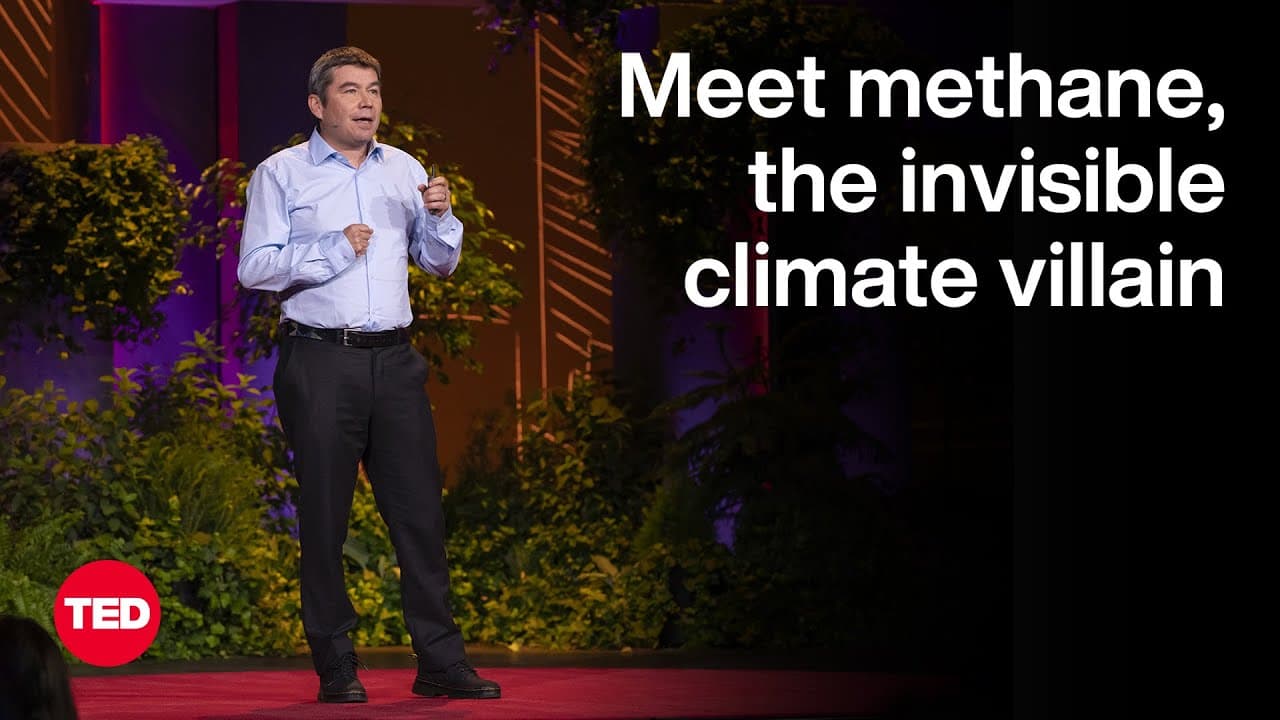
Methane is a potent greenhouse gas that contributes significantly to climate change, primarily from landfills and food systems. To keep global warming below 1.5 degrees Celsius, methane emissions must be halved by 2050, focusing on innovations in waste management and livestock practices. Reducing methane offers immediate benefits such as cleaner air and improved living conditions, particularly in developing countries.
Transcript
This is the Ghazipur landfill in Delhi, India. It’s almost 20 stories high and it often collapses, killing the waste pickers that work there. Last year, when temperatures hit 43 degrees Celsius, it caught fire three times in a month and burned for 48 hours straight, exposing the city to harmful particulate matter. This happens because the organic w... Read More
Key Insights
- 🌍 Landfills and organic waste decomposition contribute to methane emissions, which are a major contributor to climate change. Developing countries are expected to see a doubling of methane emissions by 2050 due to increasing waste generation.
- 🔥 Landfills, such as the Ghazipur landfill in Delhi and the landfill in Buenos Aires, are prone to fires that release harmful particulate matter, endangering the health of nearby communities.
- 🥵 Increasing heatwaves exacerbate the methane problem, making it even more important to reduce methane emissions by 50% by 2050 to keep global warming under 1.5 degrees Celsius.
- 🌱 Food systems, including food production and food waste, are significant sources of methane emissions. Approximately 50% of food systems' emissions come from food that is never consumed, with infrastructure limitations and inadequate storage being major contributors to food waste.
- 🛰️ Technology, such as satellite monitoring systems, can help identify methane sources in landfills and support interventions to reduce emissions effectively, as seen in the case of the Sunshine Canyon Landfill in Los Angeles.
- 🐄 Raising cows for dairy and meat is a major anthropogenic source of methane emissions, primarily through enteric fermentation (cow burps). Improving breeding, animal welfare, and feeding practices can help reduce emissions and benefit farmers.
- 🌿 Research initiatives, like the Enteric Fermentation Research and Development Accelerator, aim to find safe and lasting solutions to reduce livestock emissions, such as feeding algae or seaweed.
- ⚡️ Taking action to reduce methane emissions from food, waste, and neighborhoods can have immediate positive impacts, such as cleaner air, improved living conditions, and enhanced food security, benefiting vulnerable communities worldwide.
Install to Summarize YouTube Videos and Get Transcripts
Explore YouTube Video Summarizer or Get YouTube Transcript Extractor
Questions & Answers
Q: What are the major contributors to climate change mentioned in the video?
The major contributors to climate change mentioned in the video are landfills, specifically due to the methane emissions they release. Methane is a highly flammable and potent greenhouse gas that is created when organic waste in landfills decomposes.
Q: How do heat waves worsen the landfill problem?
Heat waves worsen the landfill problem because the organic waste in landfills decomposes faster under high temperatures, leading to increased methane emissions. As heat waves become more frequent and intense, the problem of methane emissions from landfills is expected to worsen.
Q: What is the role of methane in climate change compared to carbon dioxide?
Methane has contributed to almost half of the warming experienced to date, making it a significant factor in climate change. While carbon dioxide gets more attention, focusing on reducing methane emissions is crucial because methane is short-lived, meaning its warming effect will diminish quickly once emissions are stopped.
Q: What are the main sources of methane emissions in developing countries?
In developing countries, methane emissions primarily come from two sources: fossil fuel extraction, which accounts for 40% of emissions, and food systems, including food production and food waste, which is responsible for the other 60% of emissions.
Q: How can methane emissions from landfills be mitigated?
Methane emissions from landfills can be mitigated by diverting organic waste from the landfill. Solutions such as composting and turning organic waste into food or fertilizer can help reduce methane emissions. Additionally, technologies like satellite monitoring can help pinpoint methane sources in landfills, enabling interventions to stop emissions and prevent new ones from occurring.
Summary & Key Takeaways
-
Landfills, specifically those in developing countries like Delhi and Buenos Aires, contribute significantly to methane emissions and climate change due to the decomposition of organic waste.
-
Methane emissions are expected to double by 2050 in developing countries as they experience economic growth and increased waste generation.
-
Mitigating methane emissions, particularly from food systems and waste, is a fast and efficient way to reduce temperature within our lifetime and improve living conditions, air quality, and food security.
Read in Other Languages (beta)
Share This Summary 📚
Summarize YouTube Videos and Get Video Transcripts with 1-Click
Try YouTube Summary with ChatGPT & Claude or YouTube Transcript Generator
Explore More Summaries from TED 📚





Summarize YouTube Videos and Get Video Transcripts with 1-Click
Try YouTube Summary with ChatGPT & Claude or YouTube Transcript Generator