What Is the Skunk Works and Its Impact on Aviation?
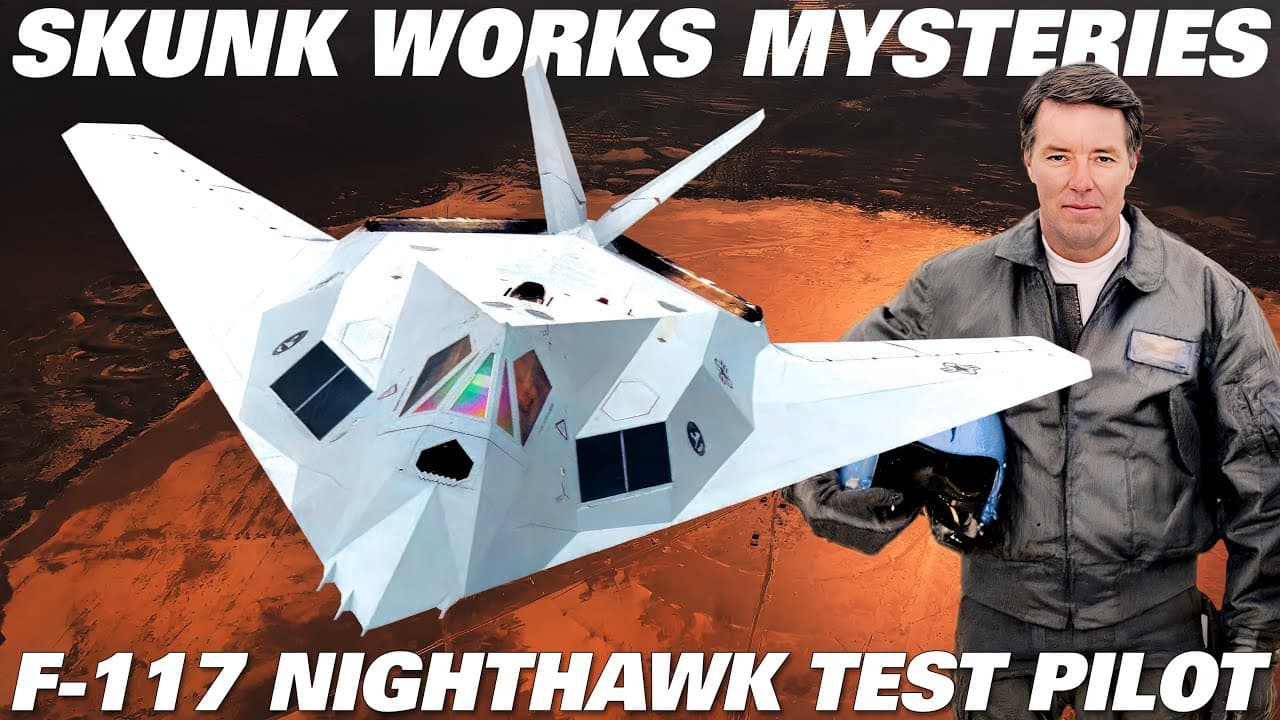
TL;DR
The Skunk Works, established by Kelly Johnson at Lockheed, is renowned for its rapid and innovative aircraft design, including the XP-80, developed in just 143 days to counter the German ME-262. Key to its success were principles of teamwork, simplicity, and direct communication, leading to groundbreaking aircraft like the F-104 and U-2, forever changing aviation history.
Transcript
My name is Harold Carlson Farley Junior and I was raised under the name of Carlson. When my wife gets serious, she calls me Carlson, but everybody else calls me Hal. And I got that from the military as being Herald to Hal. Skunk works. Back in 1943, I believe it was, the United States Air Force realized that the Germans were fielding a new jet airp... Read More
Key Insights
- 😎 In 1943, the US Air Force contacted Lockheed and asked them to develop a jet airplane to compete with the German ME-262.
- 😊 Kelly Johnson, a well-known airplane designer, took on the job and set up 14 basic rules for the project, including selecting the best people, reporting directly to the company president, and ensuring no interference from others.
- 🦨 The name "Skunk Works" was inspired by the Little Abner comic strip, and it stuck. The emblem of a skunk was then added to the tail of the airplanes.
- 📅 Harold Carlson Farley Junior joined Skunk Works in 1978 after being recommended by a colleague. He went through a clearance process before being introduced to the project.
- ✈️ The first flight of the XP-80, the airplane developed by Skunk Works, took place in 1944 and reached a top speed of 490 mph. It later became the first American aircraft to exceed 500 mph.
- 🤝 Cooperation and teamwork were crucial to the success of Skunk Works projects. Chief test pilot and engineering involvement were essential for effective design and development.
- 🌍 The Skunk Works operated out of the Burbank hangar in California, where airplanes were assembled and then transported to testing locations in a disguised manner to maintain secrecy.
- 💡 Kelly Johnson believed in simplicity, honesty, integrity, and care for others. He stressed the importance of being able to test his own airplanes and encouraged a culture of respect and sharing the workload among the team.
Install to Summarize YouTube Videos and Get Transcripts
Explore YouTube Video Summarizer or Get YouTube Transcript Extractor
Questions & Answers
Q: Why was Kelly Johnson's design of the XP-80 considered groundbreaking at the time?
The XP-80 was considered groundbreaking because it was one of the first successful jet airplanes developed in the United States, capable of speeds exceeding 500 mph. It showcased Johnson's ability to create advanced aircraft designs that pushed the boundaries of aviation technology.
Q: How did Johnson's Skunk Works operate differently from other aircraft design and production units?
The Skunk Works operated with a streamlined, informal method of getting things done. Johnson had complete authority over decisions, and paperwork and red tape were minimized. The design process involved close collaboration between engineers and shop workers, allowing for quick problem-solving and efficient production.
Q: What were some of the notable features and accomplishments of the F-104 Starfighter?
The F-104 Starfighter featured a small, thin-wing design for high-speed flight, capable of reaching speeds over Mach 2. It set multiple altitude and speed records, becoming one of the fastest operational aircraft at the time. It also served as the basis for various other aircraft models, such as the T-33 trainer and the F-94 interceptor.
Q: How did the U-2 spy plane revolutionize reconnaissance capabilities?
The U-2 spy plane, designed by Johnson and his team, provided unprecedented high-altitude reconnaissance capabilities. Flying at altitudes above 70,000 feet, it could take detailed photographs of targets and gather intelligence from areas previously inaccessible to other aircraft. Its missions played a crucial role during the Cold War in gathering information about Soviet military activities.
Q: What was the impact of Johnson's design and production methods on the aviation industry?
Johnson's design and production methods prioritized simplicity, functionality, and efficiency, resulting in groundbreaking aircraft designs. His ability to deliver high-performance aircraft on tight schedules and within budget constraints earned him a reputation for excellence in the aviation industry. The Skunk Works approach continues to influence the development of advanced aircraft today.
Summary & Key Takeaways
-
Kelly Johnson established a unique and highly successful design and production branch at Lockheed called the Skunk Works, known for its efficiency and innovation.
-
Johnson's first major project was the XP-80, a jet airplane created in just 143 days that became the basis for the future F-80 Shooting Star.
-
He worked on various other aircraft designs, such as the F-104 Starfighter and the U-2 spy plane, pushing the boundaries of speed, altitude, and reconnaissance capabilities.
Read in Other Languages (beta)
Share This Summary 📚
Summarize YouTube Videos and Get Video Transcripts with 1-Click
Try YouTube Summary with ChatGPT & Claude or YouTube Transcript Generator
Explore More Summaries from DroneScapes 📚

![WWII IN COLOR: Inside The Pacific Air War & Carriers Operations [Restored Footage] thumbnail](/_next/image?url=https%3A%2F%2Fi.ytimg.com%2Fvi%2FRxcnJNnOiaw%2Fhqdefault.jpg&w=750&q=75)
Summarize YouTube Videos and Get Video Transcripts with 1-Click
Try YouTube Summary with ChatGPT & Claude or YouTube Transcript Generator