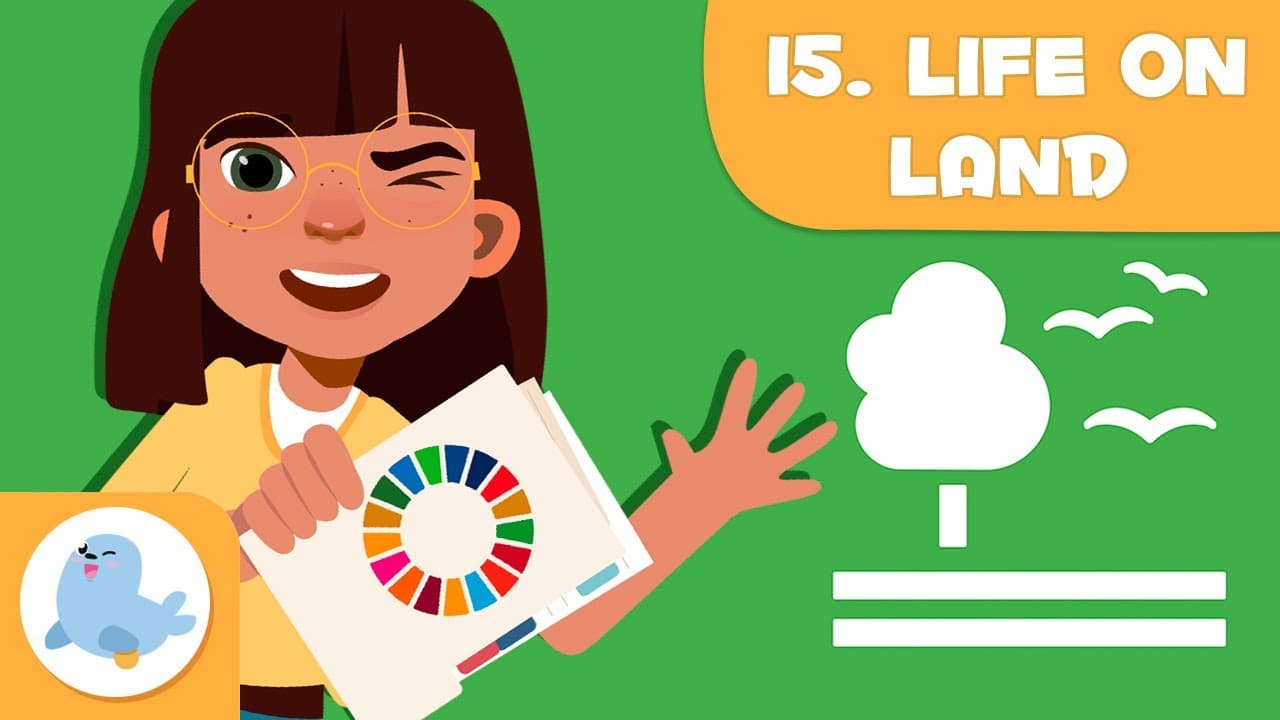
Life on Land 🌳 SDG 15 🐻 Sustainable Development Goals for Kids
TL;DR
Forests are crucial for life on land and need protection.
Transcript
smile and learn Hello friends today we are going to continue talking about the sustainable development goals let's talk about number 15. life on land a fascinating topic join me to learn more about it let's remember that an ecosystem is a community of living beings and the physical characteristics of the environment where they live ... Read More
Key Insights
- Forests play a crucial role in cleaning air pollution, earning them the nickname 'lungs of the planet'.
- Over 80% of terrestrial animal and plant species reside in forests, highlighting their biodiversity importance.
- Millions globally rely on forests for food, employment, and essential resources, making their preservation vital.
- Human activities result in the loss of 13 million hectares of forests annually, equivalent to the size of Greece.
- Deforestation, climate change, and overpopulation contribute to desertification, turning fertile lands barren.
- Mass tourism and poaching are significant threats to biodiversity, with 8% of species extinct and 22% endangered.
- Protecting terrestrial habitats can be achieved by respecting nature, reducing waste, and promoting sustainable practices.
- Educational resources like videos can help raise awareness about sustainable development goals among children.
Install to Summarize YouTube Videos and Get Transcripts
Explore YouTube Video Summarizer or Get YouTube Transcript Extractor
Questions & Answers
Q: Why are forests called the 'lungs of the planet'?
Forests are referred to as the 'lungs of the planet' because they play a crucial role in cleaning air pollution. The large masses of vegetation in forests absorb carbon dioxide and release oxygen, which is essential for life. This process helps to mitigate the effects of air pollution caused by human activities.
Q: What is the impact of human activity on forests?
Human activities, such as deforestation and uncontrolled logging, have a significant impact on forests, leading to the loss of approximately 13 million hectares annually. This destruction threatens biodiversity, contributes to climate change, and disrupts the livelihoods of millions who depend on forests for resources and employment.
Q: How does deforestation contribute to desertification?
Deforestation contributes to desertification by removing trees that help maintain soil fertility and moisture. Without trees, the land becomes more susceptible to erosion and loses its ability to retain water, leading to barren, desert-like conditions. This process is exacerbated by climate change and overpopulation, further threatening ecosystems.
Q: What are some threats to biodiversity mentioned in the video?
The video highlights mass tourism and poaching as significant threats to biodiversity. These activities disrupt natural habitats and contribute to the extinction of species. Currently, 8% of known animal species have disappeared, and 22% are endangered, underscoring the urgent need for conservation efforts.
Q: How can individuals help protect terrestrial habitats?
Individuals can help protect terrestrial habitats by respecting nature, reducing waste, and engaging in sustainable practices. Simple actions like not littering in forests, supporting conservation initiatives, and educating others about the importance of ecosystems can make a significant difference in preserving biodiversity and environmental health.
Q: Why is it important to regulate logging activities?
Regulating logging activities is crucial to prevent deforestation, which threatens biodiversity and disrupts ecosystems. Sustainable forest management ensures that logging is conducted responsibly, preserving forest resources for future generations while maintaining the ecological balance necessary for the survival of numerous species and human communities.
Q: What role do educational videos play in promoting sustainable development?
Educational videos play a vital role in promoting sustainable development by raising awareness and educating viewers, especially children, about environmental issues and the importance of conservation. They provide accessible information and practical solutions, empowering individuals to take action and contribute to global sustainability efforts.
Q: What is the significance of forests for human livelihoods?
Forests are significant for human livelihoods as they provide essential resources such as food, employment, and materials for daily life. Millions of people worldwide, particularly those living in or near forested areas, depend on these ecosystems for their survival and economic well-being, making forest conservation critical for sustaining communities.
Summary & Key Takeaways
-
Forests are essential ecosystems that clean air pollution and house a vast majority of terrestrial species. They provide livelihoods for millions, making their conservation crucial. Human actions threaten these ecosystems, leading to deforestation and desertification, which endanger biodiversity and climate stability.
-
The video emphasizes the importance of forests in sustaining life on land, aligning with Sustainable Development Goal 15. It highlights the threats of deforestation and the need for sustainable management to preserve biodiversity, prevent desertification, and ensure the well-being of communities dependent on forests.
-
Educational content like this video is vital for teaching children about sustainable development goals. It encourages respect for natural habitats and offers practical ways to contribute to environmental conservation, fostering awareness and responsibility from a young age.
Read in Other Languages (beta)
Share This Summary 📚
Summarize YouTube Videos and Get Video Transcripts with 1-Click
Try YouTube Summary with ChatGPT & Claude or YouTube Transcript Generator
Explore More Summaries from Smile and Learn - English 📚


Summarize YouTube Videos and Get Video Transcripts with 1-Click
Try YouTube Summary with ChatGPT & Claude or YouTube Transcript Generator