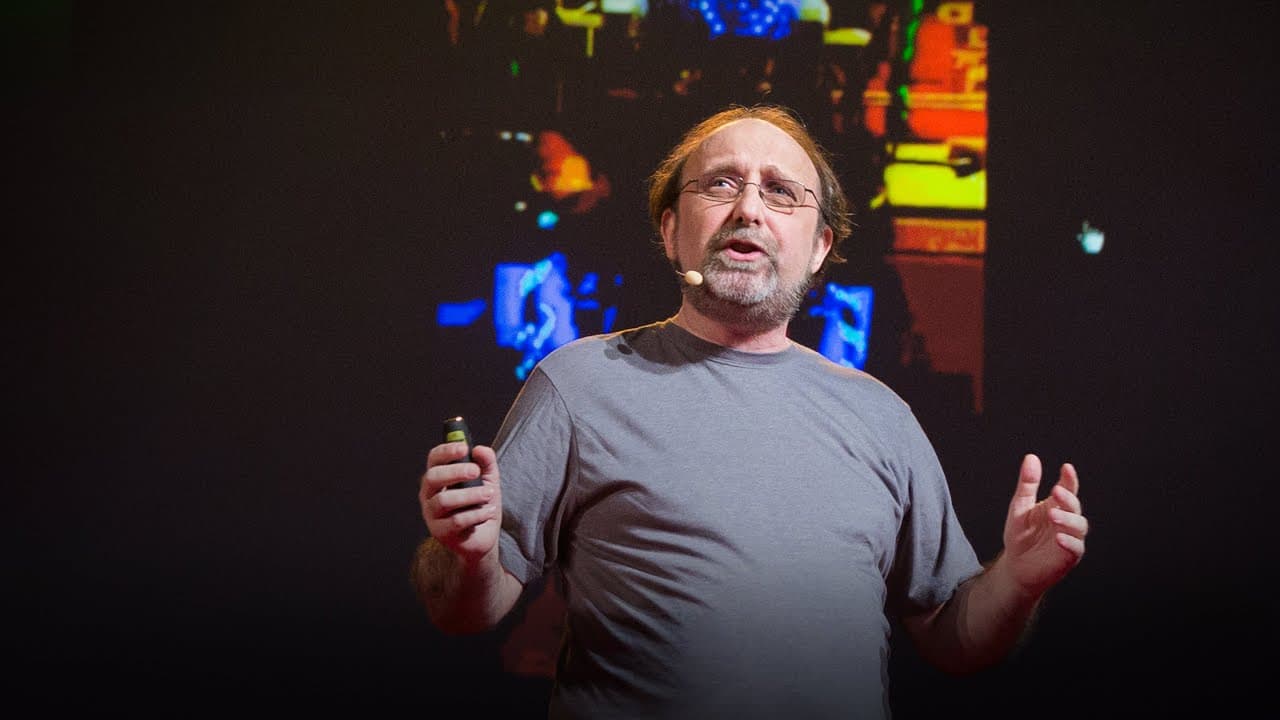
Miguel Nicolelis: Brain-to-brain communication has arrived. How we did it
TL;DR
Miguel Nicolelis, a neuroscientist, describes his groundbreaking research in brain-machine interfaces and the ability to control devices through thoughts.
Transcript
On June 12, 2014, precisely at 3:33 in a balmy winter afternoon in São Paulo, Brazil, a typical South American winter afternoon, this kid, this young man that you see celebrating here like he had scored a goal, Juliano Pinto, 29 years old, accomplished a magnificent deed. Despite being paralyzed and not having any sensation from mid-chest to the t... Read More
Key Insights
- 💭 Juliano Pinto, a paralyzed man, was able to kick the opening kick of the 2014 Brazilian World Soccer Cup just by thinking, showing the incredible potential of brain-machine interfaces. This accomplishment took years of research and planning.
- 💭 A brain-machine interface is not as complicated as it may seem, and it simply involves using sensors to read electrical brain activity and translating it into motor commands. These commands can then be used to control various devices, allowing individuals to perform actions without moving their bodies.
- 😮 By combining brain activity from multiple individuals, neuroscientists have been able to create brain nets that can achieve complex tasks. This includes monkeys collaborating to move a virtual arm in 3D space and humans transmitting brain activity to each other to interpret visual messages.
- 🌐 These advancements in brain-actuating technology have the potential to revolutionize fields such as communication, mobility, and even perception. One day, individuals may be able to surf the internet just by thinking or donate senses to others who may have disabilities.
- 🧠 The possibilities of brain-machine interfaces are limited only by our imagination. As researchers continue to push the boundaries of this technology, we may witness even more astounding breakthroughs in the future.
Install to Summarize YouTube Videos and Get Transcripts
Explore YouTube Video Summarizer or Get YouTube Transcript Extractor
Questions & Answers
Q: Question 1: What did Juliano Pinto accomplish that was deemed impossible by many?
Juliano Pinto, a paralyzed young man, delivered the opening kick of the 2014 Brazilian World Soccer Cup using a brain-controlled robotic vest, even though he could not physically move his body.
Question 2: How does the brain-machine interface work?
Answer: The brain-machine interface uses sensors to read electrical brain signals and extract the motor planning that the brain generates to make a person move. These signals are then converted into digital commands that can be understood by mechanical, electronic, or virtual devices.
Question 3: What is the purpose of the brain-controlled exoskeleton?
Answer: The brain-controlled exoskeleton allows paraplegic and quadriplegic patients to regain mobility. It is controlled by brain signals recorded through electroencephalography and provides feedback to the patient through a smart shirt with micro-vibrating elements.
Question 4: What is the significance of the brain-to-brain interface?
Answer: The brain-to-brain interface allows animals or humans to exchange mental messages using brain activity and collaborate to achieve a motor goal. It has the potential to revolutionize communication and interaction between individuals and could have numerous applications in the future.
Summary & Key Takeaways
-
Juliano Pinto, a paralyzed man, kicked the opening ball of the 2014 Brazilian World Soccer Cup using a brain-machine interface
-
The brain-machine interface allows individuals to control external devices using only their thoughts
-
Brain-machine interfaces have the potential to revolutionize medicine and technology in the future
Read in Other Languages (beta)
Share This Summary 📚
Summarize YouTube Videos and Get Video Transcripts with 1-Click
Try YouTube Summary with ChatGPT & Claude or YouTube Transcript Generator
Explore More Summaries from TED 📚


Summarize YouTube Videos and Get Video Transcripts with 1-Click
Try YouTube Summary with ChatGPT & Claude or YouTube Transcript Generator