How We Can Keep Plastics Out of Our Ocean | National Geographic
TL;DR
A global effort is needed to redesign the plastic packaging system, so that plastic never becomes waste and is instead recovered and reused, while also addressing other forms of marine pollution caused by industrial, agricultural, and urban waste.
Transcript
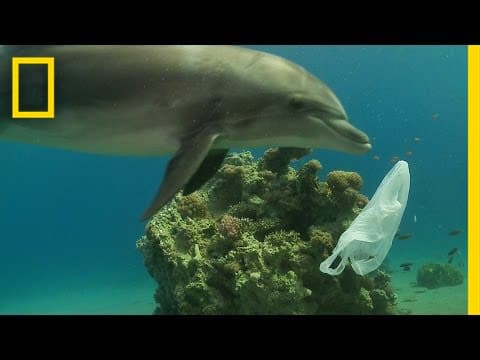
8 million metric tons of plastic trash enters the sea from land every year the equivalent of five plastic bags filled with trash for every foot of coastline in the world across our ocean plastic trash flows into circulation dispersed almost everywhere but concentrating in huge swathes in the midst of global currents breaking down into smaller and s... Read More
Key Insights
- 🌊 Every year, 8 million metric tons of plastic trash enter the sea from land, causing widespread pollution and harm to marine life.
- 🌎 Plastic waste is dispersed throughout the ocean, but it accumulates in certain areas due to global currents, breaking down into smaller pieces and being ingested by marine species.
- 💡 To solve the plastic packaging problem, it is crucial to shift from a linear system of production and disposal to one that allows for recovery and reuse of plastic materials, creating a circular economy.
- 🚜 Marine pollution is not just caused by plastic waste; industrial, agricultural, and urban waste also contribute and result in dead zones where marine ecosystems lack oxygen.
- 🌿 Managing nutrient pollution, such as agricultural runoff, can be achieved by implementing changes in major contributing systems like agriculture, highlighting the need for collective action.
- 💦 Enhancing soil health, particularly by increasing organic matter, is essential for improved water quality as it helps retain nutrients like nitrogen and phosphorus within the soil and prevents leaching.
- 🌾 Changing farming systems to prioritize soil health and reduce environmental impact is challenging but necessary, as it requires learning new practices and processes.
- 🤝 Collaboration among all stakeholders, including farmers, is crucial in addressing the agricultural and marine pollution issues and achieving sustainable solutions.
Install to Summarize YouTube Videos and Get Transcripts
Explore YouTube Video Summarizer or Get YouTube Transcript Extractor
Questions & Answers
Q: Why is a shift towards a circular economy important in solving the plastic packaging problem?
A circular economy approach aims to recover and reuse plastic, preventing it from becoming waste and reducing the amount of new plastic that needs to be produced. By closing the loop, valuable plastic materials can be kept in circulation and the negative environmental impacts of plastic pollution can be mitigated.
Q: What are some consequences of marine pollution caused by industrial, agricultural, and urban waste?
Marine pollution, including nutrient pollution from various sources, leads to the formation of dead zones, areas in the ocean where oxygen levels are depleted. This can result in the loss of marine life and disrupt entire ecosystems. It is crucial to address these forms of pollution to protect the health of our oceans.
Q: How can agriculture contribute to reducing water pollution caused by nutrient runoff?
By focusing on improving soil health, particularly increasing organic matter content, farmers can help prevent nutrients like phosphorus and nitrogen from leaching out of the soil and into water bodies through runoff. This can be achieved through implementing practices that promote soil conservation, such as cover cropping and reduced tillage.
Q: What are the challenges faced by farmers in transitioning to more sustainable practices?
Changing agricultural systems and practices can be challenging for farmers. It requires learning new processes and techniques that are effective in maintaining productivity while minimizing environmental impact. Despite the challenges, many farmers are willing to make changes and play a crucial role in addressing water pollution by adopting sustainable farming methods.
Summary & Key Takeaways
-
Every year, 8 million metric tons of plastic trash enter the sea, causing widespread pollution and harm to marine ecosystems.
-
To solve the plastic packaging problem, a shift towards a circular economy is necessary, where plastic is recovered and reused instead of being disposed of as waste.
-
Marine pollution is not limited to plastic, but also includes industrial, agricultural, and urban waste, which leads to the creation of dead zones in the ocean.
Read in Other Languages (beta)
Share This Summary 📚
Summarize YouTube Videos and Get Video Transcripts with 1-Click
Try YouTube Summary with ChatGPT & Claude or YouTube Transcript Generator
Explore More Summaries from National Geographic 📚



Summarize YouTube Videos and Get Video Transcripts with 1-Click
Try YouTube Summary with ChatGPT & Claude or YouTube Transcript Generator