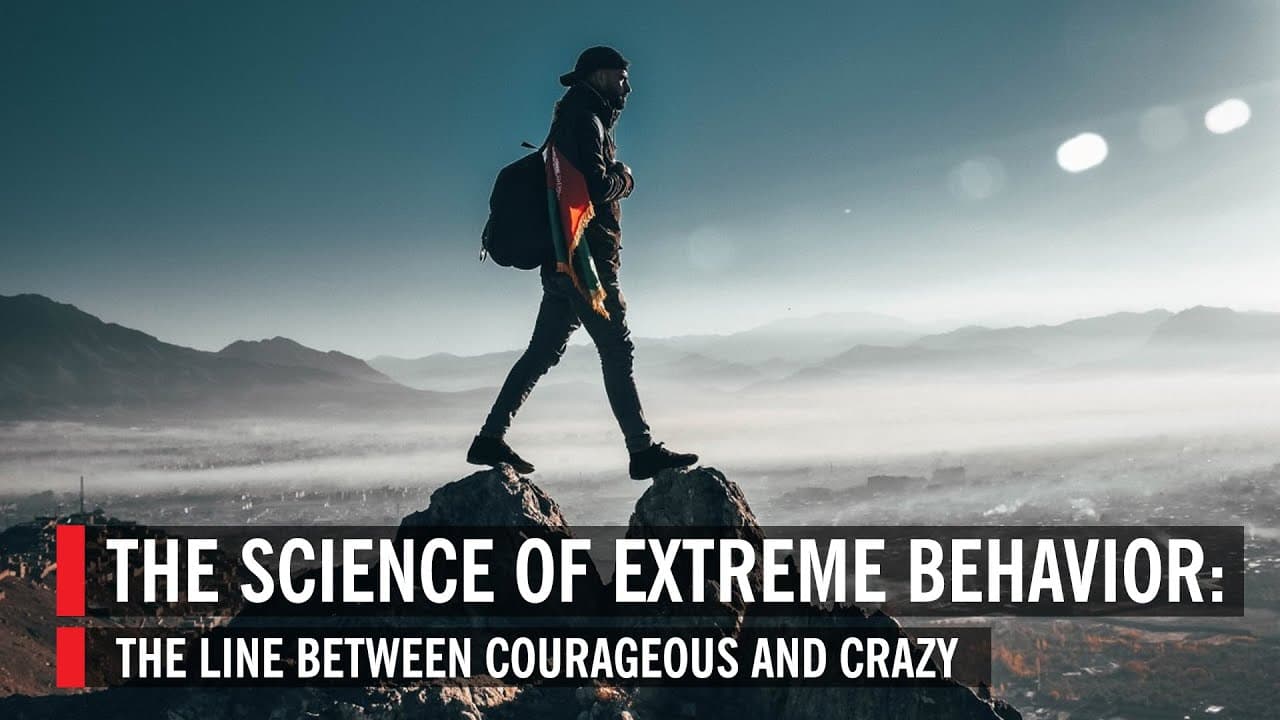
The Science of Extreme Behavior: The Line Between Courageous and Crazy
TL;DR
Researchers discuss the psychology behind extreme risk-taking and the motivations of individuals who engage in dangerous sports and activities.
Transcript
How many people think those guys are nuts? And how many want to go do all that stuff right now? Yeah, there's a couple of us in here. So by point of introduction, uh, indulge me in a bit of biography. I jumped at this panel. I've been away from the World Science Festival for a couple of years, but when they told me the title of this one, I was all ... Read More
Key Insights
- ✳️ Extreme risk-taking involves calculated risks and is guided by years of training, preparation, and mastery of skills.
- 🧠 Individual differences in brain activity, genes, and personality traits contribute to the desire for and enjoyment of extreme adventures.
- 😨 Extreme sports enthusiasts experience fear but have developed the ability to overcome it and take risks in pursuit of their goals.
- 🧑🏭 Gender imbalance in extreme sports is more likely a result of cultural factors rather than innate differences.
Install to Summarize YouTube Videos and Get Transcripts
Explore YouTube Video Summarizer or Get YouTube Transcript Extractor
Questions & Answers
Q: Are extreme adventurers fearless?
No, extreme adventurers are not fearless. They experience fear but have developed the skills and confidence to overcome it and take calculated risks.
Q: How do extreme sports enthusiasts balance risk with the joy they derive from these activities?
Extreme sports enthusiasts find great joy and satisfaction in pushing their limits and achieving goals. The reward and fulfillment they experience outweigh the risk involved.
Q: Why are there fewer women than men in extreme sports?
The gender imbalance in extreme sports is likely due to cultural factors rather than innate differences. As societal attitudes change, more women are participating in these sports and achieving equal success.
Q: Can fear be developed or cultivated through deliberate training?
Fear is a natural human response to perceived danger, but it can be managed and controlled through training and experience. Over time, individuals can learn to overcome fear and take risks within their abilities.
Summary & Key Takeaways
-
Risk-taking is subjective and varies from person to person based on their perception and personal experiences.
-
Extreme adventurers often have a strong sense of confidence and mastery in their abilities, which allows them to push their limits.
-
Individual differences in brain activity, genes, and personality traits can contribute to the desire for adrenaline-fueled activities.
-
Risk-taking behavior can be influenced by both nature (genetics) and nurture (environmental factors).
-
In extreme sports, calculated risks are taken after years of training and preparation, reducing the chances of accidents and injuries.
Read in Other Languages (beta)
Share This Summary 📚
Summarize YouTube Videos and Get Video Transcripts with 1-Click
Try YouTube Summary with ChatGPT & Claude or YouTube Transcript Generator
Explore More Summaries from World Science Festival 📚




Summarize YouTube Videos and Get Video Transcripts with 1-Click
Try YouTube Summary with ChatGPT & Claude or YouTube Transcript Generator