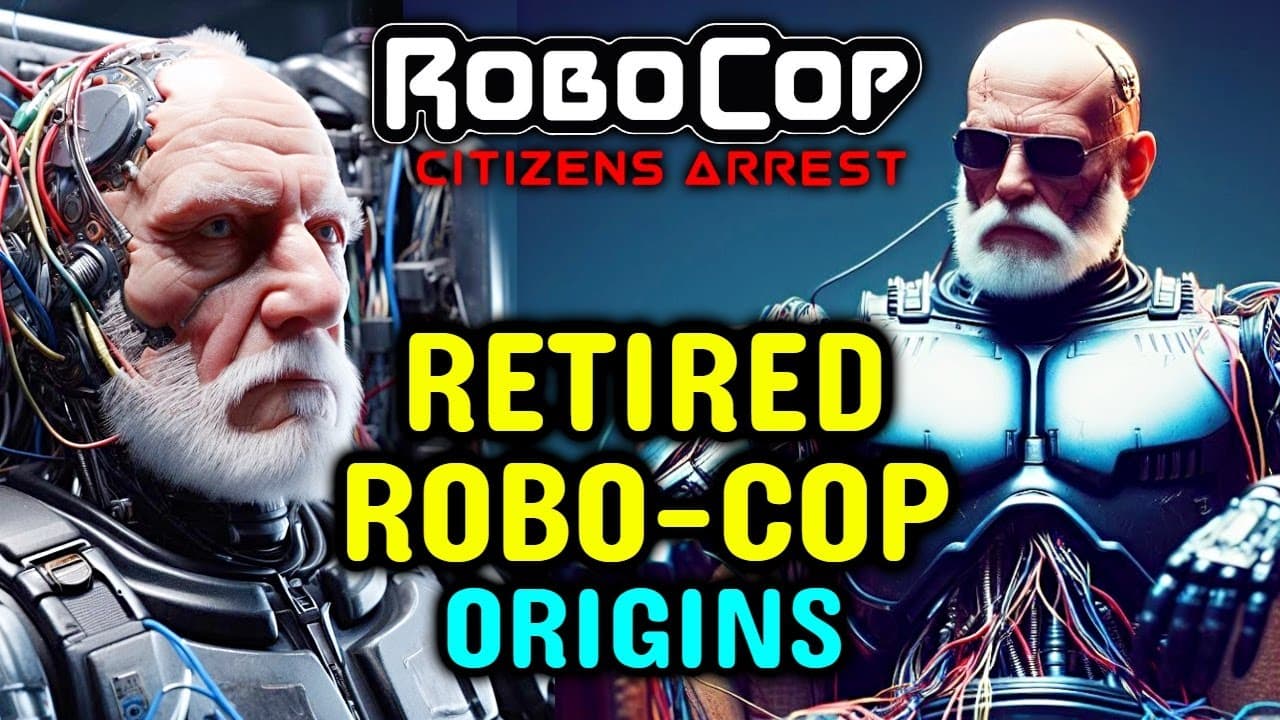
Retired RoboCop Explored - What Happened to Detroit After RoboCop Was Decommissioned By OCP
TL;DR
RoboCop battles against corporate corruption and societal chaos in a gripping new comic series.
Transcript
RoboCop citizens arrest from boom Studios has delivered some serious non-stop action creators Brian Wood and George Coello thrust iconic cyborg police officer into a Relentless battle against corruption and seemingly insurmountable odds for RoboCop it's not really just another day on the job because he has been retired by ocp in fact this guy can't... Read More
Key Insights
- 🇨🇫 The impact of corporate greed on public services is a central theme, mirroring real-world societal issues.
- 😀 RoboCop’s character evolution reflects deeper narratives of identity, loss, and redemption in the face of systemic oppression.
- ❓ Themes of community solidarity against corporate exploitation are prevalent throughout the narrative.
- 🤨 The story showcases the consequences of technological control as a method of subjugation, raising questions about ethics in policing.
- ❓ Social commentary is woven into the plot through character dialogues, action sequences, and artistic storytelling.
- 👔 The emotional stakes for characters are heightened by their ties to the deteriorating community structures.
- 😒 Effective use of artistic elements contrasts socio-economic differences, enhancing reader engagement.
Install to Summarize YouTube Videos and Get Transcripts
Explore YouTube Video Summarizer or Get YouTube Transcript Extractor
Questions & Answers
Q: What are the central themes explored in the RoboCop comic series?
The comic series examines significant themes such as corporate corruption, the struggle for justice in a privatized system, and the impact of poverty on society. These themes resonate with real-life issues where corporations prioritize profit over the public good, amplifying the emotional stakes for both characters and readers.
Q: How does RoboCop cope with his retirement and loss of identity?
RoboCop grapples with feelings of isolation and insignificance after being sidelined by OCP. He is portrayed as a victim of his own creators, who stripped him of agency, making his struggle to regain autonomy both poignant and relatable in the context of battling systemic oppression and personal demons.
Q: Who is Leo Raza, and what role does he play in the narrative?
Leo Raza is a former police officer who becomes an ally to RoboCop. His journey reflects themes of lost identity and redemption, as he attempts to help RoboCop reclaim his capabilities. Leo embodies the fight against the oppressive corporate structure represented by OCP, emphasizing solidarity among the oppressed.
Q: What is the significance of the "retirement code" in the story?
The retirement code symbolizes the stripping away of RoboCop's agency and reflects broader issues of control prevalent in the corporate world. It serves as a narrative device to showcase how powerful entities can render individuals powerless, paralleling real-world discussions about dehumanization in privatized systems.
Q: How does the media influence the public perception of RoboCop and OCP's actions?
The media is portrayed as a manipulative force in the narrative, shaping public perception of RoboCop as a threat while allowing OCP's actions to be glossed over. This reflects the complex relationship between media and power, illustrating how information can be weaponized to control narratives and public opinion.
Q: In what ways does the comic highlight the disparity between social classes?
The comic visually distinguishes between the impoverished citizens of Detroit and the wealthy elite through art and color choices. These distinctions underscore the themes of inequality, as the experiences of the marginalized citizens starkly contrast with the lavish and ruthless nature of corporate power, deepening the narrative's social commentary.
Q: What are the implications of RoboCop's return to action?
RoboCop's return signifies a rebellion against OCP's oppressive regime and the reclaiming of justice by the disenfranchised. His re-emergence as a force for good reflects hope and resilience among the citizens of Detroit, pushing back against the odds stacked against them by corporate interests.
Q: What does the conclusion of the comic suggest about the future of Detroit and its citizens?
The conclusion offers a sense of renewed hope amid adversity, indicating a potential alliance between RoboCop and the citizens of Detroit. It portrays a possible shift toward collective resistance against corporate greed, suggesting that unity and trust can overcome seemingly insurmountable challenges.
Summary & Key Takeaways
-
The comic series delves into themes from the original RoboCop movie, highlighting corporate takeovers, public service cuts, and societal inequality, which remain relevant in contemporary discussions about corporate ethics.
-
Central character RoboCop, now unable to function due to retirement codes, must reclaim his power with the help of former cop Leo Raza, highlighting themes of trust and resilience against oppressive systems.
-
The decline of public services is depicted through character interactions and societal dynamics in Detroit, emphasizing the role of corporations like OCP in exacerbating crime and social disparity.
Read in Other Languages (beta)
Share This Summary 📚
Summarize YouTube Videos and Get Video Transcripts with 1-Click
Try YouTube Summary with ChatGPT & Claude or YouTube Transcript Generator
Explore More Summaries from Marvelous Videos 📚






Summarize YouTube Videos and Get Video Transcripts with 1-Click
Try YouTube Summary with ChatGPT & Claude or YouTube Transcript Generator