Relaxation devices | Pulse synchronization | PDC | Lec-118
TL;DR
This video explains pulse synchronization in relaxation oscillators to modify frequency characteristics.
Transcript
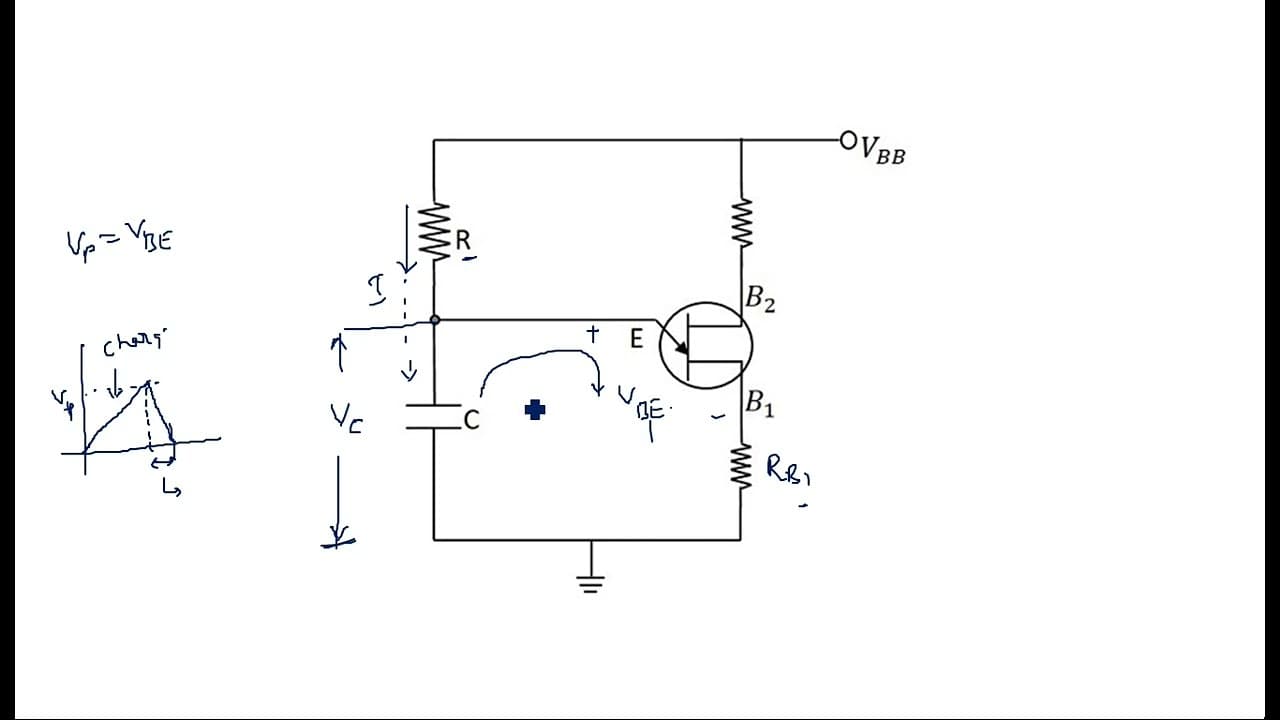
hi everyone in this video I am going to explain about pulse synchronization of relaxation devices we know already relaxation devices are nothing but example is user generalization oscillator or SCT all Triad like uh ugt which is having three terminals under the charging and as well as discharging the type of devices we are using it as relaxation de... Read More
Key Insights
- 👻 Pulse synchronization in relaxation devices allows modification of oscillation frequencies for precise control in electronic circuits.
- 🈸 UJT relaxation oscillators exhibit distinct charging and discharging behaviors, producing standardized sawtooth waveforms essential for various applications.
- 💗 Synchronization requires careful consideration of both pulse duration and amplitude to effectively modify the output of oscillators.
- 💗 Conditions for successful synchronization are critical, with the pulse period needing to be shorter than the oscillator's time period to achieve stable operation.
- 🥺 Inadequate pulse amplitude can lead to synchronization failure, highlighting the importance of voltage levels in oscillator functionality.
- 💗 The interaction between input synchronization pulses and oscillator output creates unique waveform behaviors that can be tailored for specific tasks.
- 📡 Frequency modulations achieved through synchronization have applications in timing circuits, signal processing, and electronic communications.
Install to Summarize YouTube Videos and Get Transcripts
Explore YouTube Video Summarizer or Get YouTube Transcript Extractor
Questions & Answers
Q: What is the main function of pulse synchronization in relaxation devices?
Pulse synchronization primarily modifies the frequency characteristics of relaxation devices, allowing for controlled oscillation outputs. By applying synchronization signals, the oscillator's frequency can change dynamically, which is useful in various electronic applications that require precise timing and waveform modulation.
Q: How does a UJT relaxation oscillator generate a sawtooth waveform?
A UJT relaxation oscillator generates a sawtooth waveform by charging and discharging a capacitor through different resistances. Initially, when the UJT is off, the capacitor charges until reaching a threshold voltage (Vb). Once the UJT turns on, the capacitor discharges through a different resistance, creating the sawtooth waveform characteristic.
Q: What conditions must be met for synchronization to occur?
Synchronization occurs when the pulse period (TP) of the incoming synchronization signal is less than the oscillator’s inherent time period (Tn). Additionally, the amplitude of the synchronization pulse should be sufficient to reach and maintain the operating voltage of the oscillator for effective synchronization to occur.
Q: Why does synchronization sometimes fail when TP is greater than Tn?
When the pulse period (TP) is greater than the oscillator’s time period (Tn), synchronization fails because the synchronization pulse is not efficiently coupled with the oscillator output. The two waveforms do not overlap sufficiently, preventing the oscillator from responding to the synchronization signal properly, leading to inconsistent oscillation outputs.
Q: Explain the role of amplitude in pulse synchronization.
Amplitude plays a crucial role in pulse synchronization; if the amplitude of the synchronization pulse is too low, it may not provide enough voltage to switch the oscillator into its operating state. Proper amplitude ensures that the oscillator recognizes the synchronization signal, facilitating consistent operational changes and effective frequency modulation.
Summary & Key Takeaways
-
The video discusses pulse synchronization using relaxation oscillators, with a focus on UJT oscillators and their frequency modulation.
-
It explains the mechanics of oscillation and how applying a synchronization pulse alters the oscillator's output frequency and waveform characteristics.
-
The content covers the conditions necessary for synchronization, including the relationship between pulse period and oscillator time period.
Read in Other Languages (beta)
Share This Summary 📚
Summarize YouTube Videos and Get Video Transcripts with 1-Click
Try YouTube Summary with ChatGPT & Claude or YouTube Transcript Generator