Is there life in the oceans of Europa? | Katherine de Kleer and Lex Fridman
TL;DR
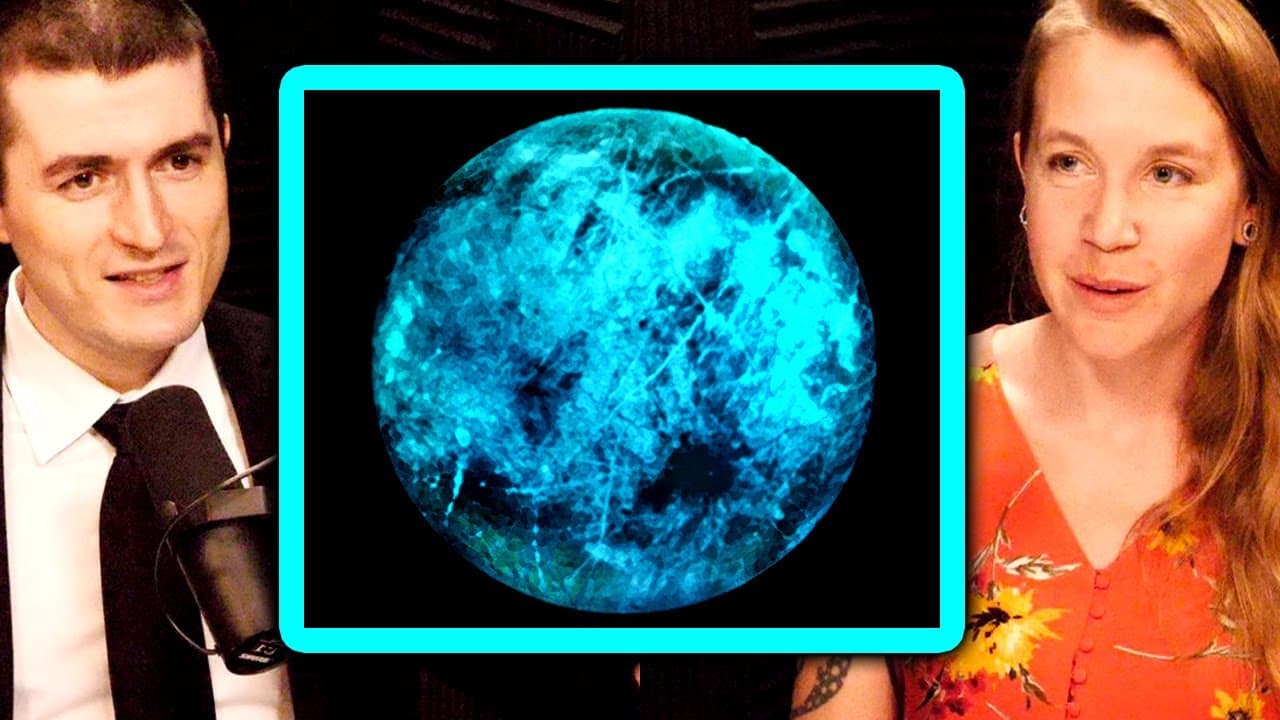
Europa and Enceladus, moons of Jupiter and Saturn, respectively, are the most plausible places in the solar system for life to evolve due to their subsurface oceans and potential for hydrothermal activity.
Transcript
can we talk about um europa is there um so maybe can you talk about the intuition the hope that people have about life being in europa maybe also what are the things we know about it what are things to you that are interesting about that particular moon of jupiter sure yeah europa is from many perspectives one of the really interesting places in th... Read More
Key Insights
- 🛟 Europa and Enceladus are considered the most promising places for life in the solar system due to their subsurface oceans.
- 💦 The direct interaction of water and rock on Europa may provide essential nutrients for potential life.
- 🌊 Enceladus' geysers offer a potential opportunity to collect and study material from its ocean.
- 🛟 Water is considered crucial for life as we know it, but other conditions like a heat source and liquid nutrients could support alternative forms of life.
- 💁 Titan's atmosphere presents an interesting possibility for life evolving in the atmosphere itself, where complex organic molecules are formed.
- 🤨 Enceladus' cyclical evolution and potential episodic freeze and thaw of its ocean raise questions about the feasibility of life developing and surviving there.
- 🥶 The colonization of these moons would face significant challenges, including extreme cold and high radiation levels.
Install to Summarize YouTube Videos and Get Transcripts
Explore YouTube Video Summarizer or Get YouTube Transcript Extractor
Questions & Answers
Q: Is it possible for life to exist without water as a solvent?
While scientists recognize that our understanding of life is limited, water is considered essential for life as we know it due to its ability to dissolve molecules and provide a polar solvent. Other substances like liquid magma could potentially support life under certain conditions.
Q: How can we detect if there is life on Europa without drilling or sending robots?
Realistically, drilling and collecting samples from Europa's subsurface ocean would be necessary. There is a possibility of detecting spectroscopic signatures of dead bacteria on the surface, but this scenario relies on several assumptions and uncertainties.
Q: What makes Enceladus an exciting moon of Saturn?
Enceladus is intriguing from an astrobiology perspective due to its geysers that spew material from its ocean. This presents a potential opportunity to directly study and measure bacteria if an instrument is able to collect samples without destroying any life signatures.
Q: Which is more likely to have life, Titan or Enceladus?
The potential for life in Titan and Enceladus is very different. Titan offers the possibility of life evolving in its atmosphere, where complex organic molecules are formed. Enceladus, on the other hand, has the advantage of spewing material from its ocean, making it more accessible for study.
Summary & Key Takeaways
-
Europa and Enceladus have subsurface oceans and are considered to be the most likely places in the solar system for life to evolve.
-
Europa lacks an ice shell beneath its ocean, allowing for the direct interaction of water and rock, which is important for potential habitability.
-
Enceladus has geysers at its south pole, spewing material from its ocean, providing a potential opportunity to study and measure bacteria.
Read in Other Languages (beta)
Share This Summary 📚
Summarize YouTube Videos and Get Video Transcripts with 1-Click
Try YouTube Summary with ChatGPT & Claude or YouTube Transcript Generator
Explore More Summaries from Lex Clips 📚




Summarize YouTube Videos and Get Video Transcripts with 1-Click
Try YouTube Summary with ChatGPT & Claude or YouTube Transcript Generator