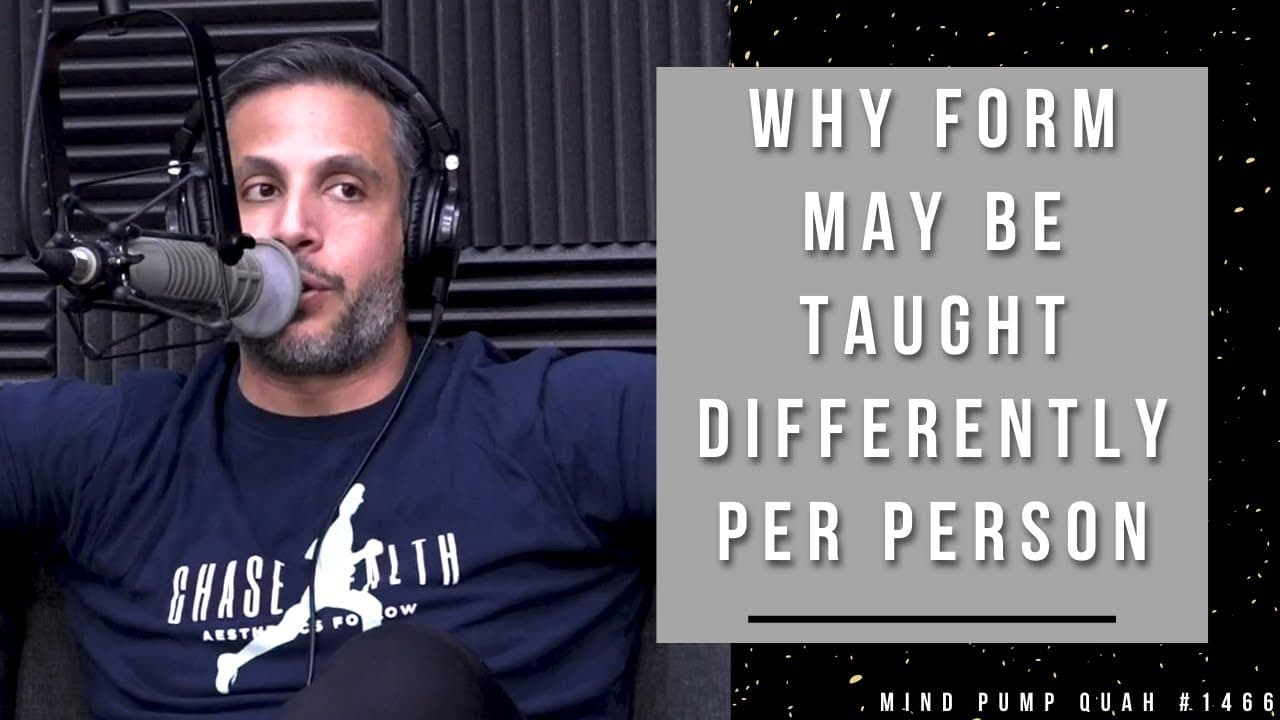
Why Trainers Can’t Always Agree on Exercise Form
TL;DR
Trainers differ on exercise form due to individual needs and varying expertise.
Transcript
first question is from melissa falks pt why is there such a discrepancy between trainers on the proper form and mechanics of exercises is there a lot of discrepancy on form well okay so i think there's debates on certain exercises i would say yeah well okay so i'll use myself as an example if you watch me train let's say you work at a gym that i'm ... Read More
Key Insights
- Trainers often modify exercise forms to suit individual client needs, leading to variations in technique.
- Some trainers prioritize calorie burn and sweat over proper form, which can lead to discrepancies.
- Experience and knowledge in biomechanics are crucial for trainers to effectively teach proper form.
- Different exercise camps and certifications promote varied techniques, contributing to differing opinions.
- Certifications often limit range of motion recommendations to avoid legal issues, affecting training techniques.
- Movements done with control and stability are generally safe, irrespective of traditional form guidelines.
- Trainers' understanding of safe and effective exercise forms evolves with experience and education.
- Mind Pump TV offers resources on exercise mechanics, providing reliable information and guidance.
Install to Summarize YouTube Videos and Get Transcripts
Explore YouTube Video Summarizer or Get YouTube Transcript Extractor
Questions & Answers
Q: Why do trainers have different opinions on exercise form?
Trainers have different opinions on exercise form due to individual client needs, varying expertise, and differing training philosophies. Some trainers may focus more on calorie burn and sweat, while others prioritize proper form and biomechanics, leading to diverse approaches in the fitness industry.
Q: How do certifications influence trainers' exercise techniques?
Certifications influence trainers' exercise techniques by promoting specific methods and limiting range of motion to avoid legal issues. This can lead to trainers teaching exercises in ways that align with certification guidelines, sometimes at the expense of more effective or individualized techniques.
Q: What role does experience play in a trainer's ability to teach proper form?
Experience plays a crucial role in a trainer's ability to teach proper form. As trainers gain experience, they develop a deeper understanding of biomechanics and learn to identify and correct improper form, enabling them to provide more effective instruction and guidance to their clients.
Q: Why might a trainer modify exercise forms for different clients?
A trainer might modify exercise forms for different clients to accommodate individual needs, abilities, and limitations. By tailoring exercises to each client, trainers can ensure safety, effectiveness, and progression, leading to better outcomes and reduced risk of injury.
Q: How do different exercise camps contribute to discrepancies in form?
Different exercise camps contribute to discrepancies in form by promoting varied techniques and philosophies. For example, a kettlebell swing may be taught differently across camps, leading to diverse interpretations of proper form and technique among trainers and clients.
Q: What is the importance of control and stability in exercise movements?
Control and stability are vital in exercise movements as they ensure safety and effectiveness. Movements performed with good control and stability are generally safe, regardless of traditional form guidelines, reducing the risk of injury and enhancing the benefits of the exercise.
Q: How has the understanding of exercise form evolved among trainers?
The understanding of exercise form among trainers has evolved through experience, education, and exposure to various training philosophies. As trainers learn more about biomechanics and client needs, they adapt their techniques, leading to more effective and individualized training approaches.
Q: What resources are available for learning about exercise mechanics?
Mind Pump TV offers extensive resources on exercise mechanics, including over 500 exercises and insights from professionals. These resources provide reliable information and guidance on proper form and technique, helping trainers and clients improve their understanding and execution of exercises.
Summary & Key Takeaways
-
Trainers often disagree on exercise form due to individual client needs, differing expertise, and varying training philosophies. Some prioritize calorie burn over form, while others modify exercises to suit client capabilities. This leads to diverse techniques and approaches in the fitness industry.
-
Certifications and exercise camps contribute to discrepancies by promoting different techniques and limiting range of motion to avoid legal issues. This affects how trainers teach exercises and what they consider safe or effective, creating further variations in exercise form.
-
Experience and knowledge in biomechanics are crucial for trainers to teach proper form effectively. As trainers gain experience, their understanding of safe and effective exercise forms evolves, enabling them to provide better guidance and instruction to clients.
Read in Other Languages (beta)
Share This Summary 📚
Summarize YouTube Videos and Get Video Transcripts with 1-Click
Try YouTube Summary with ChatGPT & Claude or YouTube Transcript Generator
Explore More Summaries from Mind Pump Show 📚




Summarize YouTube Videos and Get Video Transcripts with 1-Click
Try YouTube Summary with ChatGPT & Claude or YouTube Transcript Generator