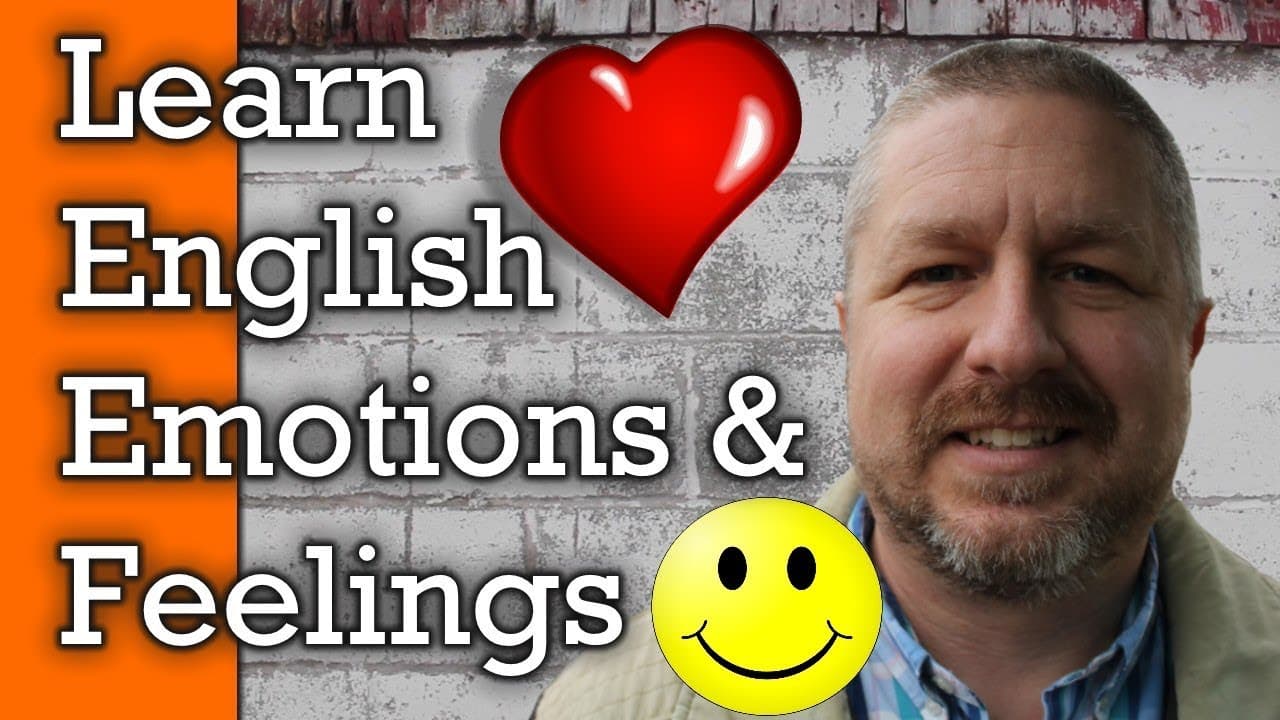
Learn How to Use English Words for Emotions and Feelings - Happy, Sad, Scared
TL;DR
This livestream discusses eight different emotions in English and provides examples and synonyms for each, emphasizing the importance of understanding and expressing feelings accurately.
Transcript
well hello there everyone Bob the Canadian here this is another livestream but at the same time this livestream works great if you're watching it later today I'm gonna talk about using emotions and expressing feelings in English and I know sometimes this can be a challenge for some of you but I'm gonna go through eight different feelings and emotio... Read More
Key Insights
- 😑 Learning to express and understand emotions accurately is crucial for effective communication in English.
- 😀 Emotions such as happy, sad, angry, afraid, surprised, in love, ashamed, and hatred have distinct meanings and can be expressed using various synonyms.
- 🆘 Differentiating between these emotions and correctly using them in sentences helps in conveying precise feelings and intentions.
- 😑 Expressions of emotions can vary in intensity, ranging from mild emotions like gladness and embarrassment to intense emotions like fear and hatred.
- 😑 Understanding and appropriately expressing emotions strengthens interpersonal connections and facilitates better communication.
- 😑 Emotions are universal, but cultural differences may influence the ways they are expressed and understood.
- 🔇 Learning to discuss emotions in English enhances language fluency and the ability to connect emotionally with English speakers.
Install to Summarize YouTube Videos and Get Transcripts
Explore YouTube Video Summarizer or Get YouTube Transcript Extractor
Questions & Answers
Q: How can I differentiate between feeling happy and feeling glad?
While both happy and glad are expressions of feeling good, glad has a slightly stronger connotation. Happy is a general statement of feeling content, while being glad indicates even more satisfaction or joy in a specific situation.
Q: What is the difference between feeling afraid and feeling surprised?
Afraid and surprised may appear similar in facial expressions, but they represent different emotions. Being afraid is an intense feeling of fear or terror, while being surprised is usually a positive experience, resulting from unexpected, often pleasant, events.
Q: Can you explain the difference between shame and embarrassment?
Shame is a more intense feeling than embarrassment. Shame is associated with a deep sense of regret and not wanting others to know about a certain action or situation. Embarrassment, on the other hand, is a milder form of shame, often related to a minor social mishap or awkwardness.
Q: How can I express love towards someone without sounding too strong?
To express love without being too strong, you can use phrases like having a crush on someone, feeling crazy about someone, or simply stating that you feel affection for them. These expressions convey romantic love in a gentler manner.
Summary & Key Takeaways
-
Bob the Canadian introduces the topic of using emotions and expressing feelings in English, emphasizing its importance in effective communication.
-
He covers eight different emotions: happy, sad, angry, afraid, surprised, in love, ashamed, and hatred.
-
For each emotion, Bob explains the meaning, provides synonyms, and shares examples to help learners understand and use these emotions in English.
Read in Other Languages (beta)
Share This Summary 📚
Summarize YouTube Videos and Get Video Transcripts with 1-Click
Try YouTube Summary with ChatGPT & Claude or YouTube Transcript Generator
Explore More Summaries from Learn English with Bob the Canadian 📚





Summarize YouTube Videos and Get Video Transcripts with 1-Click
Try YouTube Summary with ChatGPT & Claude or YouTube Transcript Generator