Amoxicillin | Bacterial Targets, Mechanism of Action, Adverse Effects | Antibiotic Lesson
TL;DR
This video discusses the bacterial targets of amoxicillin, its mechanism of action, and its contraindications and adverse effects.
Transcript
hey everyone this lesson is on the antibiotic amoxicillin and today we're gonna talk about what are the bacterial targets of amoxicillin what is the mechanism of action of amoxicillin and then we're also going to talk about some of the contraindications and the adverse effects of amoxicillin usage so what is amoxicillin well amoxicillin is actually... Read More
Key Insights
- 🧪 Amoxicillin is a beta-lactam antibiotic that targets gram-positive cocci, gram-negative aerobes, and anaerobes, making it effective against a variety of bacterial infections.
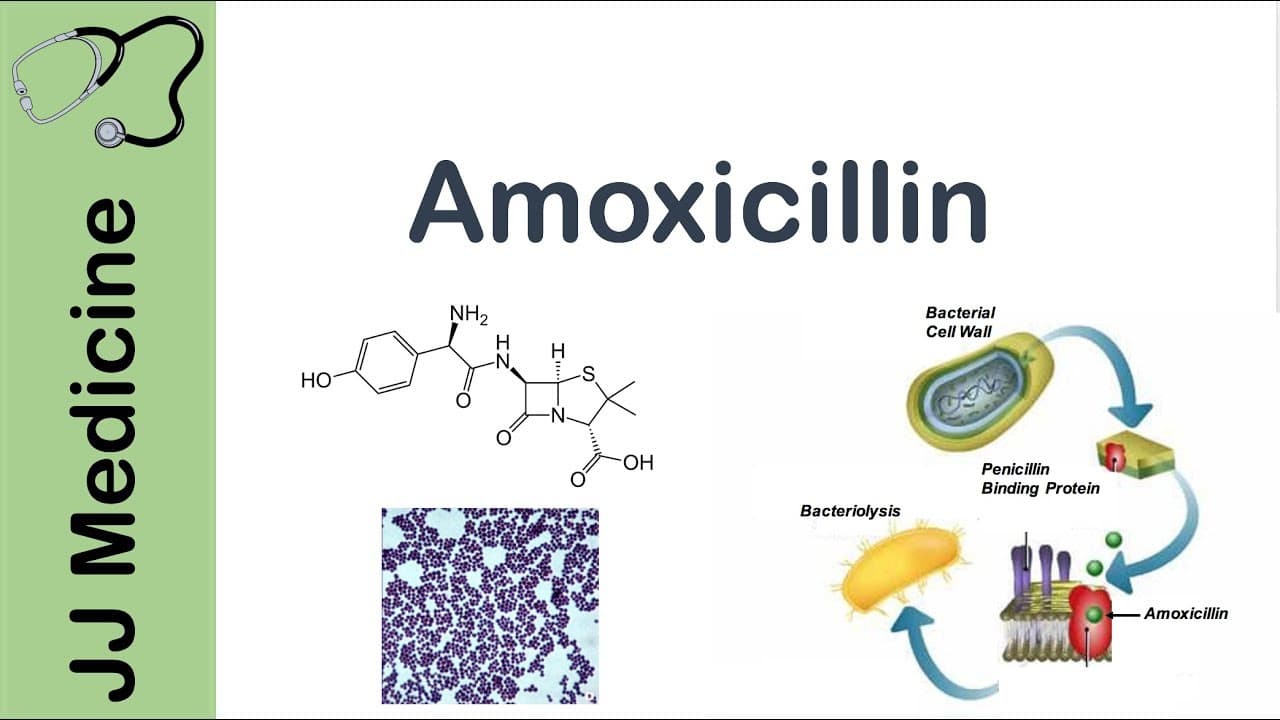
- 🏢 Amoxicillin works by inhibiting bacterial cell wall synthesis, specifically the final transpeptidase step, leading to bacterial cell wall dysfunction and lysis.
- 💊 Amoxicillin can be combined with clavulanic acid to increase its effectiveness against certain bacteria, including methicillin-sensitive Staphylococcus aureus and H. influenzae.
- ⚠️ Contraindications for amoxicillin use include previous hypersensitivity reactions to amoxicillin or other beta-lactam antibiotics, such as anaphylaxis or Stevens-Johnson syndrome.
- ⚠️ Amoxicillin can cause a variety of adverse reactions, including hypersensitivity reactions, CNS agitation, headache, insomnia, rashes, diarrhea, nausea, hematologic issues, hepatitis, and rarely, dental discoloration.
- 🔬 Antibiotic resistance can be a concern with beta-lactam antibiotics, but clavulanic acid can help overcome resistance by inhibiting the beta-lactamase enzyme produced by resistant bacteria.
- 💉 Amoxicillin is commonly used to treat otitis media (middle ear infection) caused by H. influenzae, Moraxella catarrhalis, or streptococcus, in combination with clavulanic acid.
- 🔎 Monitoring for hypersensitivity reactions and adverse effects is crucial when prescribing amoxicillin, and healthcare providers should consider a patient's previous medical history before initiating treatment.
Install to Summarize YouTube Videos and Get Transcripts
Explore YouTube Video Summarizer or Get YouTube Transcript Extractor
Questions & Answers
Q: How does amoxicillin work to inhibit bacterial cell wall synthesis?
Amoxicillin works by binding to penicillin binding proteins, which are essential for the final transpeptidase step in peptidoglycan synthesis. This prevents the cross-linking of peptidoglycan and leads to bacterial cell wall dysfunction, ultimately causing the death of the bacteria.
Q: Can amoxicillin be used against gram-negative bacteria?
Yes, amoxicillin can target gram-negative aerobes such as Salmonella, Shigella, E. coli, Proteus, and H. influenza, although its effectiveness may vary against different strains.
Q: What is the role of clavulanic acid in combination with amoxicillin?
Clavulanic acid is added to amoxicillin to prevent the breakdown of the beta-lactam ring by beta-lactamase enzymes produced by some bacteria. This combination, known as amoxicillin-clavulanate or "Augmentin," increases the effectiveness of amoxicillin against a wider range of bacteria.
Q: What are the contraindications for amoxicillin usage?
One major contraindication is a previous history of serious hypersensitivity reactions to amoxicillin or other beta-lactam antibiotics. This can include conditions like anaphylaxis or Stevens-Johnson syndrome.
Q: What are some of the adverse reactions associated with amoxicillin use?
Adverse reactions can include hypersensitivity reactions, CNS effects such as agitation and headache, rashes, dental discoloration (rare), gastrointestinal symptoms like nausea and diarrhea, hematologic issues, hepatitis, and rare cases of anaphylaxis. However, these reactions are generally rare and not a common concern.
Summary & Key Takeaways
-
Amoxicillin is a beta-lactam antibiotic that targets gram-positive cocci, gram-negative aerobes, and some anaerobes.
-
Its mechanism of action involves binding to penicillin binding proteins, inhibiting bacterial cell wall synthesis and causing bacterial death.
-
Contraindications for amoxicillin usage include hypersensitivity reactions, while adverse effects can range from rashes to more serious conditions like anaphylaxis.
Read in Other Languages (beta)
Share This Summary 📚
Summarize YouTube Videos and Get Video Transcripts with 1-Click
Try YouTube Summary with ChatGPT & Claude or YouTube Transcript Generator
Explore More Summaries from JJ Medicine 📚





Summarize YouTube Videos and Get Video Transcripts with 1-Click
Try YouTube Summary with ChatGPT & Claude or YouTube Transcript Generator