James Rachels | Five Claims of Cultural Relativism | Philosophy Core Concepts
TL;DR
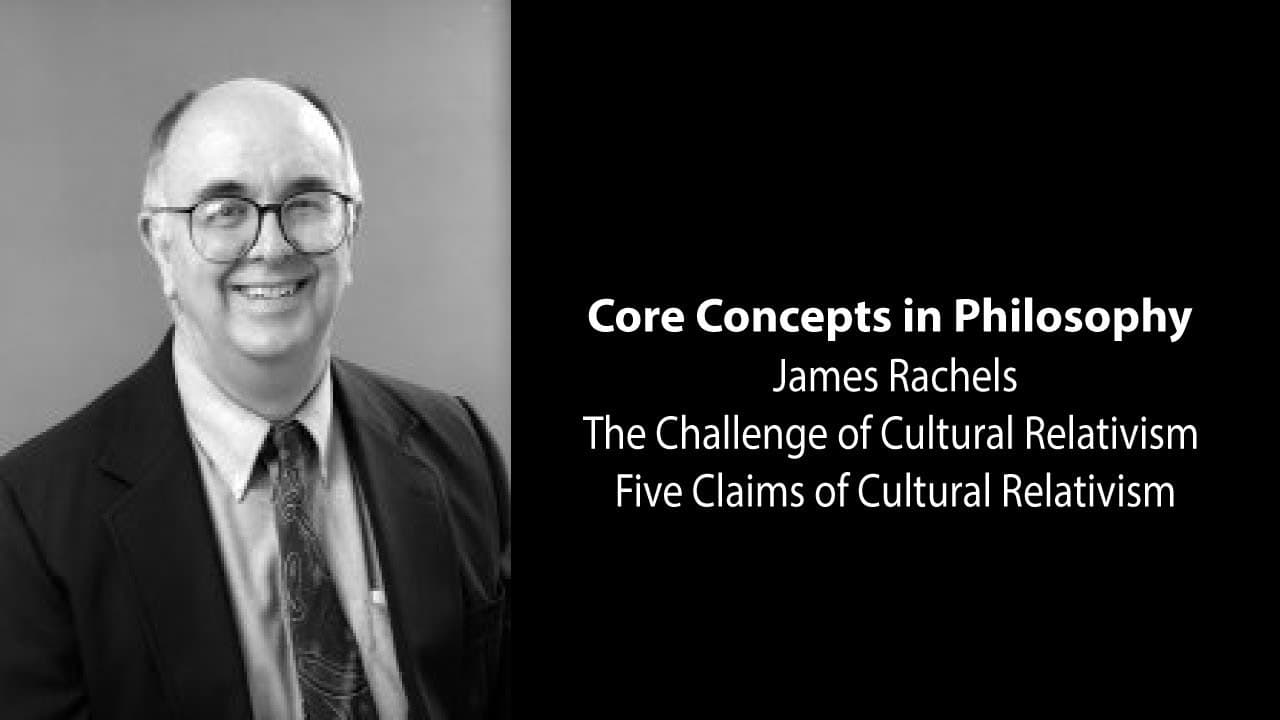
In this video, Dr. Gregory Sadler explores James Rachel's analysis of cultural relativism, discussing five main claims and their implications.
Transcript
hi this is dr. Gregory Sadler I'm a professor of philosophy and the president and founder of an educational consulting company called reason IO where we put philosophy into practice I've studied and taught philosophy for over 20 years and I find that many people run into difficulties reading classic philosophical texts sometimes it's the way things... Read More
Key Insights
- 🎯 Different societies have different moral codes, leading to variability in judgments about right and wrong, even within the same culture.
- 🗺️ The moral code of a society determines what is considered right and wrong within that society, suggesting that moral standards are socially constructed.
- 🌍 There is no objective standard to judge one society's moral code as superior to another, challenging the notion of universal moral truths.
- 💼 The moral code of our own society does not hold a special status and should be seen as one among many, undermining ethnocentrism.
- 🙃 It is seen as arrogant to judge other cultures, and tolerance should be exercised in understanding cultural differences.
- ⚖️ These claims are independent of one another and can be held separately, although contradictions may arise when examining specific cases.
- ⭐ The notion that each society has different moral codes does not mean that all codes are entirely different and devoid of shared norms.
- 🌐 Without an objective standard, it becomes difficult to condemn or even judge certain cultural practices, necessitating the use of broader moral principles.
Install to Summarize YouTube Videos and Get Transcripts
Explore YouTube Video Summarizer or Get YouTube Transcript Extractor
Questions & Answers
Q: What are the five main claims of cultural relativism according to James Rachel's analysis?
The five main claims, as outlined by James Rachel's analysis of cultural relativism, are: 1) different societies have different moral codes, 2) the moral code of a society determines what is right, 3) there is no objective standard to judge one society's code as better, 4) the moral code of one's own society has no special status, and 5) it is arrogant to judge other cultures.
Q: Can one believe in some of the claims without believing in others?
Yes, according to Dr. Sadler, one can subscribe to any combination of these claims without necessarily accepting all five. There is no requirement to hold all the claims simultaneously, although there may be some tensions or contradictions between certain claims.
Q: How does the claim that different societies have different moral codes vary within the same society?
Within the same society, there can be significant variance in moral judgments and codes. Subcultures, as well as individuals, may hold diverse beliefs about what is right and wrong. Even within a particular cultural context, there can be disagreements and differing perspectives on moral matters.
Q: What are the implications of the claim that there is no objective standard to judge one society's code?
If there is no objective standard to judge one society's moral code, it becomes challenging to assess or compare different cultural practices. However, Dr. Sadler points out that certain practices, such as genocide or female circumcision, are widely recognized as wrong, suggesting that some principles beyond specific societies are necessary for moral judgment.
Q: Is it possible to uphold a general attitude of tolerance towards all cultural practices?
Dr. Gregory Sadler suggests that an across-the-board attitude of tolerance is not morally appropriate. While tolerance can be valuable, he argues that not everything can or should be tolerated for the progress of human societies. It is necessary to question and critique cultural practices that may be harmful or morally objectionable, rather than accepting them without examination.
Summary & Key Takeaways
-
Dr. Gregory Sadler introduces his educational consulting company, Reason IO, which aims to help students and lifelong learners navigate classic philosophical texts.
-
He discusses James Rachel's analysis of cultural relativism, focusing on five key claims: different societies have different moral codes, the moral code of a society determines what is right, there is no objective standard to judge one society's code as better, the moral code of one's own society has no special status, and it is arrogant to judge other cultures.
-
Dr. Sadler explores the implications of these claims, highlighting possible tensions and contradictions, and suggests qualifications for each claim to maintain their validity.
Read in Other Languages (beta)
Share This Summary 📚
Summarize YouTube Videos and Get Video Transcripts with 1-Click
Try YouTube Summary with ChatGPT & Claude or YouTube Transcript Generator
Explore More Summaries from Gregory B. Sadler 📚


Summarize YouTube Videos and Get Video Transcripts with 1-Click
Try YouTube Summary with ChatGPT & Claude or YouTube Transcript Generator