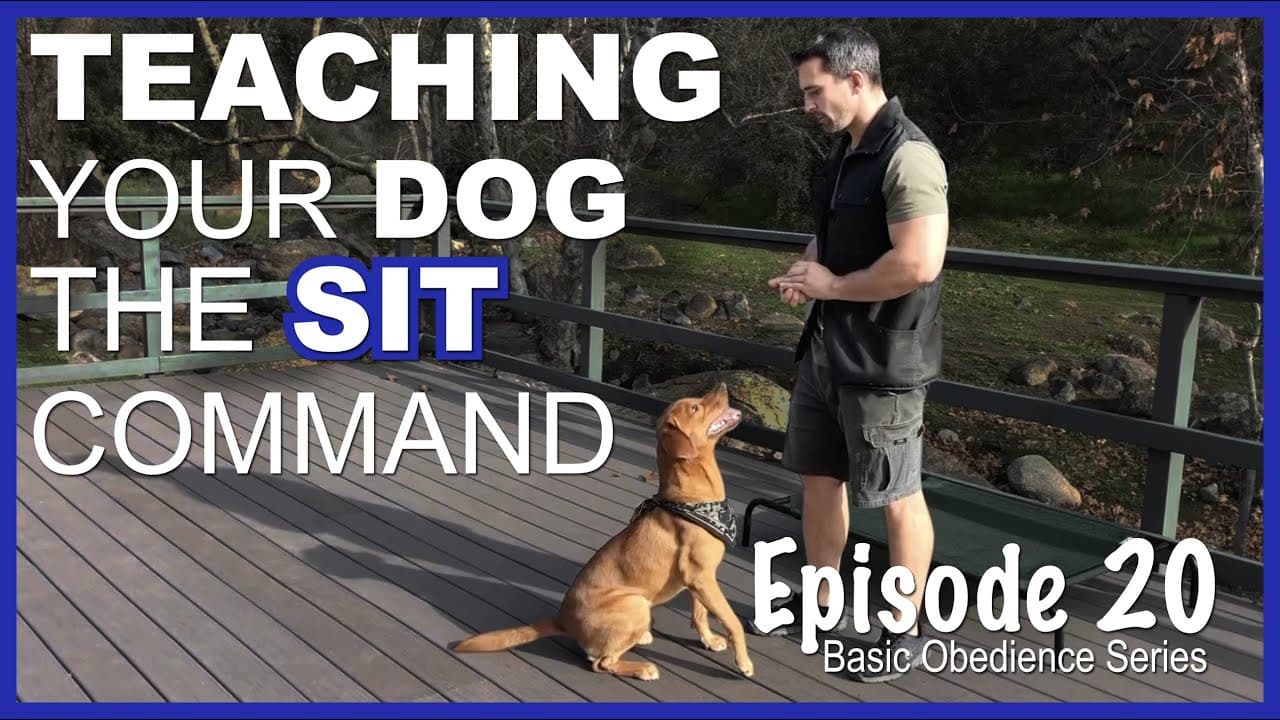
Easily Teach Your Dog the Sit Command. Episode 20
TL;DR
Learn simple techniques to teach your dog the sit command.
Transcript
all right in today's video we're gonna be teaching our dogs to sit command I know this is a very simple command but I'm gonna show you how you can teach it to where it's going to be very easy for your dog to understand and to learn we're gonna be using two different techniques to teach our dogs this command one is going to be using the concept of L... Read More
Key Insights
- The video teaches how to effectively train a dog to sit using two main techniques: luring and leash pressure.
- Luring involves using food to guide the dog's head upwards, prompting the dog to sit naturally.
- Leash pressure is used to gently guide the dog into a sitting position, which helps in future training commands.
- The importance of understanding continuation and terminal markers is emphasized for effective communication with the dog.
- The video suggests using the terminal marker 'free' to indicate the end of a command and reward the dog.
- Motivation is key in training; the more motivated a dog is, the quicker it will learn and perform commands.
- The trainer demonstrates the process of shaping behavior before naming the command to ensure consistency.
- Repetition and consistency are crucial in reinforcing the command, ensuring the dog understands and responds reliably.
Install to Summarize YouTube Videos and Get Transcripts
Explore YouTube Video Summarizer or Get YouTube Transcript Extractor
Questions & Answers
Q: What are the two techniques used to teach the sit command?
The two techniques used to teach the sit command are luring and leash pressure. Luring involves using food to guide the dog's head upwards, which naturally leads the dog to sit. Leash pressure involves gently lifting the leash to guide the dog into a sitting position. Both methods are used to ensure the dog understands and responds to the command effectively.
Q: Why is motivation important in dog training?
Motivation is crucial in dog training because it directly influences the speed and enthusiasm with which a dog learns and performs commands. A motivated dog is more likely to engage actively in training sessions, making it easier for them to understand and respond to commands. The video emphasizes using rewards and positive reinforcement to maintain high motivation levels.
Q: What role do continuation and terminal markers play in training?
Continuation and terminal markers are essential for clear communication between the trainer and the dog. Continuation markers, like 'yes,' signal to the dog that they are performing correctly and should continue the behavior. Terminal markers, such as 'free,' indicate the end of a command, allowing the dog to stop the behavior and receive a reward. These markers help the dog understand the trainer's expectations and reinforce desired behaviors.
Q: How does shaping behavior before naming the command help?
Shaping behavior before naming the command ensures that the dog consistently performs the desired action in response to a physical cue. This consistency helps the dog associate the behavior with the verbal command once it is introduced. By ensuring the dog can reliably perform the behavior, the trainer increases the likelihood of successful command training, as the dog understands what is expected when the command is given.
Q: What is the significance of using the terminal marker 'free'?
The terminal marker 'free' is significant because it clearly indicates to the dog that the command has ended, and they can stop the behavior. It also signals that a reward is forthcoming, reinforcing the behavior and encouraging the dog to perform the command quickly and accurately. Using 'free' helps create a structured training environment where the dog knows when they have completed a task successfully.
Q: Why is repetition important in dog training?
Repetition is important in dog training because it helps reinforce the association between the command and the desired behavior. Consistent practice allows the dog to become familiar with the expectations and increases their ability to respond reliably. Repetition also helps solidify the dog's understanding of the command, making it more likely that they will perform the behavior correctly in different situations and environments.
Q: How does the trainer suggest using rewards in training?
The trainer suggests using rewards to motivate the dog and reinforce desired behaviors. By rewarding the dog immediately after they perform the command correctly, the trainer strengthens the association between the behavior and the positive outcome. This encourages the dog to repeat the behavior in the future. The trainer also emphasizes the importance of using rewards to maintain high motivation levels, which enhances the dog's learning speed and enthusiasm.
Q: What additional resources does the trainer offer for dog training?
The trainer offers various additional resources for dog training, including a top-rated course titled 'From Novice to Pro: The Ultimate Guide To Dog Training,' available on Sit Stay Learn. The trainer also provides access to live Q&As, custom emojis, badges, and a dog training manual. These resources aim to provide comprehensive guidance and support for dog owners looking to enhance their training skills and improve their dog's behavior.
Summary & Key Takeaways
-
The video provides a step-by-step guide on teaching a dog the sit command using luring and leash pressure techniques. It emphasizes the importance of using markers to communicate effectively with the dog and suggests that motivation enhances learning speed.
-
The trainer demonstrates how to shape the sitting behavior before naming the command, ensuring the dog performs consistently. The use of terminal markers like 'free' is highlighted to indicate the end of a command and reward the dog.
-
Viewers are encouraged to maintain consistency and repetition in training to ensure the dog reliably understands and responds to the sit command. The video also promotes additional resources for comprehensive dog training.
Read in Other Languages (beta)
Share This Summary 📚
Summarize YouTube Videos and Get Video Transcripts with 1-Click
Try YouTube Summary with ChatGPT & Claude or YouTube Transcript Generator
Explore More Summaries from Nate Schoemer 📚



Summarize YouTube Videos and Get Video Transcripts with 1-Click
Try YouTube Summary with ChatGPT & Claude or YouTube Transcript Generator