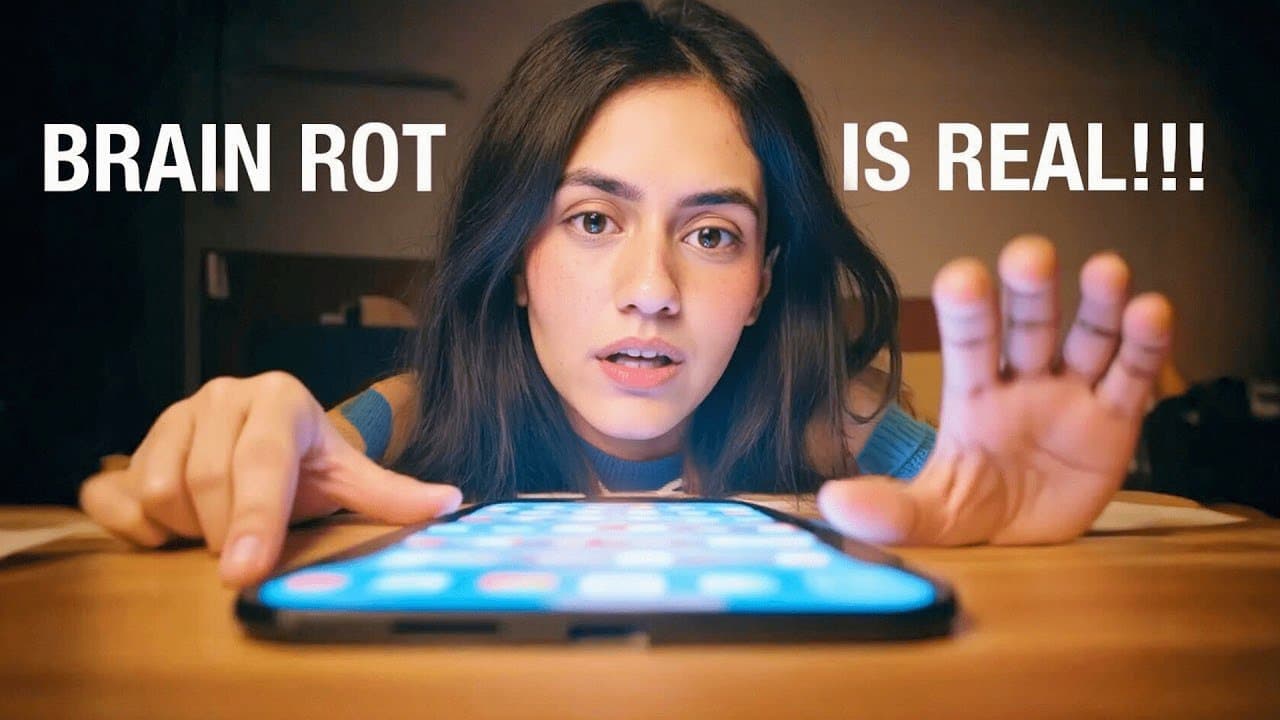
BRAIN ROT | Why You Are Losing Control Of Your Brain?
TL;DR
Our brains are being rewired by modern technology.
Transcript
You know, only about 15% of you will watch this video through to the end. Think about that in a few minutes. Most of you will be gone, lured away by another notification. A fresh piece of content, some shiny new dopamine hit. And no, I don't blame you. I get it. Your brain, my brain. In fact, everyone's brain is in the midst of a ma... Read More
Key Insights
- Modern technology, especially social media, is causing a massive rewiring of human brains, leading to shorter attention spans and restlessness.
- The human brain evolved to focus on important stimuli, but now it's constantly bombarded with digital notifications triggering dopamine releases.
- The rise of smartphones and social media has accelerated brain rewiring, making deep focus feel unnatural and leading to cognitive mismatches.
- Memes have evolved from cultural units to fast-spreading digital content, shaping modern language and communication styles among younger generations.
- Constant digital stimulation is leading to increased anxiety, restlessness, and a reduced ability to handle boredom, affecting mental health.
- The attention economy is monetizing user engagement, leading to productivity declines and a risk of losing complex problem-solving abilities.
- Neuroplasticity allows for retraining the brain to focus deeply, but it requires intentional effort and changes in digital consumption habits.
- Mindful consumption and environmental design can help individuals reclaim their cognitive abilities and resist the pull of endless digital novelty.
Install to Summarize YouTube Videos and Get Transcripts
Explore YouTube Video Summarizer or Get YouTube Transcript Extractor
Questions & Answers
Q: What is causing the massive rewiring of human brains?
The massive rewiring of human brains is primarily caused by modern technology, particularly social media and smartphones. These platforms constantly bombard users with notifications and stimuli, triggering dopamine releases and altering the brain's natural focus and attention mechanisms.
Q: How have memes evolved in the digital age?
In the digital age, memes have evolved from being units of cultural transmission to fast-spreading digital content. They now represent low-context, high-emotional impact information that spreads rapidly online, shaping language and communication styles, particularly among younger generations like Gen Z and Gen Alpha.
Q: What are the consequences of constant digital stimulation on mental health?
Constant digital stimulation leads to increased anxiety, restlessness, and a reduced ability to handle boredom. These effects are particularly concerning for younger generations who are growing up in a digital environment, influencing their neural pathways and overall mental health negatively.
Q: How does the attention economy affect productivity and problem-solving abilities?
The attention economy, which monetizes user engagement, leads to productivity declines as individuals struggle to maintain focus. It also risks the loss of complex problem-solving abilities, as deep work and sustained attention are crucial for innovation, which are compromised by the constant demand for digital interaction.
Q: Can the brain be retrained to focus deeply again?
Yes, the brain can be retrained to focus deeply again through neuroplasticity. This requires intentional effort, such as progressively increasing focus duration, designing environments that minimize distractions, and practicing mindful consumption of digital content to rebuild cognitive endurance and attention span.
Q: What strategies can help reclaim cognitive abilities from digital distractions?
Strategies to reclaim cognitive abilities include mindful consumption, where individuals reflect on content after consumption, and environmental design, which involves reducing easy access to distractions. Setting aside time for non-stimulating activities and progressively increasing focus duration can also help rebuild attention spans.
Q: How does the video suggest individuals address the issue of digital distraction?
The video suggests individuals address digital distraction by acknowledging the problem, gradually increasing focus time, redesigning environments to reduce distractions, and balancing dopamine levels by engaging in non-stimulating activities. It also encourages mindful consumption and reflection on digital content.
Q: What role do schools and platforms play in addressing attention issues?
Schools can address attention issues by teaching attention literacy, helping students understand and manage their focus. Platforms can contribute by adopting humane design principles, such as limiting infinite scroll and encouraging conscious pausing, to respect users' cognitive limits and promote healthier digital interactions.
Summary & Key Takeaways
-
The video explores how modern technology, especially social media, is rewiring human brains, leading to shorter attention spans and restlessness. It discusses the historical context of brain evolution and the impact of digital stimuli on dopamine release, causing cognitive mismatches.
-
Memes, once cultural units, have become fast-spreading digital content, shaping modern language and communication styles. The video highlights the consequences of constant digital stimulation, including increased anxiety and restlessness, affecting mental health and the ability to focus deeply.
-
The attention economy monetizes user engagement, leading to productivity declines and a risk of losing complex problem-solving abilities. The video suggests retraining the brain through mindful consumption and environmental design to reclaim cognitive abilities and resist digital distractions.
Read in Other Languages (beta)
Share This Summary 📚
Summarize YouTube Videos and Get Video Transcripts with 1-Click
Try YouTube Summary with ChatGPT & Claude or YouTube Transcript Generator
Explore More Summaries from Aevy TV 📚




Summarize YouTube Videos and Get Video Transcripts with 1-Click
Try YouTube Summary with ChatGPT & Claude or YouTube Transcript Generator