How to Execute Trades Using Python for Algorithmic Trading?
TL;DR
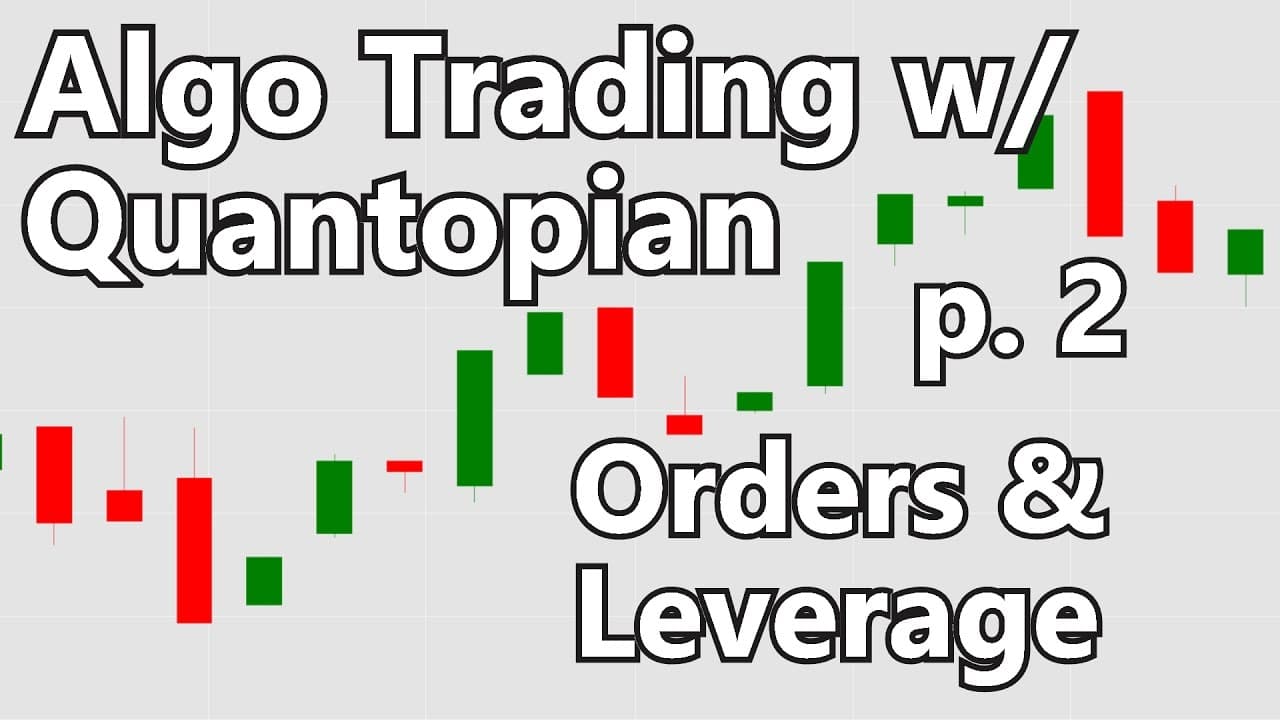
To execute trades using Python in algorithmic trading, utilize order methods like market, limit, and target percent. It's essential to check for open orders before placing new ones to prevent over-leveraging and unintended trades. Understanding shorting, which involves selling borrowed shares, is crucial for implementing effective trading strategies.
Transcript
what is going on everybody and welcome to part 14 of our Python for Finance tutorial series as well as kind of part 2 of the quanto peon part so in the last tutorial we kind of just built up these initial two functions and now we're actually going to execute trades so the way that we're going to do that is basically we're just going to ask if SMA 2... Read More
Key Insights
- ⚾ Python for finance tutorials cover executing trades based on trading conditions and strategies.
- 🪈 Various order methods, including market, limit, stop, stop limit, order value, order percent, and order target percent can be used to place trades in Python.
- 😘 Shorting stocks involves borrowing shares and selling them with the expectation of buying them back at a lower price, but it carries risks.
- 🤑 Monitoring leverage is crucial as it indicates the amount of borrowed money being used for investments and impacts potential profits and losses.
- 🏁 Checking for open orders before placing new ones helps avoid unintended consequences in executing trades.
- 🔊 High trade volumes and leverage can lead to significant transaction costs, which can impact overall profitability.
- ✳️ Proper risk management and monitoring of trading conditions are essential for successful trading strategies.
Install to Summarize YouTube Videos and Get Transcripts
Explore YouTube Video Summarizer or Get YouTube Transcript Extractor
Questions & Answers
Q: What are the different order methods that can be used to execute trades in Python for finance?
Some of the order methods that can be used include market, limit, stop, stop limit, order value, order percent, and order target percent. Each method has its own purpose and allows traders to specify the type of order they want to place.
Q: How does shorting work in trading?
Shorting involves borrowing shares of a company and selling them at the current price with the expectation that the stock price will decrease. Traders aim to buy back the borrowed shares at a lower price, thereby making a profit. However, shorting carries risks as there is unlimited downside potential if the stock price increases instead.
Q: Why is it important to track leverage in trading?
Tracking leverage is crucial because it indicates the extent to which traders are borrowing money to invest. High leverage can amplify both profits and losses. It's important to monitor leverage to avoid overextending and to ensure that the trading strategy remains within predetermined risk limits.
Q: How can open orders affect the execution of trades?
If there are open orders that have not been filled, executing additional orders for the same security can result in unintended consequences like buying or selling more than intended. It's important to check for open orders before placing new ones to avoid over-trading and potential loss accumulation.
Summary & Key Takeaways
-
This video tutorial focuses on executing trades using Python for finance, specifically by placing orders based on specific trading conditions.
-
The tutorial demonstrates how to use order methods such as market, limit, stop, stop limit, order value, order percent, and order target percent to execute trades.
-
The video also explains the concept of shorting, where traders bet against a company by selling borrowed shares at a higher price and buying them back at a lower price.
Read in Other Languages (beta)
Share This Summary 📚
Summarize YouTube Videos and Get Video Transcripts with 1-Click
Try YouTube Summary with ChatGPT & Claude or YouTube Transcript Generator
Explore More Summaries from sentdex 📚
Summarize YouTube Videos and Get Video Transcripts with 1-Click
Try YouTube Summary with ChatGPT & Claude or YouTube Transcript Generator