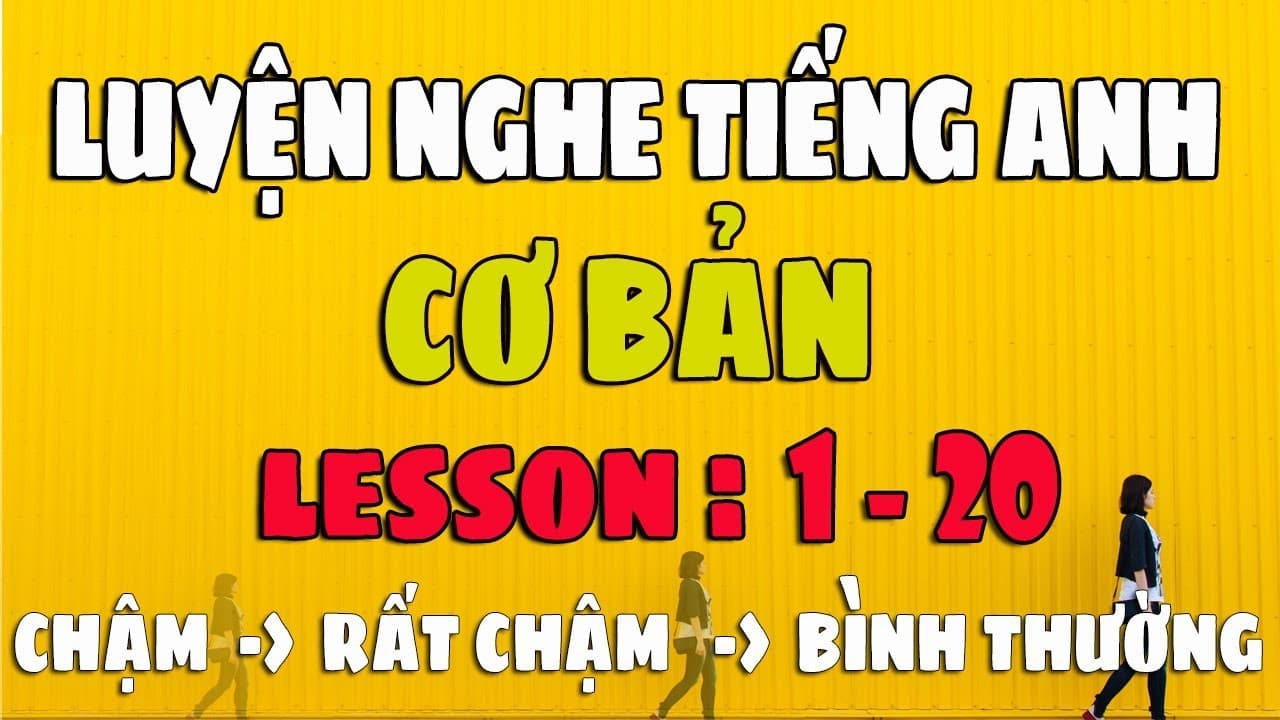
Luyện Nghe Tiếng Anh Giao Tiếp Cơ Bản [Lesson 1-20]
TL;DR
Simple English dialogues for beginners to improve listening skills.
Transcript
where are you from where are you from where are you from xin zhao hello xin zhao hi how are you how are you how are you i'm good how are you i'm good how are you i'm good how are you wait good do you speak english good do you speak english good do you speak english a little are you american a little are you american a little are you american yes wh... Read More
Key Insights
- The content provides basic English dialogues to help beginners practice listening and speaking skills effectively.
- Repetition of phrases and questions is a key technique used to reinforce language learning and comprehension.
- The dialogues cover everyday situations such as introductions, asking for directions, and ordering food, which are essential for basic communication.
- The use of simple and clear language makes the content accessible to learners with minimal English proficiency.
- Cultural references, such as mentioning New York and American identity, help learners understand language in a cultural context.
- The content emphasizes the importance of practice by encouraging learners to listen repeatedly and mimic pronunciation.
- The dialogues are designed to build confidence in speaking English by using familiar scenarios and predictable responses.
- The content is part of a structured course aimed at helping learners gradually build their English language skills through consistent practice.
Install to Summarize YouTube Videos and Get Transcripts
Explore YouTube Video Summarizer or Get YouTube Transcript Extractor
Questions & Answers
Q: What is the main purpose of the dialogues in the content?
The main purpose of the dialogues is to help beginners practice their English listening and speaking skills. By using repetitive and simple language, the dialogues aim to reinforce comprehension and build confidence in everyday communication scenarios, such as introductions, asking for directions, and ordering food.
Q: How do the dialogues help in language learning?
The dialogues help in language learning by using repetition and clear language to reinforce understanding and retention. They cover common situations, allowing learners to practice familiar phrases and responses, which builds confidence and proficiency in basic communication. The structured approach aids gradual mastery of the language.
Q: What kind of scenarios do the dialogues cover?
The dialogues cover everyday scenarios that are essential for basic communication, such as introductions, asking for directions, ordering food, and making small talk. These scenarios are designed to provide learners with practical language skills that can be applied in real-life situations, helping them navigate common interactions.
Q: Why is repetition a key technique used in the content?
Repetition is a key technique because it helps reinforce language learning by allowing learners to hear and practice phrases multiple times. This repetition aids in memorization, pronunciation, and understanding, ensuring that learners become more comfortable and confident in using the language in various contexts.
Q: How does the content incorporate cultural references?
The content incorporates cultural references by mentioning locations like New York and discussing American identity. These references provide context to the dialogues, helping learners understand how language is used within cultural settings and preparing them for interactions in English-speaking environments.
Q: What is the intended audience for this content?
The intended audience is beginners who are looking to improve their English listening and speaking skills. The content is designed for learners with minimal English proficiency, providing simple and repetitive dialogues that make language learning accessible and effective for those starting their English language journey.
Q: How does the content encourage learners to practice?
The content encourages learners to practice by suggesting they listen to the dialogues repeatedly and mimic pronunciation. This consistent engagement with the material helps reinforce language skills, ensuring that learners can gradually improve their comprehension and speaking abilities through regular practice.
Q: What is the benefit of using familiar scenarios in the dialogues?
Using familiar scenarios in the dialogues benefits learners by providing context and relevance to their language practice. These scenarios are relatable and commonly encountered, allowing learners to apply the language skills they acquire to real-life situations, thus enhancing their ability to communicate effectively in everyday interactions.
Summary & Key Takeaways
-
This content provides a series of basic English dialogues aimed at helping beginners improve their listening and speaking skills. It features repetitive and simple conversations covering everyday topics like introductions, directions, and dining out, making it accessible to learners with minimal English proficiency.
-
The dialogues emphasize the importance of practice and repetition in language learning. By using familiar scenarios and straightforward language, the content helps learners build confidence and comprehension in real-life situations, while cultural references provide context to the dialogues.
-
Part of a structured course, this content encourages learners to listen repeatedly and mimic pronunciation to enhance their language skills. It is designed to support gradual learning and mastery of English through consistent engagement with the material.
Read in Other Languages (beta)
Share This Summary 📚
Summarize YouTube Videos and Get Video Transcripts with 1-Click
Try YouTube Summary with ChatGPT & Claude or YouTube Transcript Generator
Explore More Summaries from BingGo Leaders 📚
![Luyện Nghe Tiếng Anh Giao Tiếp Cơ Bản [Lesson 61-80] Chậm và Dễ Dàng cho Người Mới Bắt Đầu thumbnail](/_next/image?url=https%3A%2F%2Fi.ytimg.com%2Fvi%2F3TP3L5ciGfA%2Fhqdefault.jpg&w=750&q=75)



Summarize YouTube Videos and Get Video Transcripts with 1-Click
Try YouTube Summary with ChatGPT & Claude or YouTube Transcript Generator