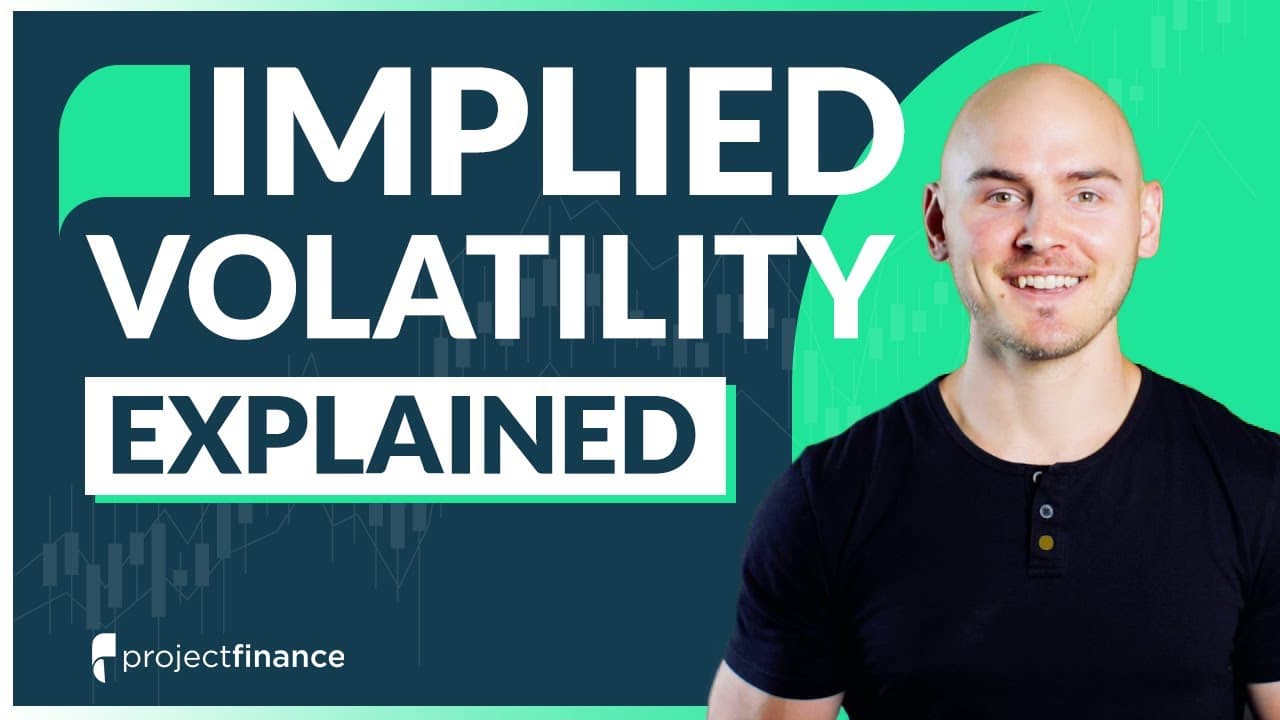
Implied Volatility Explained (The ULTIMATE Guide)
TL;DR
This video explains the concept of implied volatility, how it is derived from a stock's option prices, and its impact on option prices. It also covers topics such as IV rank, IV percentile, and the relationship between historical volatility and option prices.
Transcript
what's going on YouTube in this video I'm going to teach you to become a master of implied volatility because I'm going to clearly explain to you what implied volatility represents and I'm also going to teach you some of the most common topics regarding implied volatility such as IV rank and IV percentile why implied volatility changes and some of ... Read More
Key Insights
- 📈 Implied volatility represents the market's expected magnitude for a stock's future price movements based on its option prices. It is derived from the extrinsic value in the stock's options relative to their time until expiration.
- 😮 Implied volatility can be confusing for beginners, but it is actually intuitive and not as complicated as it may seem.
- 🔄 Implied volatility changes based on the buying and selling pressure in the market, causing option prices to fluctuate.
- ⚖️ Comparing option prices of similarly priced stocks can help determine the level of implied volatility. Higher option prices indicate higher implied volatility and vice versa.
- 📊 Implied volatility has a close relationship with a stock's historical volatility, where lower recent volatility is correlated with lower implied volatility and vice versa.
- 🔮 Implied volatility represents the uncertainty the market has regarding a stock's future performance and is derived from a stock's option prices.
- 📊 Implied volatility rank (IV rank) and implied volatility percentile (IV percentile) are metrics that help traders determine whether a stock's implied volatility is currently high or low relative to its historical levels.
- 📈 Implied volatility can increase leading up to a stock's earnings report, but this does not necessarily mean that option prices are increasing. It is important to consider the option prices themselves and how they may be affected by the upcoming earnings announcement.
Install to Summarize YouTube Videos and Get Transcripts
Explore YouTube Video Summarizer or Get YouTube Transcript Extractor
Questions & Answers
Q: How is implied volatility calculated and expressed?
Implied volatility is calculated as an annualized percentage and represents the one standard deviation range of a stock's price over the next year. It is expressed as a percentage figure.
Q: What is the difference between implied volatility rank and implied volatility percentile?
Implied volatility rank compares a stock's current implied volatility to its highest and lowest levels observed over the past year. Implied volatility percentile, on the other hand, tells us how often a stock's implied volatility has been below the current level over the past year.
Q: How does historical volatility affect option prices?
Historical volatility, or a stock's past volatility, is closely related to its current implied volatility and can influence option prices. When historical volatility is low, option prices tend to be cheaper, indicating lower expected volatility, and vice versa.
Q: Can buying options before a stock's earnings report lead to higher profits due to increased implied volatility?
Not necessarily. While implied volatility often increases around earnings reports, this does not always result in higher option prices. Options can retain their value leading up to an earnings report, causing implied volatility to rise without a significant change in option prices.
Q: How can implied volatility be used to calculate expected stock price ranges?
By multiplying a stock's price by its implied volatility and the square root of the calendar days to expiration divided by 365, a stock's expected price range over any timeframe can be estimated. This calculation gives a one standard deviation range, representing a 68% probability of the stock being within that range.
Summary & Key Takeaways
-
Implied volatility represents the expected magnitude of a stock's future price movements as implied by its option prices.
-
Option prices, not implied volatility, drive changes in implied volatility, as buying and selling pressure affects option prices.
-
Implied volatility is determined by the extrinsic value in a stock's options relative to their time until expiration.
-
Implied volatility rank and percentile are metrics used to compare a stock's current implied volatility to its historical levels.
-
Implied volatility can increase around earnings reports, but this does not necessarily result in higher option prices.
Read in Other Languages (beta)
Share This Summary 📚
Summarize YouTube Videos and Get Video Transcripts with 1-Click
Try YouTube Summary with ChatGPT & Claude or YouTube Transcript Generator
Explore More Summaries from projectfinance 📚


Summarize YouTube Videos and Get Video Transcripts with 1-Click
Try YouTube Summary with ChatGPT & Claude or YouTube Transcript Generator