What Was Earth Like Before the Dinosaurs?
TL;DR
The Permian period, 300 million years ago, was a time of diverse and fascinating species, but it ended in the most catastrophic mass extinction event in Earth's history.
Transcript
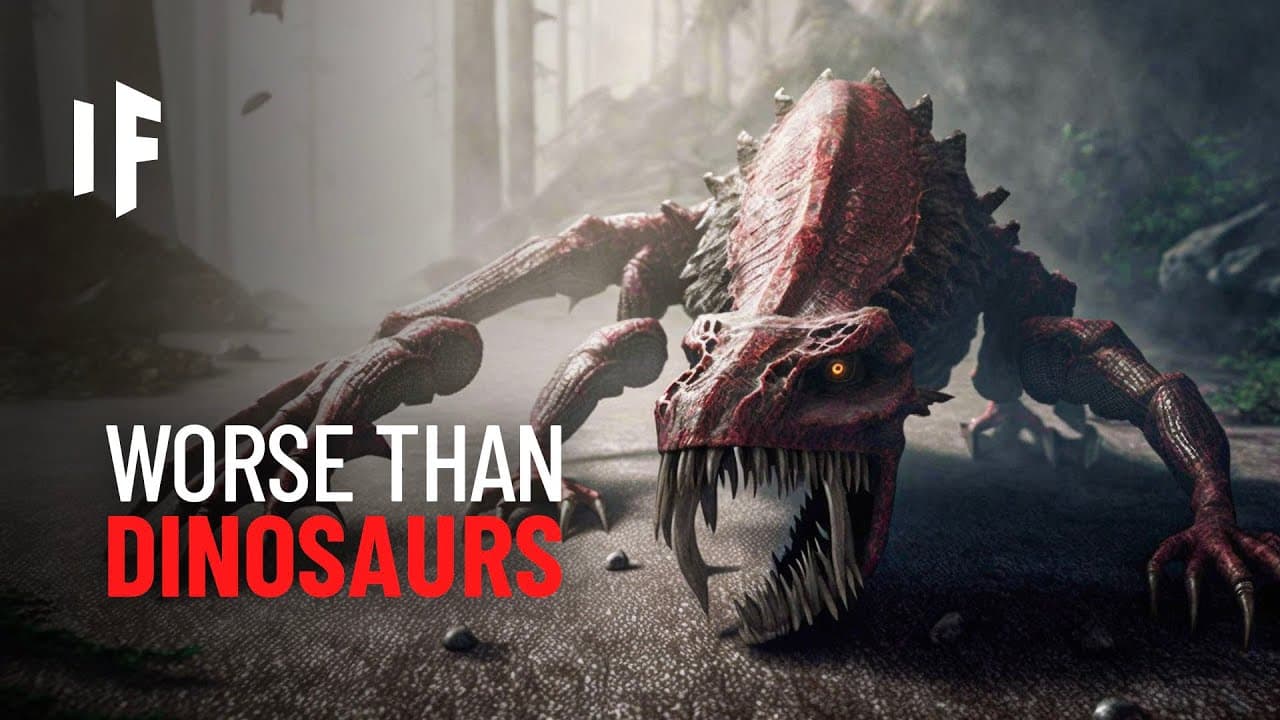
millions of years ago Earth looked very different all the continents were fused into one teeming with life both beautiful and terrifying when you think of prehistoric times you might picture a T-Rex rampaging through the jungle with its razor-sharp teeth but even before the dinosaurs there were other giant creatures ruling the Earth yeah welcome to... Read More
Key Insights
- 😅 The Permian period was a time of significant climate change, from a cooler phase to a warming and eventually extremely hot phase.
- ❓ Giant creatures like Dimetrodon and mammal-like reptiles thrived during the Permian period.
- 🌱 The "Great Dying" was the result of volcanic activity causing climate disruptions and the extinction of the majority of plant and animal life.
- 💆 This mass extinction event had a significant impact on both land and marine ecosystems.
- 💱 The Permian period offers valuable insights into the effects of dramatic climate changes on biodiversity.
- 🖐️ The ancient supercontinent Pangea played a crucial role in shaping the Permian period's geography and species distribution.
- 😀 The Permian period highlights the importance of adaptation and evolution in the face of changing environments.
Install to Summarize YouTube Videos and Get Transcripts
Explore YouTube Video Summarizer or Get YouTube Transcript Extractor
Questions & Answers
Q: What were some of the unique features of the Permian period?
The Permian period was characterized by the formation of the supercontinent Pangea, the emergence of seed-bearing plants called gymnosperms, and the dominance of giant creatures like Dimetrodon.
Q: How did the climate and environment change during the Permian period?
Initially, the climate was cooler, but it later warmed up, leading to a lush world with volcanic activity shaping the landscape. Eventually, the climate became extremely hot and dry, leading to the mass extinction event.
Q: What caused the mass extinction event known as the "Great Dying"?
The "Great Dying" was likely caused by massive volcanic eruptions that released copious amounts of ash into the atmosphere. This resulted in a blockage of sunlight, causing plant death and disrupting the food chain.
Q: What were the consequences of the "Great Dying"?
The "Great Dying" led to the extinction of over 90% of all plant and animal species, both on land and in the sea. It was Earth's most devastating mass extinction event.
Summary & Key Takeaways
-
The Permian period began with a cooler climate and the formation of the supercontinent Pangea, followed by a warming period and the emergence of diverse plant and animal life.
-
Giant creatures such as Dimetrodon and mammal-like reptiles dominated the land during this time.
-
The period ended with the devastating "Great Dying," where 90% of all plant and animal life was wiped out due to volcanic activity and drastic climate changes.
Read in Other Languages (beta)
Share This Summary 📚
Summarize YouTube Videos and Get Video Transcripts with 1-Click
Try YouTube Summary with ChatGPT & Claude or YouTube Transcript Generator
Explore More Summaries from What If 📚
Summarize YouTube Videos and Get Video Transcripts with 1-Click
Try YouTube Summary with ChatGPT & Claude or YouTube Transcript Generator