Mendeleev's Business Card - Periodic Table of Videos
TL;DR
An envelope from the past reveals scientific collaboration before the digital age.
Transcript
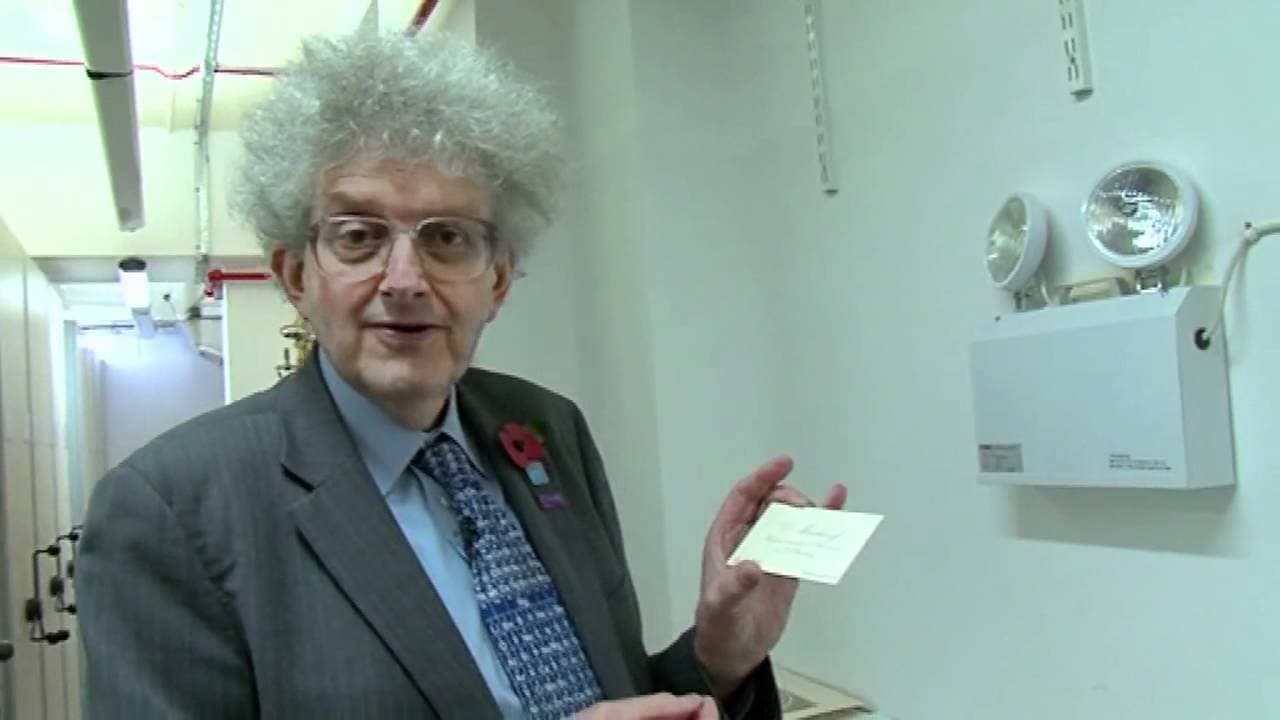
I'm in the archive of the Royal Society in London where all the precious objects are kept and there's a really interesting thing that I've never looked at before in this envelope if you look here it's a rather beautiful envelope and it says on the front London and then it says M Le Professor Mr the professor Thorp f for fellow of Royal Society and ... Read More
Key Insights
- 💌 The envelope from 1901 in the Royal Society archive contains cards introducing scientists, showcasing historical scientific communication.
- 🪜 Dmitri Mendeleev, known for the periodic table, was involved in the exchange, adding significance to the artifact.
- 🍝 The artifacts in the Royal Society archive offer a glimpse into past scientific collaboration and communication methods.
- 🤕 The envelope highlights the international nature of scientific collaboration before the digital age.
- 🧑🔬 The exchange between scientists reveals the importance of personal introductions in establishing professional connections.
- 🍝 The historical artifacts in the Royal Society archive provide tangible links to past scientific figures and their interactions.
- 🌍 The existence of such artifacts emphasizes the long history of international scientific collaboration.
Install to Summarize YouTube Videos and Get Transcripts
Explore YouTube Video Summarizer or Get YouTube Transcript Extractor
Questions & Answers
Q: What does the envelope from 1901 in the Royal Society archive contain?
The envelope contains cards introducing a scientist named Dr. Duncan to Professor Thorp, written by Dmitri Mendeleev, the discoverer of the periodic table.
Q: Why is this exchange between scientists significant?
This exchange showcases the collaboration and communication between scientists from different countries before the digital age, demonstrating the importance of international scientific connections.
Q: What does Dmitri Mendeleev's business card in the envelope reveal?
Mendeleev's business card shows his status as an Emeritus Professor at the University of St. Petersburg, providing insights into his professional status and connection to the scientific community.
Q: Why is the existence of such historical artifacts important?
These artifacts offer a tangible link to the past, showing how scientists communicated and collaborated before modern technology, providing insights into the history of scientific discovery.
Summary & Key Takeaways
-
An old envelope from 1901 in the Royal Society archive contains cards introducing a scientist to another, showcasing collaboration.
-
The envelope belonged to Dmitri Mendeleev, known for the periodic table.
-
The exchange highlights pre-internet international scientific communication.
Read in Other Languages (beta)
Share This Summary 📚
Summarize YouTube Videos and Get Video Transcripts with 1-Click
Try YouTube Summary with ChatGPT & Claude or YouTube Transcript Generator
Explore More Summaries from Periodic Videos 📚





Summarize YouTube Videos and Get Video Transcripts with 1-Click
Try YouTube Summary with ChatGPT & Claude or YouTube Transcript Generator