How Does Mistrust in Expertise Impact Democracy?
TL;DR
Public distrust in expertise threatens democracies, especially in crucial regulatory fields like finance. Thin political markets, marked by concentrated interests and low public engagement, distort policymaking and compromise democratic processes. To improve outcomes, we must enhance the roles of academics, diversify input in public comment periods, and prioritize subject matter expertise in policy decisions.
Transcript
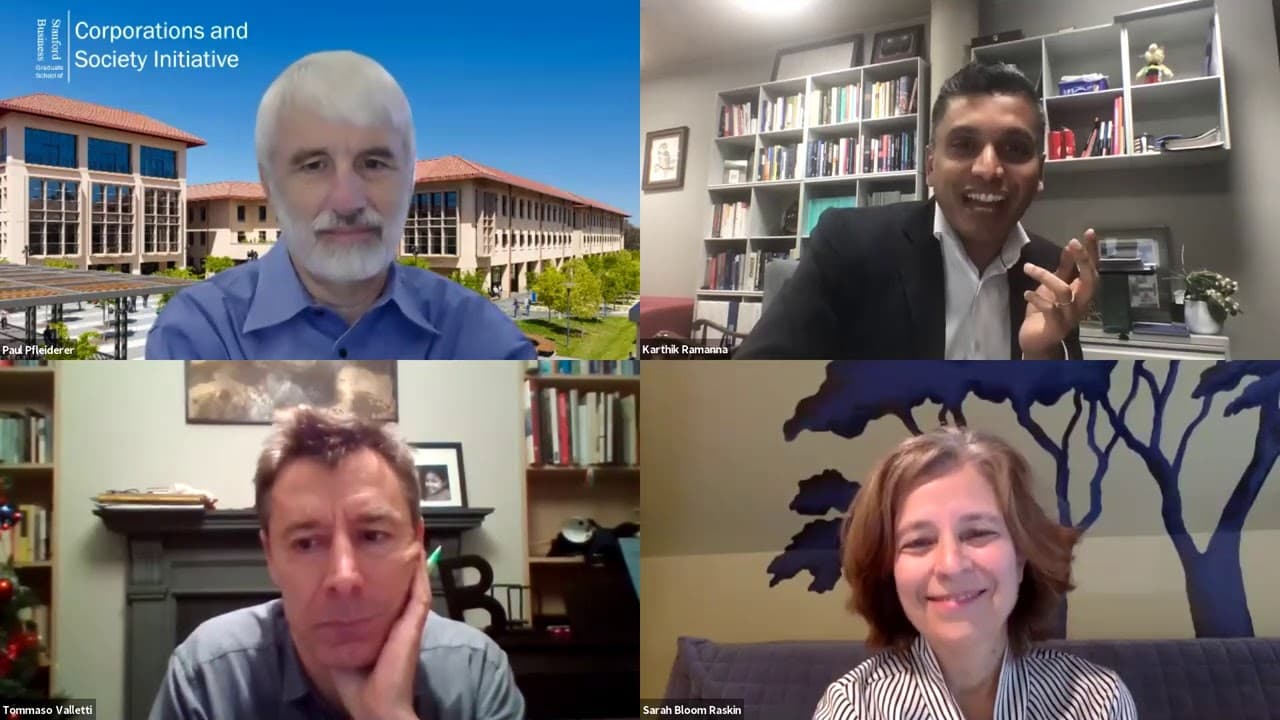
uh welcome to the second day of the uh the conference i'll say good morning but i know for some it's a good evening in this session we are going to talk about expertise i think as a maintained hypothesis few would disagree with the notion that a well-functioning democracy depends on tapping the knowledge of experts for all of us i'm sure one of the... Read More
Key Insights
- 🇨🇫 Public mistrust in expertise poses a threat to democracies, particularly in areas like financial regulation and policy-making.
- 😘 Thin political markets, fueled by concentrated commercial interests, tacit knowledge, and low salience issues, contribute to the distortion of policy-making and compromise democratic processes.
- 🖐️ Academics can play a crucial role in providing unbiased expertise and challenging the status quo.
- 🇨🇫 The comment-making process should prioritize diverse viewpoints and constructive engagement from the public, ensuring that policy outcomes reflect the public interest.
- 🪡 Policymakers need to enhance their subject matter expertise through training programs, rotational assignments, and collaboration with academics and professionals.
- 🇨🇫 A focus on the public interest, rather than corporate interests, is necessary for creating representative and effective policies.
Install to Summarize YouTube Videos and Get Transcripts
Explore YouTube Video Summarizer or Get YouTube Transcript Extractor
Questions & Answers
Q: What is a thin political market, and how does it affect democracy?
A thin political market refers to the concentration of commercial interests, the prevalence of tacit knowledge, and the low salience of certain issues in policy-making. It leads to distortions in decision-making, compromises the quality of policy outcomes, and undermines the trust in democratic processes.
Q: How can academics contribute to improving policy-making?
Academics can provide valuable expertise, research, and critical perspectives on complex policy issues. Their independent analysis can help challenge the concentration of commercial interests and promote more informed decision-making.
Q: How can the comment-making process be improved to ensure meaningful public input?
The comment-making process should be designed to encourage diverse viewpoints and meaningful contributions. Regulators should formulate questions in a way that reflects the public interest and break them down into more accessible terms. Additionally, public engagement efforts should aim to include atypical commenters and leverage subject matter experts.
Q: How can policymakers enhance their subject matter expertise?
Policymakers should prioritize subject matter expertise by investing in training programs and rotational assignments that allow them to gain practical knowledge and establish relationships with experts. They should also collaborate more closely with academics, professionals, and other stakeholders to ensure a well-rounded understanding of complex policy issues.
Summary & Key Takeaways
-
Public mistrust in expertise is a major concern for democracies, especially in areas like financial regulation and policy-making.
-
Thin political markets, characterized by concentrated commercial interests, tacit knowledge, and low salience issues, contribute to the distortion of policy-making.
-
Academics can play a crucial role in providing expert knowledge and unbiased perspectives.
-
The comment-making process should be improved to encourage meaningful public input and diverse viewpoints.
-
Enhanced subject matter expertise among policymakers and a focus on public interest rather than corporate interests are necessary for better outcomes.
Read in Other Languages (beta)
Share This Summary 📚
Summarize YouTube Videos and Get Video Transcripts with 1-Click
Try YouTube Summary with ChatGPT & Claude or YouTube Transcript Generator
Explore More Summaries from Stanford Graduate School of Business 📚
Summarize YouTube Videos and Get Video Transcripts with 1-Click
Try YouTube Summary with ChatGPT & Claude or YouTube Transcript Generator