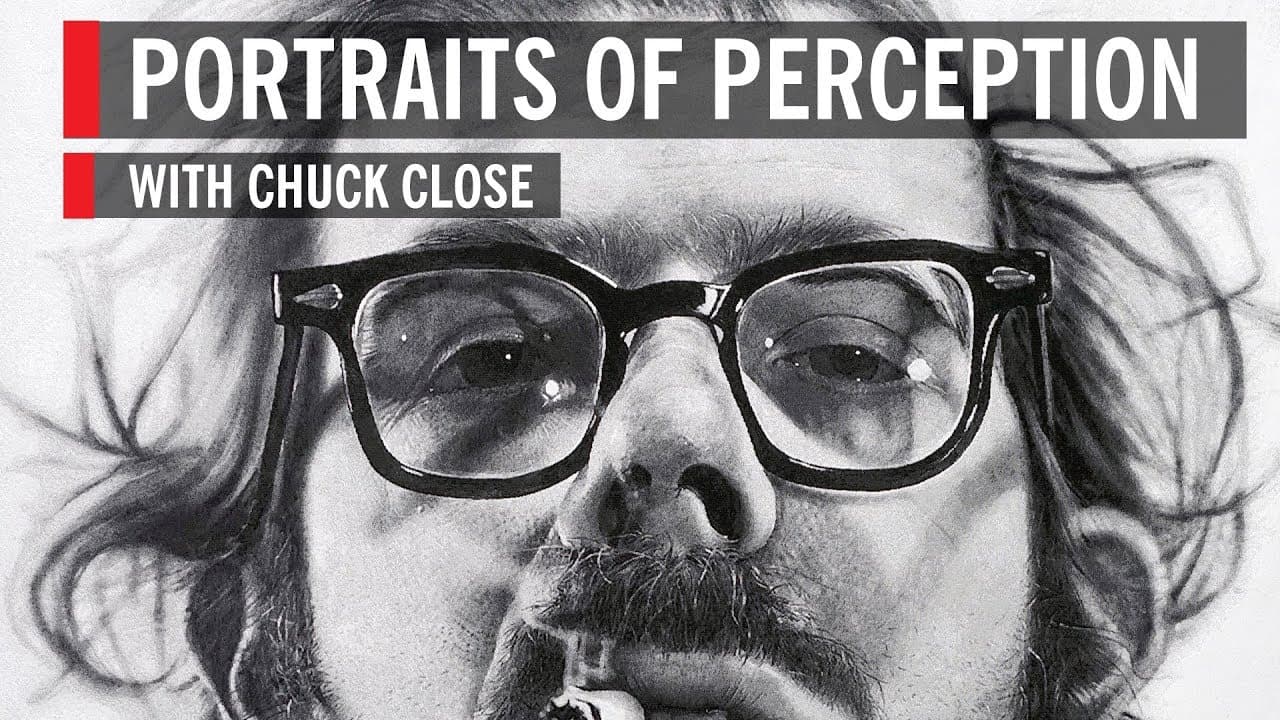
Portraits of Perception with Chuck Close
TL;DR
Renowned artists and scientists discuss the intersections between art and science, specifically in relation to the perception and portrayal of faces.
Transcript
good evening i'm kurt anderson i'm it's my great pleasure to be your moderator tonight um if you don't know studio 360 thanks to the alpha piece loan foundation regularly covers exactly this kind of thing the intersections between science and arts so it is it is why i have uh was so eager to to do this this evening the panel is an amazing group of ... Read More
Key Insights
- 😀 The perception and recognition of faces involve complex visual processing in the brain.
- 🧑🔬 Artists and scientists both experiment and make discoveries, often with significant overlap in their findings.
- 〽️ The use of noise and distortion in art can evoke different emotional responses and alter perceptions of an image.
- 😍 Eye-centeredness in portraiture has been observed throughout art history and offers a more engaging experience for viewers.
Install to Summarize YouTube Videos and Get Transcripts
Explore YouTube Video Summarizer or Get YouTube Transcript Extractor
Questions & Answers
Q: How did the panelists become interested in studying faces and their perception?
Christopher Tyler was initially interested in sculpting and the idea of revealing something in a block of stone. Ken Nakayama's interest was sparked when he realized his father had difficulty recognizing familial resemblances. Margaret Livingstone was inspired by op art's ability to illustrate how our brain processes color and other visual information. Chuck Close's face blindness and learning disabilities led him to focus on painting portraits.
Q: How did the advent of functional magnetic resonance imaging (fMRI) impact the understanding of visual perception?
The panel agrees that fMRI was a significant development, allowing researchers to see what different parts of the brain are doing in various tasks. It has helped consolidate existing knowledge and gradually improve understanding. However, the refinement of previous neurological studies has been more prevalent than transformation.
Q: How do artists and scientists collaborate to enhance their understanding of visual perception?
Scientists appreciate the insights artists gain through experimentation and pay attention to their discoveries. Artists, in turn, incorporate scientific findings into their work and use them to connect art and science. The collaboration helps bridge the gap between the two fields and drives further exploration.
Q: How does Chuck Close create his portraits and what does he aim to achieve?
Close uses dots and other marks to build portraits, focusing on flatness and the ability to memorize and recognize faces through a flat representation. His learning disabilities and face blindness influenced his choice of subject matter and his unique approach to painting.
Summary & Key Takeaways
-
A panel discussion featuring artists and scientists explores the perception and memory of faces and how they are portrayed in art.
-
Scientists discuss the gradual but significant progress in understanding visual perception, with the advent of functional magnetic resonance imaging (fMRI) being a turning point.
-
Artists share insights on their work, including Chuck Close's use of dots to create portraits and Devorah Sperber's use of thread spools to create optical illusions.
Read in Other Languages (beta)
Share This Summary 📚
Summarize YouTube Videos and Get Video Transcripts with 1-Click
Try YouTube Summary with ChatGPT & Claude or YouTube Transcript Generator
Explore More Summaries from World Science Festival 📚



Summarize YouTube Videos and Get Video Transcripts with 1-Click
Try YouTube Summary with ChatGPT & Claude or YouTube Transcript Generator