What Are Tariffs and How Do They Affect Trade?
TL;DR
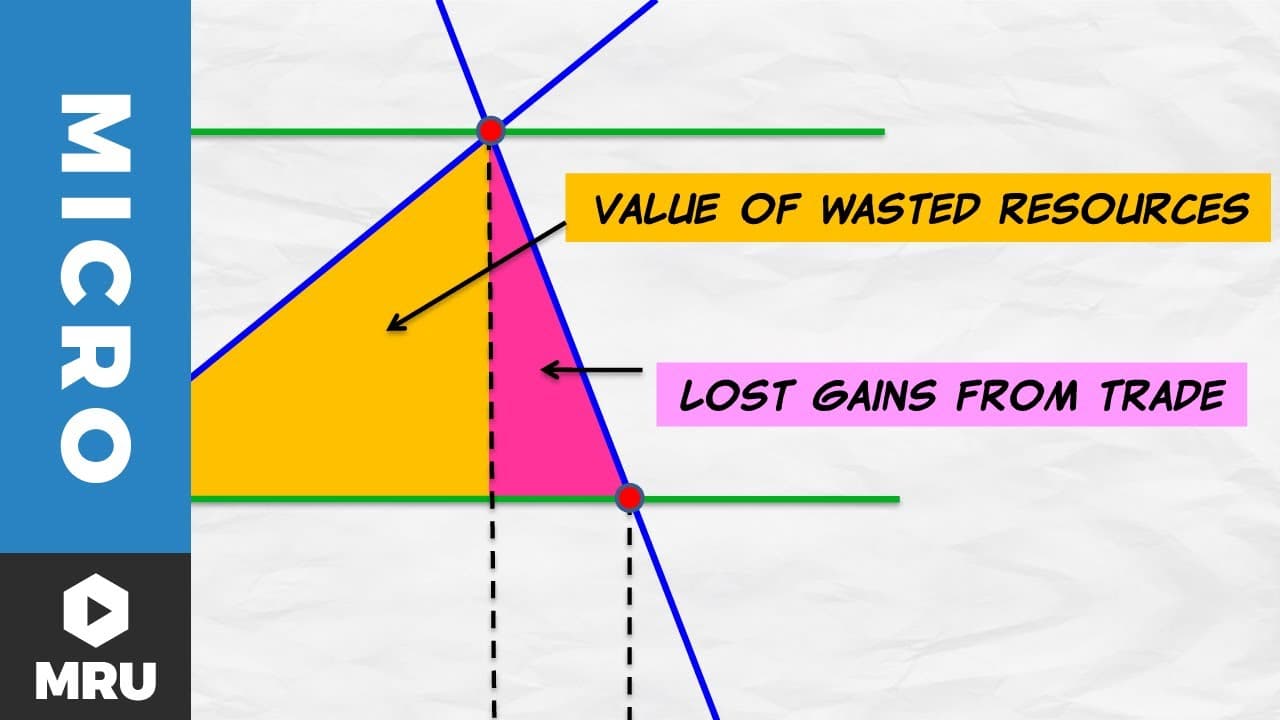
Tariffs are taxes on imports that protect domestic industries but lead to higher prices for consumers, reducing overall consumption. Although they increase domestic production and generate government revenue, tariffs result in a net welfare loss due to wasted resources and lost gains from trade. Overall, while domestic producers benefit, consumers face increased costs and the economy suffers as a whole.
Transcript
♪ [music] ♪ - [Alex] Okay, now we're going to discuss international trade and how to model international trade using demand and supply. We'll also look at how to model the consequences of a tariff, a tax on trade. We'll look at the consequences and also the cost of the tariff and the cost of protectionism in general. By the way, remember when we di... Read More
Key Insights
- International trade can be modeled using supply and demand, showing how tariffs affect market equilibrium.
- Protectionism involves tariffs and quotas, which burden foreign producers while protecting domestic ones.
- Free trade allows consumers to buy at lower world prices, increasing domestic consumption.
- Tariffs raise world prices, reducing domestic consumption and increasing domestic production.
- Tariffs generate government revenue but reduce overall welfare due to lost gains from trade.
- Domestic production increases with tariffs but leads to wasted resources compared to world production.
- Calculating deadweight loss from tariffs involves assessing lost consumer surplus and wasted production resources.
- Tariffs benefit domestic producers but harm consumers, leading to a net welfare loss.
Install to Summarize YouTube Videos and Get Transcripts
Explore YouTube Video Summarizer or Get YouTube Transcript Extractor
Questions & Answers
Q: What is protectionism and how does it affect trade?
Protectionism is an economic policy that restricts international trade through measures like tariffs and quotas, aimed at protecting domestic industries from foreign competition. It burdens foreign producers while shielding domestic ones, leading to higher prices for consumers and potential inefficiencies in resource allocation.
Q: How do tariffs impact domestic consumption and production?
Tariffs increase the cost of imports, leading to higher prices for consumers. This results in reduced domestic consumption as consumers buy less due to higher prices. Conversely, domestic production increases because domestic producers can charge higher prices, making it more profitable for them to produce more, albeit at a higher cost than world producers.
Q: What are the welfare consequences of tariffs?
Tariffs result in a net welfare loss due to two main factors: lost gains from trade and wasted resources. Consumers face higher prices and reduced consumption, leading to lost consumer surplus. Additionally, production shifts from efficient world producers to less efficient domestic ones, causing resource waste and further reducing welfare.
Q: Why are tariffs considered harmful overall despite benefiting some groups?
While tariffs benefit domestic producers by allowing them to expand production, they harm consumers who face higher prices, leading to decreased consumer surplus. The overall harm arises because the costs to consumers and the economy outweigh the benefits to producers, resulting in a net welfare loss due to inefficiencies and resource waste.
Q: How do economists measure the costs of tariffs?
Economists measure tariff costs by calculating deadweight loss, which represents the lost gains from trade and wasted resources. They use supply and demand curves to estimate areas of lost consumer surplus and the additional costs incurred by shifting production from efficient world producers to less efficient domestic ones, quantifying the economic impact.
Q: What is the role of government revenue in the analysis of tariffs?
Government revenue from tariffs is a transfer from consumers to the government. While it represents a benefit to the government, it is a cost to consumers, and thus it nets out in the overall welfare analysis. The focus is on the real changes in consumption and production that lead to welfare losses, rather than the revenue itself.
Q: How does the sugar industry example illustrate the effects of tariffs?
The sugar industry example illustrates tariffs' effects by showing how domestic production in high-cost areas like Florida replaces cheaper imports from countries like Brazil. This shift results in higher consumer prices and wasted resources, as more expensive domestic production replaces more efficient international production, exemplifying the inefficiencies caused by tariffs.
Q: What further reading is suggested for understanding the distribution of tariff effects?
For a detailed understanding of the distribution of tariff effects between consumers and producers, and the political economy aspects, the video suggests reading 'Modern Principles of Economics' by Cowan and Tabarrok. This resource provides more in-depth analysis of how tariffs impact different economic agents and the broader implications of protectionist policies.
Summary & Key Takeaways
-
The video discusses how international trade is modeled using supply and demand, focusing on the consequences of tariffs. It explains protectionism as a policy that restricts trade through tariffs and quotas, affecting foreign and domestic producers differently. The analysis uses supply and demand curves to demonstrate changes in equilibrium with and without tariffs.
-
Free trade allows consumers to purchase goods at lower world prices, leading to increased consumption. However, when tariffs are introduced, world prices rise, reducing domestic consumption and increasing domestic production. This shift results in government revenue from tariffs but also leads to a net welfare loss due to lost gains from trade.
-
The video highlights that while tariffs benefit domestic producers by allowing them to expand production, they harm consumers who face higher prices. The overall effect of tariffs is negative, as they divert production from low-cost world producers to high-cost domestic ones, resulting in wasted resources and a decrease in economic welfare.
Read in Other Languages (beta)
Share This Summary 📚
Summarize YouTube Videos and Get Video Transcripts with 1-Click
Try YouTube Summary with ChatGPT & Claude or YouTube Transcript Generator
Explore More Summaries from Marginal Revolution University 📚

Summarize YouTube Videos and Get Video Transcripts with 1-Click
Try YouTube Summary with ChatGPT & Claude or YouTube Transcript Generator