What's Up With The New JWST Findings? With Neil deGrasse Tyson
TL;DR
The James Webb Space Telescope is expected to provide insights into the birth of galaxies during the Dark Ages by detecting infrared emissions that originated as ultraviolet light in the early Universe.
Transcript
thank you in the early Universe go back to the big bang and you have this cauldron of matter and energy well we don't have stars yet we don't have galaxies yet this organizing principle of stars as they gather into cities no it's just matter and energy and it takes a while for the expanding Universe to cool so that matter can coalesce to make stars... Read More
Key Insights
- 🌌 The early Universe, before the formation of stars and galaxies, was a cauldron of matter and energy. It took billions of years for stars to form and galaxies to emerge.
- 🌌 The period between 400,000 years after the Big Bang and the formation of the first stars is known as the Dark Ages, where there were no objects generating light. However, calculations and models give us insights into this period.
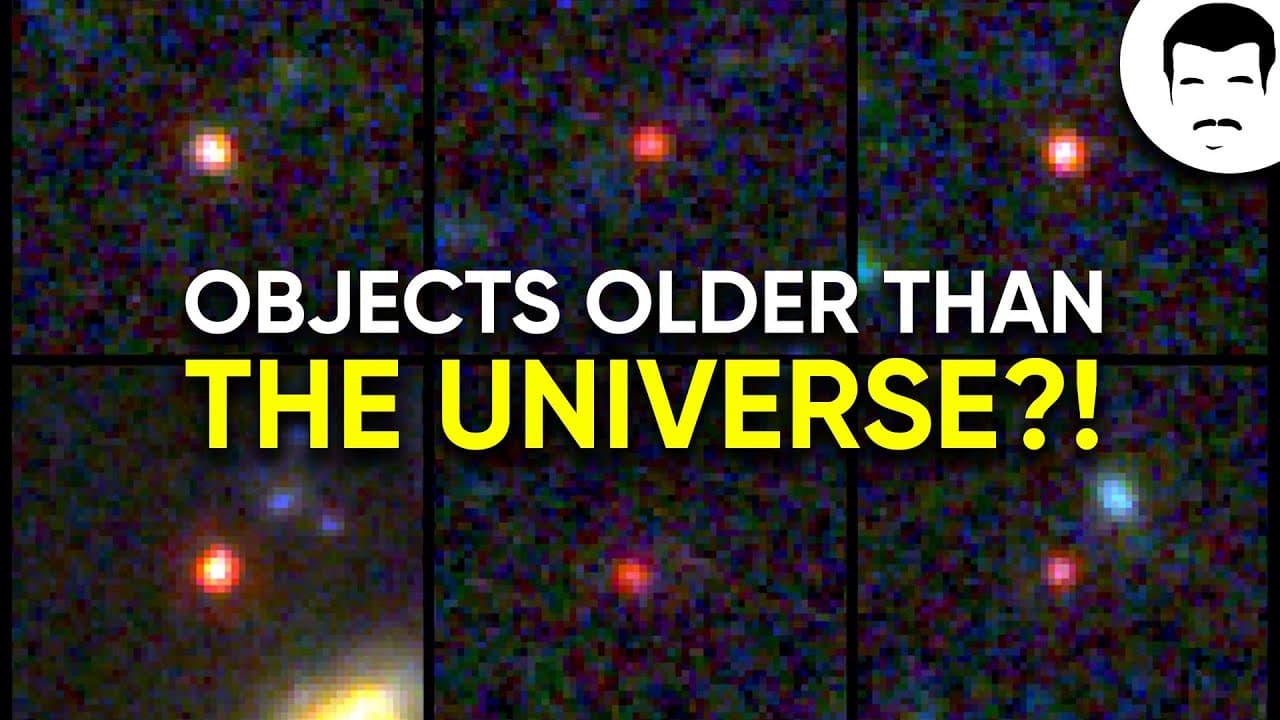
- 🔭 The James Webb Space Telescope was designed to observe galaxies being born and to detect intense amounts of high-energy light, particularly ultraviolet light from newly formed stars. However, over time, that ultraviolet light has been stretched to become infrared light.
- 🔭 Infrared light allows us to see through gas clouds that hide the birth of stars and even newborn planets, as visible light scatters and is hidden. The James Webb Space Telescope is ideal for observing nearby objects and distant phenomena.
- 🌌 The James Webb Space Telescope has unexpectedly discovered galaxies in the Dark Ages, challenging our understanding of how galaxies form. This unexpected finding necessitates a reexamination of current theories and models.
- 📚 To better understand these newly discovered galaxies, obtaining their spectrum is crucial. A spectrum reveals details about the chemical composition and other properties of objects, allowing us to place them more accurately in distance and explore potential flaws in our understanding.
- 👽 While the possibility of extraterrestrial life is always considered, it is typically the last hypothesis explored when faced with new phenomena that cannot be readily explained.
- 🔬 Science is a continuous process of discovery and exploration. Building new telescopes allows us to uncover unexpected phenomena and make discoveries that were previously unimaginable. It expands our knowledge while reminding us of the vastness of our ignorance.
Install to Summarize YouTube Videos and Get Transcripts
Explore YouTube Video Summarizer or Get YouTube Transcript Extractor
Questions & Answers
Q: How does the James Webb Space Telescope differ from the Hubble Space Telescope?
The James Webb Space Telescope differs from the Hubble Space Telescope in its ability to detect infrared emissions, allowing it to observe galaxies that were born during the Dark Ages and study their chemical composition.
Q: What is the significance of studying galaxies in the Dark Ages?
Studying galaxies in the Dark Ages helps scientists understand how galaxies formed and evolved in the early Universe, providing insights into the origins of our own galaxy, the Milky Way.
Q: How does the James Webb Space Telescope detect infrared emissions?
The James Webb Space Telescope is specifically tuned to detect infrared emissions, which originated as ultraviolet light emitted by galaxies during the Dark Ages but have been stretched to longer wavelengths due to the expansion of the Universe over 13.8 billion years.
Q: What can studying the chemical composition of early galaxies tell us?
By studying the chemical composition of early galaxies, scientists can learn about the elements present in those galaxies and gain insights into the conditions and processes that led to the formation of stars and galaxies in the early Universe.
Summary & Key Takeaways
-
Before the formation of stars and galaxies, there was a period known as the Dark Ages where there were no objects radiating light, except for leftover light from the Big Bang.
-
The James Webb Space Telescope (JWST) is specifically designed to detect infrared emissions from galaxies that were born during the Dark Ages, helping scientists understand how galaxies formed.
-
By studying the spectrum of these early galaxies, scientists can determine their chemical composition and gain a better understanding of their distance from Earth.
Read in Other Languages (beta)
Share This Summary 📚
Summarize YouTube Videos and Get Video Transcripts with 1-Click
Try YouTube Summary with ChatGPT & Claude or YouTube Transcript Generator
Explore More Summaries from StarTalk 📚






Summarize YouTube Videos and Get Video Transcripts with 1-Click
Try YouTube Summary with ChatGPT & Claude or YouTube Transcript Generator