Why The Ocean Needs Salt
TL;DR
The ocean doesn't actually contain salt, just ions, and the concentration of ions in the water, known as salinity, is crucial for the functioning of our planet.
Transcript
All that salt water that makes up our ocean doesn’t actually contain any salt, which seems ridiculous, but it’s true...and the reason why is crucial to how our planet works. Welcome to MinuteEarth. Salts are chemical compounds made of positively- and negatively-charged particles called “ions” like sodium and chloride, which make up the sa... Read More
Key Insights
- 😑 Water doesn't contain salt, just ions.
- 😑 Salinity refers to the concentration of ions in water.
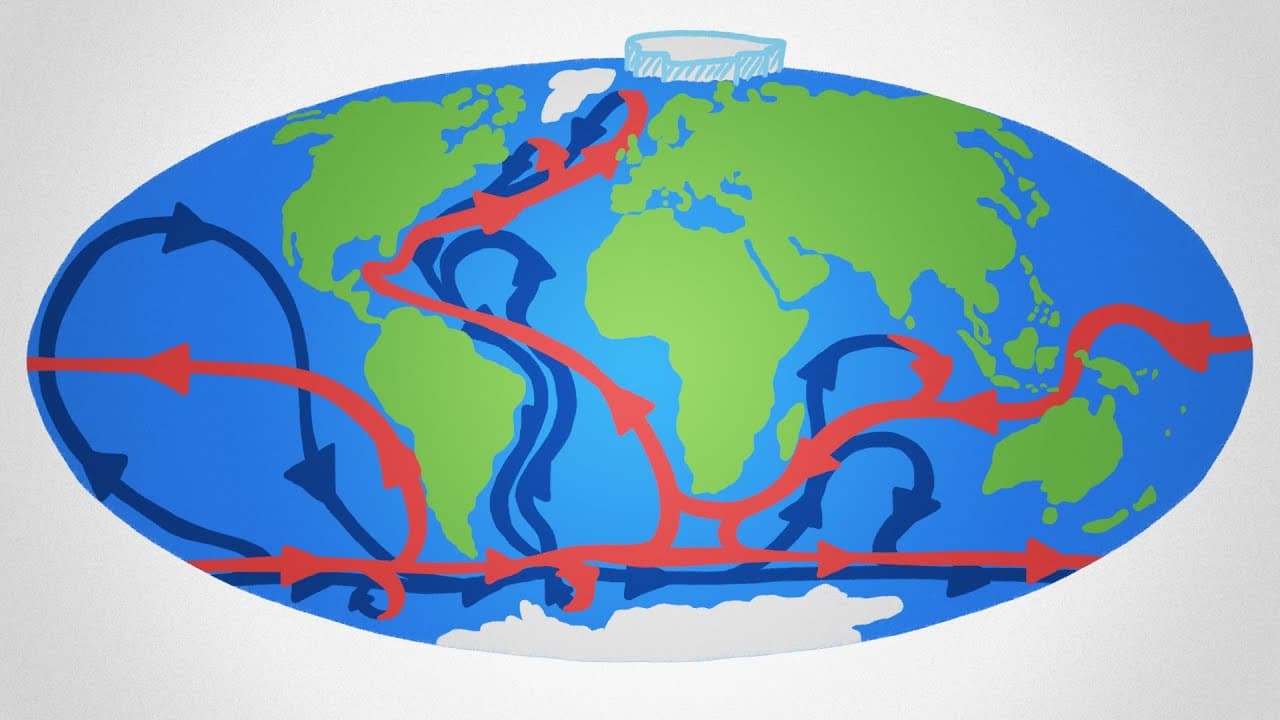
- 🌊 The constant exchange of water with different ion concentrations helps maintain the balance of nutrients and temperature in the ocean.
- 🎓 The melting of ice caps could lead to a decrease in ion concentration and have severe consequences for the planet.
- 😑 The ocean's ions are crucial for the functioning of our planet and should be monitored.
- 🐢 Carbon emissions should also be addressed to slow down the warming of the planet.
- 👣 Wren, the sponsor, offers carbon footprint calculations and suggestions for reducing emissions.
Install to Summarize YouTube Videos and Get Transcripts
Explore YouTube Video Summarizer or Get YouTube Transcript Extractor
Questions & Answers
Q: Why doesn't the ocean contain salt?
The ocean doesn't contain salt because water molecules tear the salt's positive and negative ions apart, leaving just ions in the water.
Q: How is the concentration of ions in the ocean controlled?
Ions are constantly added to the ocean through volcanic activity, river discharge, and dissolving sediments, but they are also constantly removed through various processes, keeping the ion concentration relatively constant.
Q: What role do ions play in the ocean's functioning?
The exchange of water with different ion concentrations helps distribute nutrients and oxygen, regulate temperature, and sustain marine life.
Q: What are the implications of a decrease in ion concentration at the poles due to melting ice caps?
A decrease in ion concentration could disrupt the water exchange process, causing marine life to cease to exist, making the poles uninhabitable, and leading to stronger hurricanes.
Summary & Key Takeaways
-
Salt is made up of positively and negatively charged particles called ions, but salts generally can't exist in water for long because water molecules tear the salt's ions apart.
-
The concentration of ions in water is what determines salinity. If there are too many ions, salt crystals start to form, but if ions are constantly being removed, salinity remains relatively constant.
-
The constant exchange of water with different ion concentrations in the ocean helps distribute nutrients and oxygen, regulate temperature, and support marine life.
Read in Other Languages (beta)
Share This Summary 📚
Summarize YouTube Videos and Get Video Transcripts with 1-Click
Try YouTube Summary with ChatGPT & Claude or YouTube Transcript Generator
Explore More Summaries from MinuteEarth 📚




Summarize YouTube Videos and Get Video Transcripts with 1-Click
Try YouTube Summary with ChatGPT & Claude or YouTube Transcript Generator