How to Optimize for AI Search Engines in 2025
TL;DR
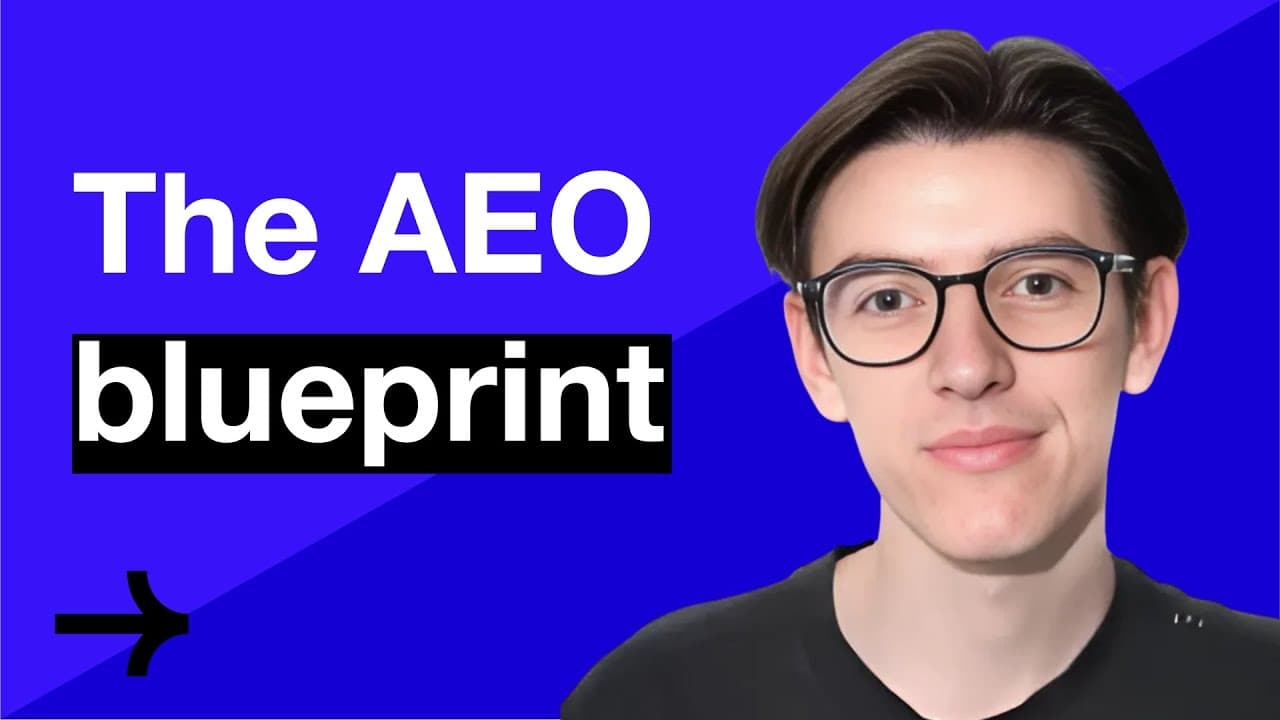
AI-native search optimization is crucial for brands seeking visibility on platforms like ChatGPT and Perplexity. Profound's AEO strategies include using 2025 in URLs and title tags, semantic chunking, and schema markup to enhance AI visibility. Understanding generative search intent and leveraging tools over traditional blogs are key to success in the AI-dominated landscape.
Transcript
Josh, I'm excited to have you here. Your company is taking the world by storm and this this whole AEO thing of course is as well or however you want to describe it which you may have some opinions on as well. But uh clearly I'm getting asked by our clients like daily seems like a new client is asking what LLM tracking platform should I recommend. I... Read More
Key Insights
- Profound has built the largest dataset of answer engine queries, providing a competitive advantage in AI search optimization.
- Generative search intent involves users interacting with AI models to perform actions, shifting focus from traditional search methods.
- Traffic quality from AI sources is exceptionally high, with users often ready to convert upon visiting.
- Sponsored AI queries are emerging, allowing brands to sponsor follow-up queries and enhance visibility.
- Listicles dominate AI search results due to their comprehensive nature, making them a go-to for answer engines.
- Using 2025 in URLs and title tags can significantly boost citations from ChatGPT by aligning with its query structure.
- Semantic chunking and structured answers help answer engines easily extract and cite relevant information.
- Schema markup, especially authorship schema, plays a crucial role in improving answer engine pickup.
Install to Summarize YouTube Videos and Get Transcripts
Explore YouTube Video Summarizer or Get YouTube Transcript Extractor
Questions & Answers
Q: How to optimize for AI search engines like ChatGPT?
Optimizing for AI search engines involves using specific strategies such as including the year 2025 in URLs and title tags, employing semantic chunking to provide clear, data-driven insights, and leveraging schema markup, particularly authorship schema. These techniques help improve visibility and citation rates in AI-generated search results.
Q: What is generative search intent?
Generative search intent refers to users interacting with AI models to perform specific actions rather than seeking traditional search results. This shift focuses on creating experiences where users can directly accomplish tasks, such as generating spreadsheets or scheduling, altering the landscape of search optimization.
Q: Why is traffic quality from AI sources considered high?
Traffic from AI sources is considered high quality because users often arrive with a clear intent to convert or take action. This readiness to engage and complete transactions makes AI-sourced traffic highly valuable for businesses seeking to maximize conversion rates.
Q: What are sponsored AI queries?
Sponsored AI queries allow brands to pay for visibility in AI-generated search results. This involves sponsoring follow-up queries, where a brand can appear as a recommended solution or product, enhancing their visibility and potential for conversion in AI search environments.
Q: How do listicles perform in AI search results?
Listicles perform exceptionally well in AI search results due to their comprehensive nature, which provides a wide range of options and information. AI models prefer listicles for their ability to offer concise, structured content that can easily be cited and referenced in responses.
Q: What is semantic chunking?
Semantic chunking involves structuring content into clear, data-driven insights that can be easily extracted by AI models. This technique helps answer engines identify and cite specific, relevant information, improving the likelihood of being included in AI-generated search results.
Q: How does schema markup affect AI search optimization?
Schema markup, particularly authorship schema, enhances AI search optimization by providing structured data that AI models can easily interpret. This improves the chances of content being picked up and cited by AI engines, increasing visibility in AI-driven search environments.
Q: What are Profound's upcoming platform enhancements?
Profound is developing platform enhancements to provide actionable insights and content briefs directly within their system. These features aim to leverage their extensive dataset to help brands create AI-optimized content, streamlining the process of adapting to the evolving AI search landscape.
Summary & Key Takeaways
-
AI-native search optimization is becoming essential for brands, with Profound leading the charge by developing a massive dataset of answer engine queries. Their strategies include using 2025 in URLs and title tags, focusing on semantic chunking, and utilizing schema markup to enhance AI visibility.
-
Generative search intent is reshaping how users interact with AI models, emphasizing action-oriented queries. Profound's Conversation Explorer and insights into sponsored AI queries highlight the shift towards tools and experiences over traditional blog content.
-
Traffic from AI sources is highly valuable, with users often ready to convert. Profound's upcoming platform enhancements aim to provide actionable insights and content briefs, leveraging their extensive data to help brands optimize for AI search engines effectively.
Read in Other Languages (beta)
Share This Summary 📚
Summarize YouTube Videos and Get Video Transcripts with 1-Click
Try YouTube Summary with ChatGPT & Claude or YouTube Transcript Generator
Explore More Summaries from Content and Conversation 📚


Summarize YouTube Videos and Get Video Transcripts with 1-Click
Try YouTube Summary with ChatGPT & Claude or YouTube Transcript Generator