How Meat Production Contributes to Climate Change
TL;DR
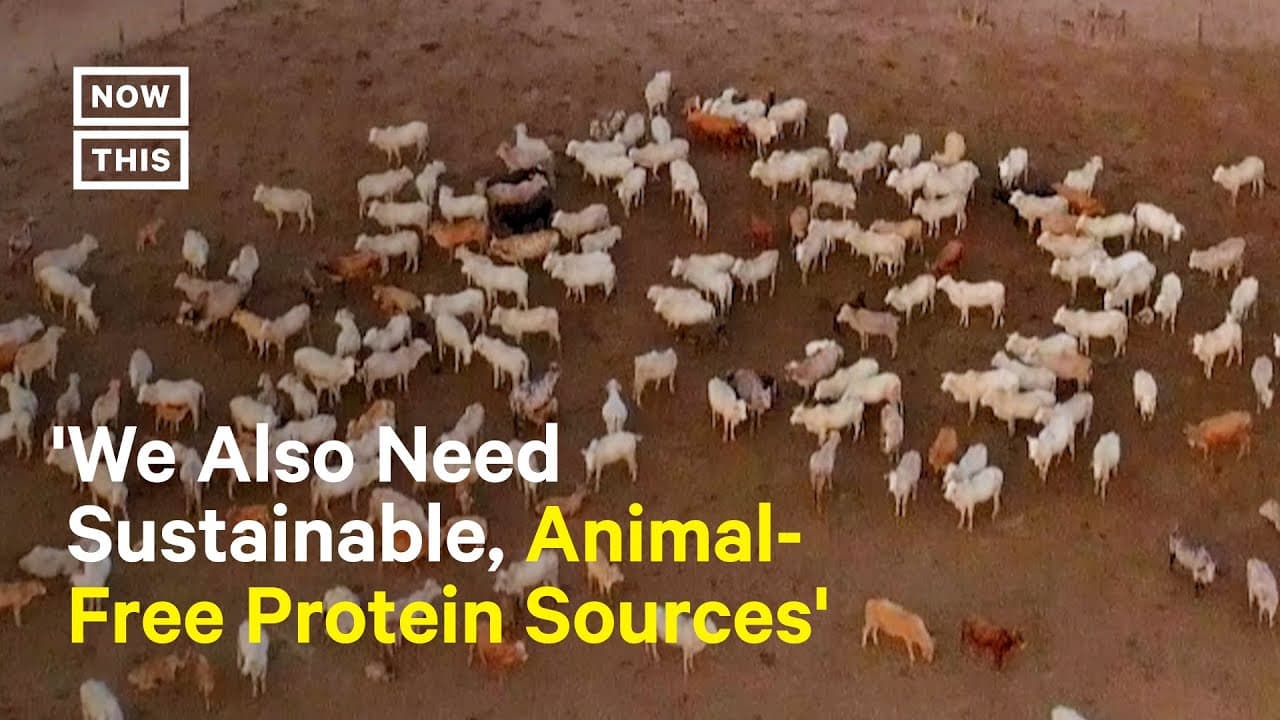
Animal agriculture is a major contributor to greenhouse gas emissions, deforestation, and resource depletion, highlighting the need for sustainable plant-based protein sources.
Transcript
according to the united nations animal agriculture is responsible for nearly 15 of the global greenhouse gas emissions that's more emissions than all cars planes trains and boats combined just in the same way that we need renewable energy so that we can continue lighting our homes without fossil fuels we also need sustainable animal-free protein so... Read More
Key Insights
- 🌍 Animal agriculture is responsible for nearly 15% of global greenhouse gas emissions, more than all cars, planes, trains, and boats combined.
- 🌿 Sustainable animal-free protein sources are needed to satisfy our desire for meat without the need to raise and slaughter animals.
- 🌳 Raising animals for food is the leading cause of deforestation, with a significant portion dedicated to growing crops to feed animals. Eating crops directly requires less land and allows for more carbon storage and wildlife conservation.
- 💧 Producing one chicken consumes around one thousand gallons of water, primarily used for irrigating corn and soy crops. It is highly inefficient to funnel crops through animals for meat production.
- 🌎 Europe imports a significant amount of livestock feed from the Amazon rainforest, leading to deforestation in Brazil. This highlights the global impact of factory farming and the need for sustainable practices.
- 🚜 Factory farms contribute to climate change, animal welfare issues, and environmental pollution. These negative effects are disproportionately borne by poorer communities living near these farms.
- 🌱 Shifting towards a more plant-based diet is crucial to reduce greenhouse gas emissions, prevent pandemics, preserve wildlife, and combat animal cruelty.
- 🌱 There is a growing interest in plant-based food, but meat demand continues to rise, especially in countries like China, India, and Brazil. Finding alternatives like plant proteins and cellular agriculture can help meet this demand sustainably.
Install to Summarize YouTube Videos and Get Transcripts
Explore YouTube Video Summarizer or Get YouTube Transcript Extractor
Questions & Answers
Q: How does animal agriculture impact greenhouse gas emissions?
Animal agriculture is responsible for nearly 15% of global greenhouse gas emissions, exceeding emissions from cars, planes, trains, and boats combined. Raising animals for food releases significant amounts of methane and nitrous oxide, contributing to climate change.
Q: How does raising animals for food lead to deforestation?
Raising animals for food requires vast amounts of land for both the animals themselves and the crops grown to feed them. This leads to deforestation as large areas of forests, especially in regions like the Amazon, are cleared to create cropland for animal feed production.
Q: What are the environmental consequences of factory farms?
Factory farms not only contribute to climate change but also pose animal welfare issues and generate immense amounts of waste. The concentration of animals in confined spaces leads to air and water pollution, impacting the health and well-being of both animals and nearby communities.
Q: Can sustainable alternatives to animal agriculture meet the growing meat demand?
Yes, sustainable alternatives such as plant-based proteins, cellular agriculture, and microbial fermentation offer ways to produce meat-like experiences without the need for raising and slaughtering animals. These alternatives can help meet the rising meat demand while reducing the environmental footprint.
Q: How does the meat industry impact disadvantaged communities?
Factory farms are often situated near low-income communities, leading to numerous health and environmental problems. These communities bear the brunt of air and water contamination, as well as the associated risks of disease outbreaks and pollution.
Summary & Key Takeaways
-
Animal agriculture is responsible for nearly 15% of global greenhouse gas emissions, surpassing emissions from all modes of transportation combined.
-
Raising animals for food is highly inefficient, requiring massive amounts of land, water, and resources to produce meat.
-
Factory farms contribute to climate change, animal welfare issues, and pollution of air and waterways, disproportionately affecting disadvantaged communities.
Read in Other Languages (beta)
Share This Summary 📚
Summarize YouTube Videos and Get Video Transcripts with 1-Click
Try YouTube Summary with ChatGPT & Claude or YouTube Transcript Generator
Explore More Summaries from NowThis News 📚



Summarize YouTube Videos and Get Video Transcripts with 1-Click
Try YouTube Summary with ChatGPT & Claude or YouTube Transcript Generator