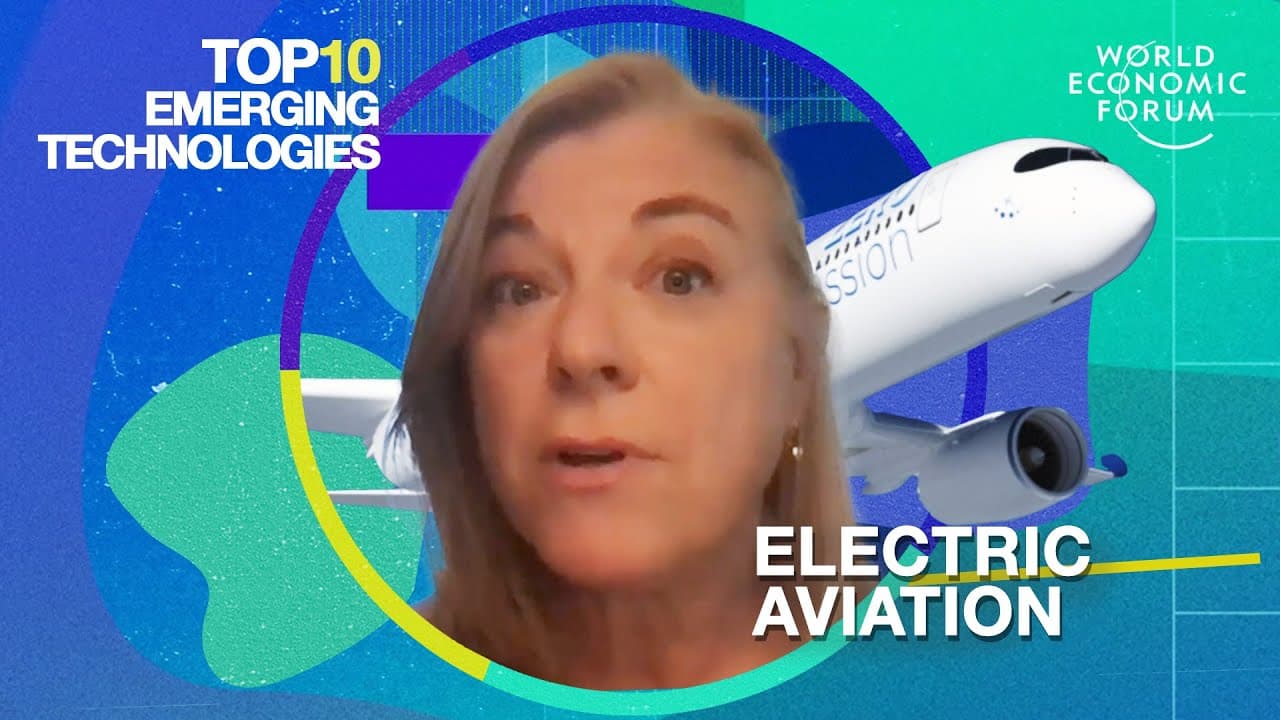
EP.9 Electric Aviation | 10 Years of #EmergingTech
TL;DR
Electric aviation is transforming the industry with cleaner, quieter flights and lower costs.
Transcript
hello and welcome to top 10 emerging technologies a show from the world economic forum that looks at the performance of some of the most promising technologies of the last decade i'm your host greta keenan and in this episode we'll be talking about electric aviation which made it onto our 2020 list to get us started let's take a look at this clip f... Read More
Key Insights
- 💄 Electric aviation aims to reduce carbon emissions, making the industry more sustainable.
- ✈️ Innovation in battery technology is crucial for the advancement of electric planes.
- 🔌 Certification and testing are essential steps for the commercial adoption of electric aviation.
- 👶 Various companies are driving electric aviation forward with new technologies.
- 🪡 Challenges like battery density and supply chain development need to be addressed for electric aviation to succeed.
- 🛳️ Passenger safety and confidence are critical considerations for the widespread adoption of electric planes.
- ✈️ Electric aviation technology is advancing rapidly, with test flights planned for the near future.
Install to Summarize YouTube Videos and Get Transcripts
Explore YouTube Video Summarizer or Get YouTube Transcript Extractor
Questions & Answers
Q: What are the main drivers behind the transition to electric aviation?
The main drivers behind the transition to electric aviation are the need to decarbonize the aviation sector, industry innovations in electric technologies, and the growing regulatory support for electric aircraft.
Q: How do different types of electric planes operate, and what are some examples of technologies being used?
Electric planes can operate with fixed wing aircraft or eVTOL technology, utilizing lithium-ion batteries or hydrogen fuel cells. Examples include hybrid electric planes, all-electric planes with batteries or hydrogen, and eVTOL aircraft.
Q: When can we expect electric planes with passengers on board to take flight?
Electric planes have been undergoing testing and are expected to be certified for passenger flights around 2023. Initial flights may include small training planes before progressing to larger commercial aircraft.
Q: What are the key challenges that need to be overcome for electric aviation to become mainstream?
Key challenges include improving battery density, adopting hydrogen fuel cells, scaling innovation, establishing a robust supply chain, and ensuring aircraft certification for passenger safety.
Summary & Key Takeaways
-
Electric aviation aims to reduce the aviation industry's carbon footprint by transitioning from fuel-powered to electric planes.
-
Significant progress has been made in electric aviation technology, with companies developing innovative solutions like electric vertical takeoff and landing (eVTOL).
-
Challenges such as battery density and certification processes need to be addressed for electric aviation to become mainstream.
Read in Other Languages (beta)
Share This Summary 📚
Summarize YouTube Videos and Get Video Transcripts with 1-Click
Try YouTube Summary with ChatGPT & Claude or YouTube Transcript Generator
Explore More Summaries from Top-10 Tech - the innovations set to change our lives 📚

Summarize YouTube Videos and Get Video Transcripts with 1-Click
Try YouTube Summary with ChatGPT & Claude or YouTube Transcript Generator